
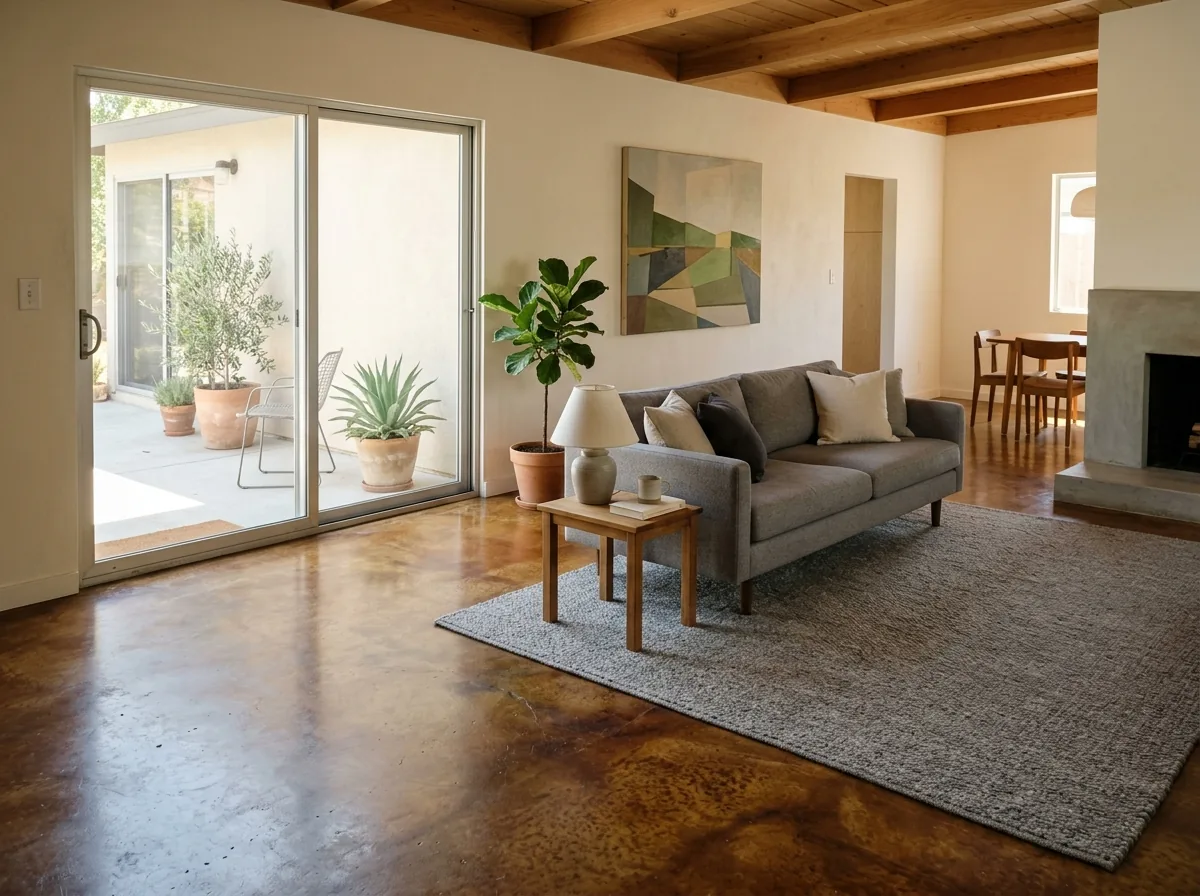
Residential Epoxy Flooring in Hayward
Hayward's houses are mostly from the 1970s and earlier: the median home was built in 1974, and nearly six in ten were built before 1980. On slabs that old, we'd expect most estimates to include some crack repair and a moisture check before anyone talks about colors.
Garage Floor Epoxy Coating
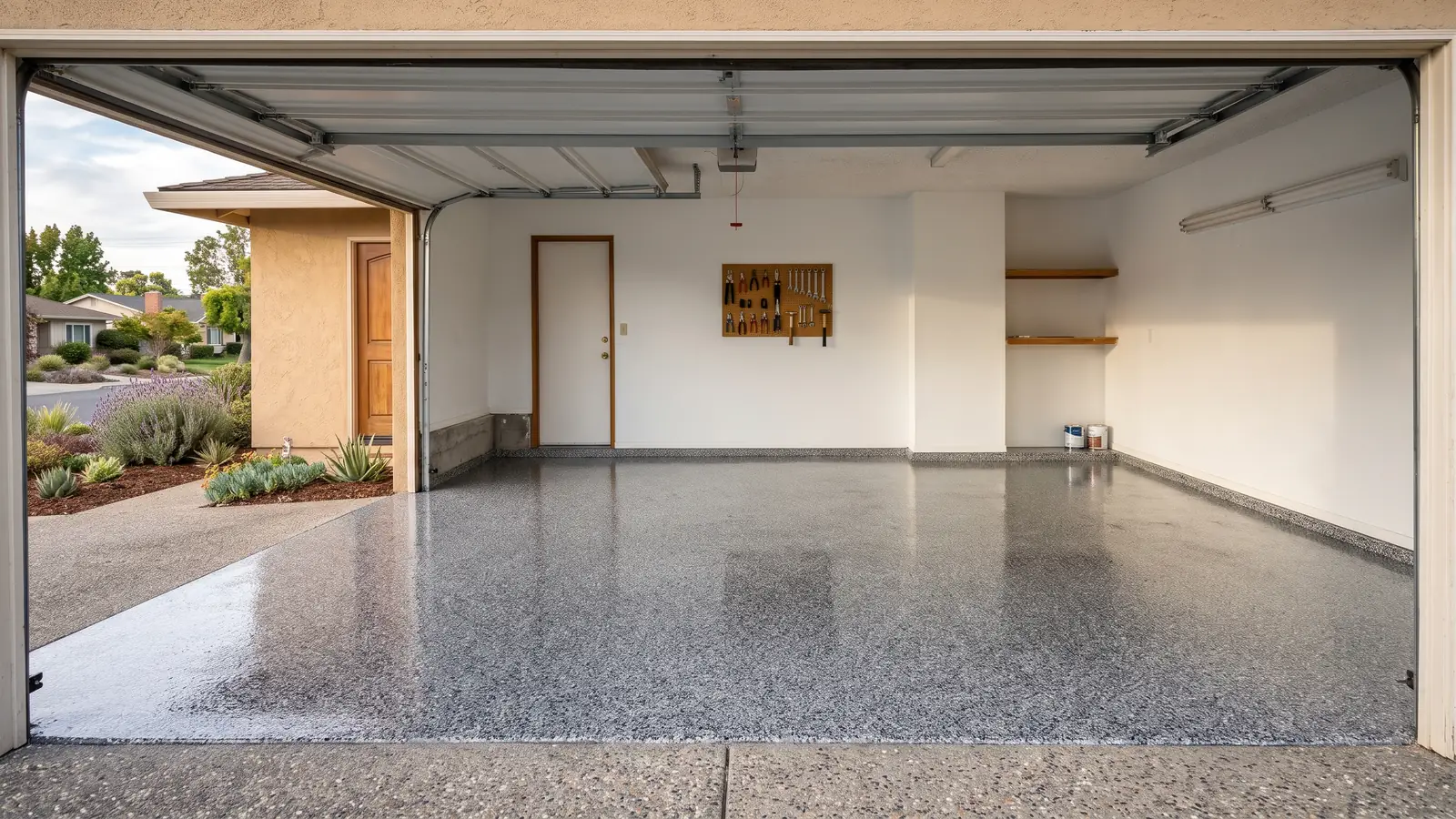
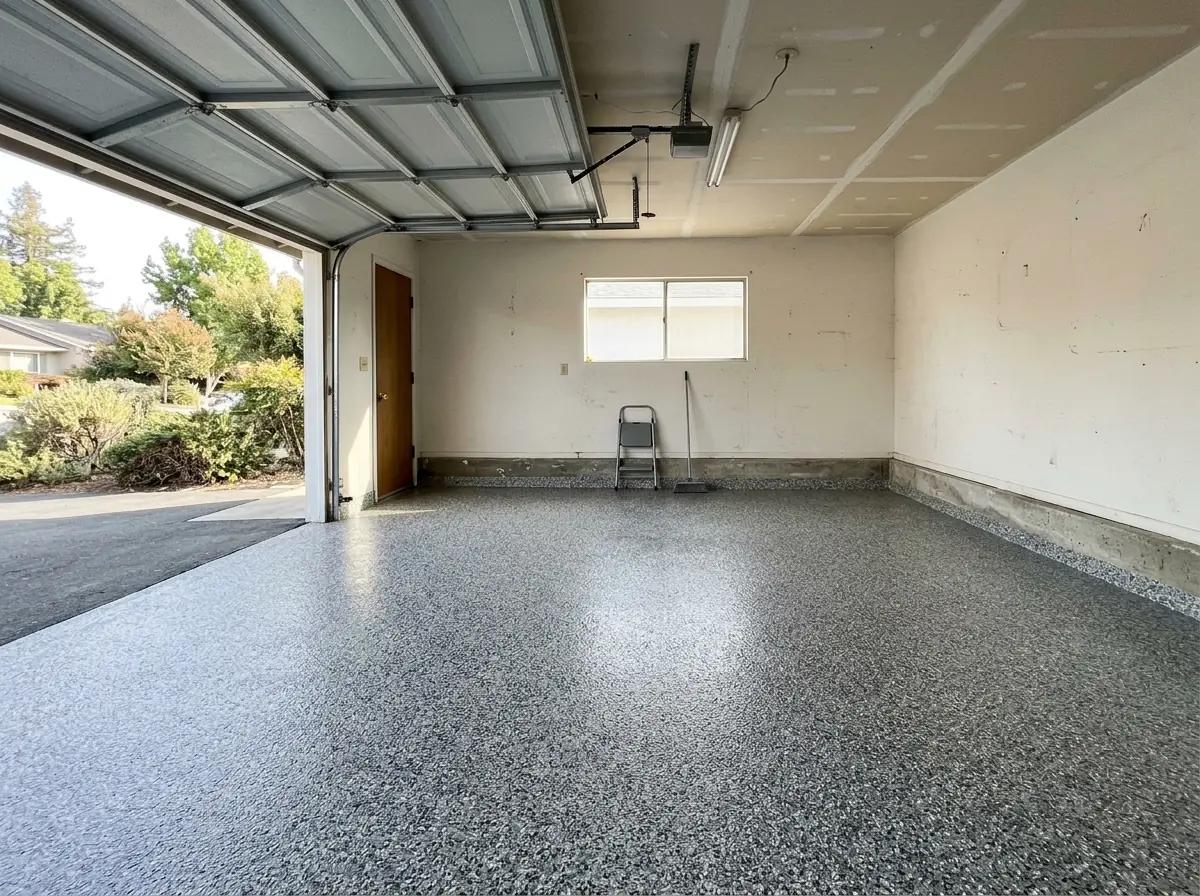
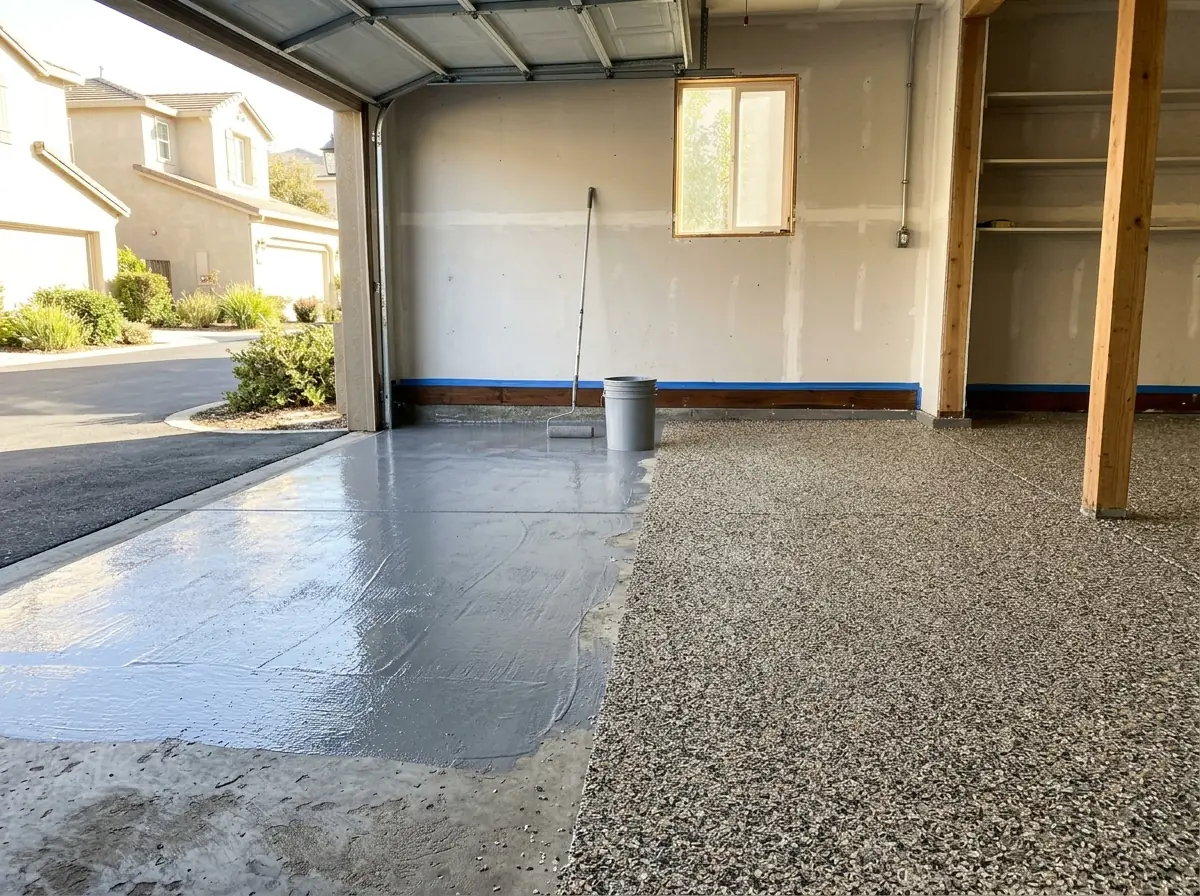
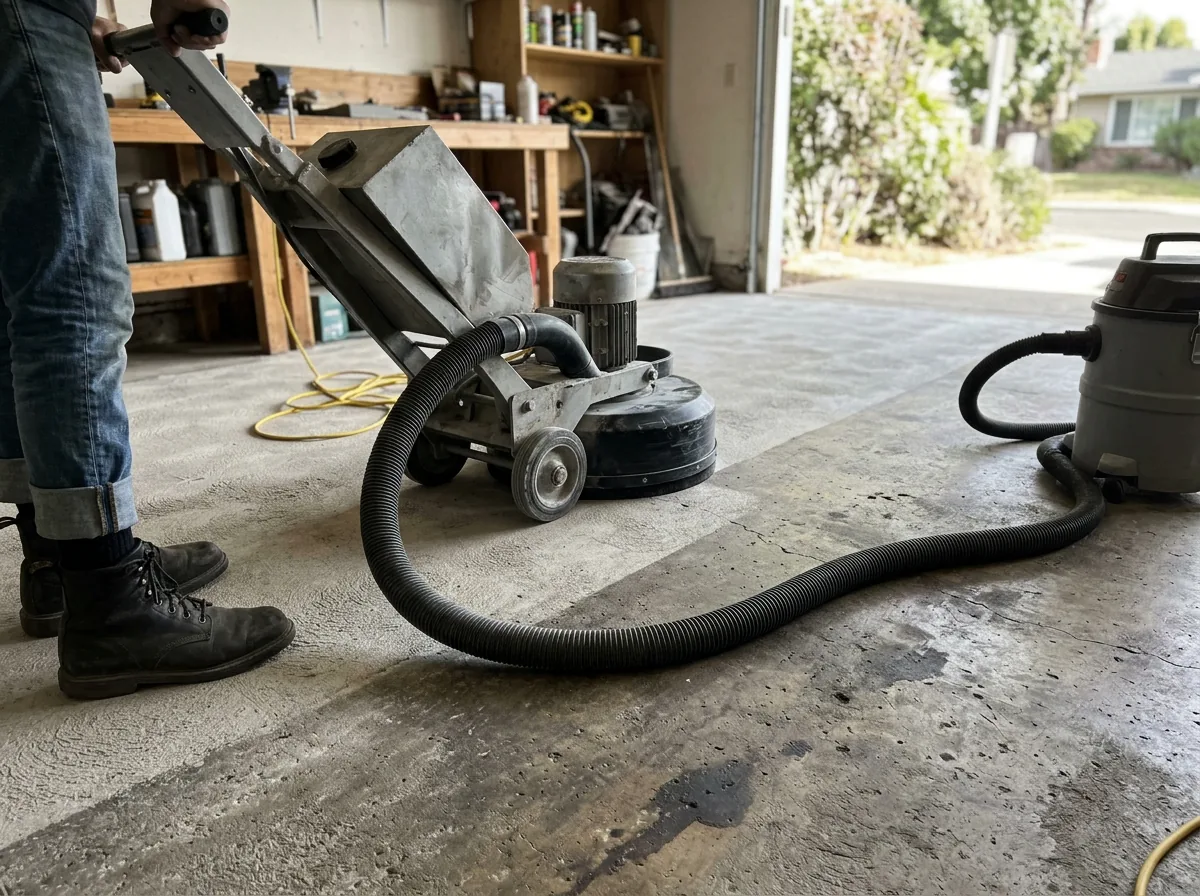
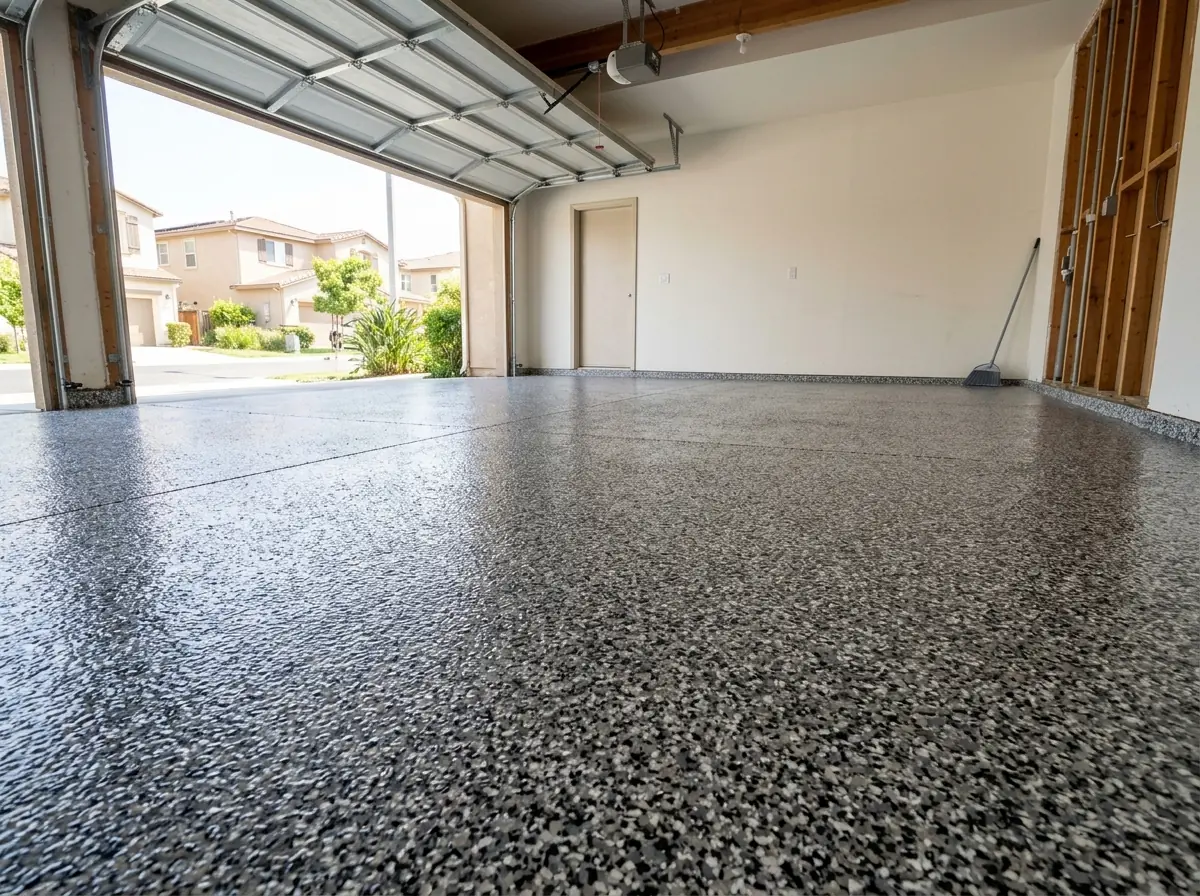
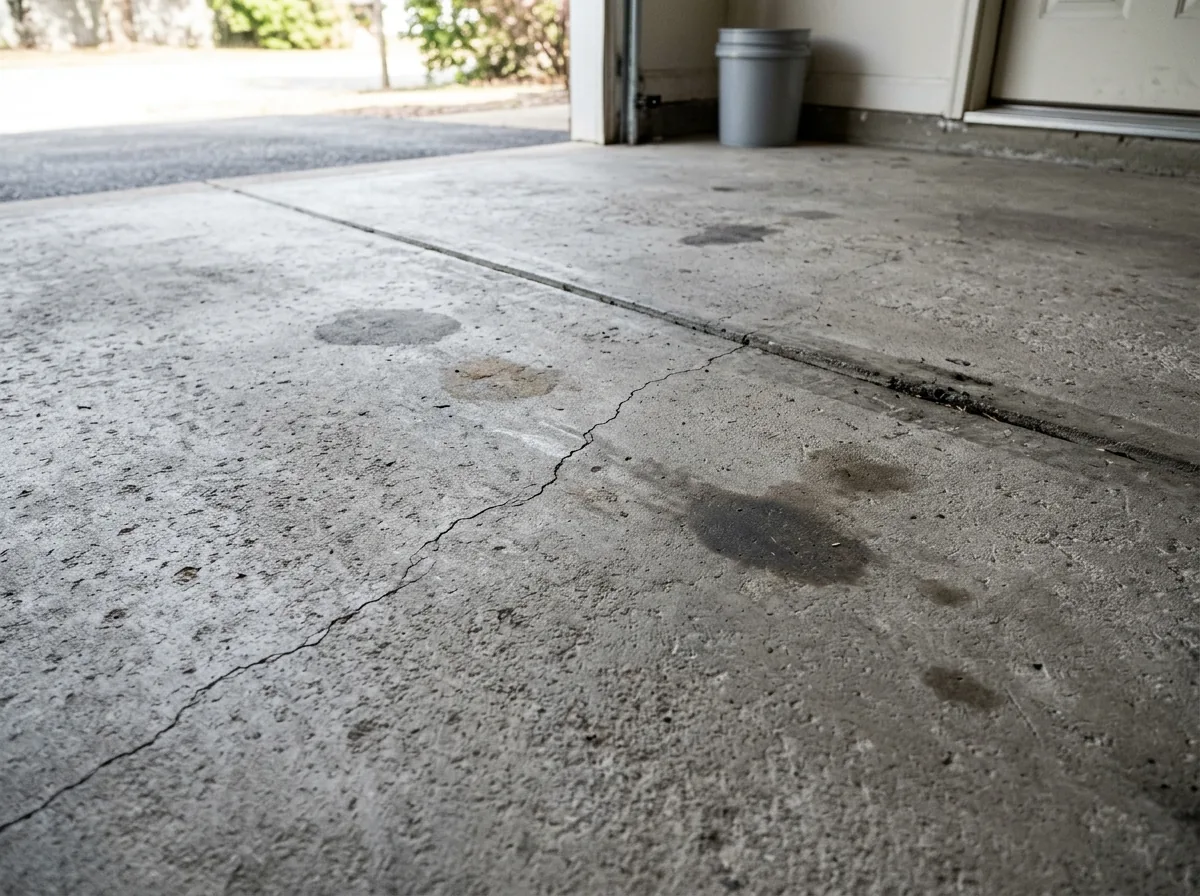
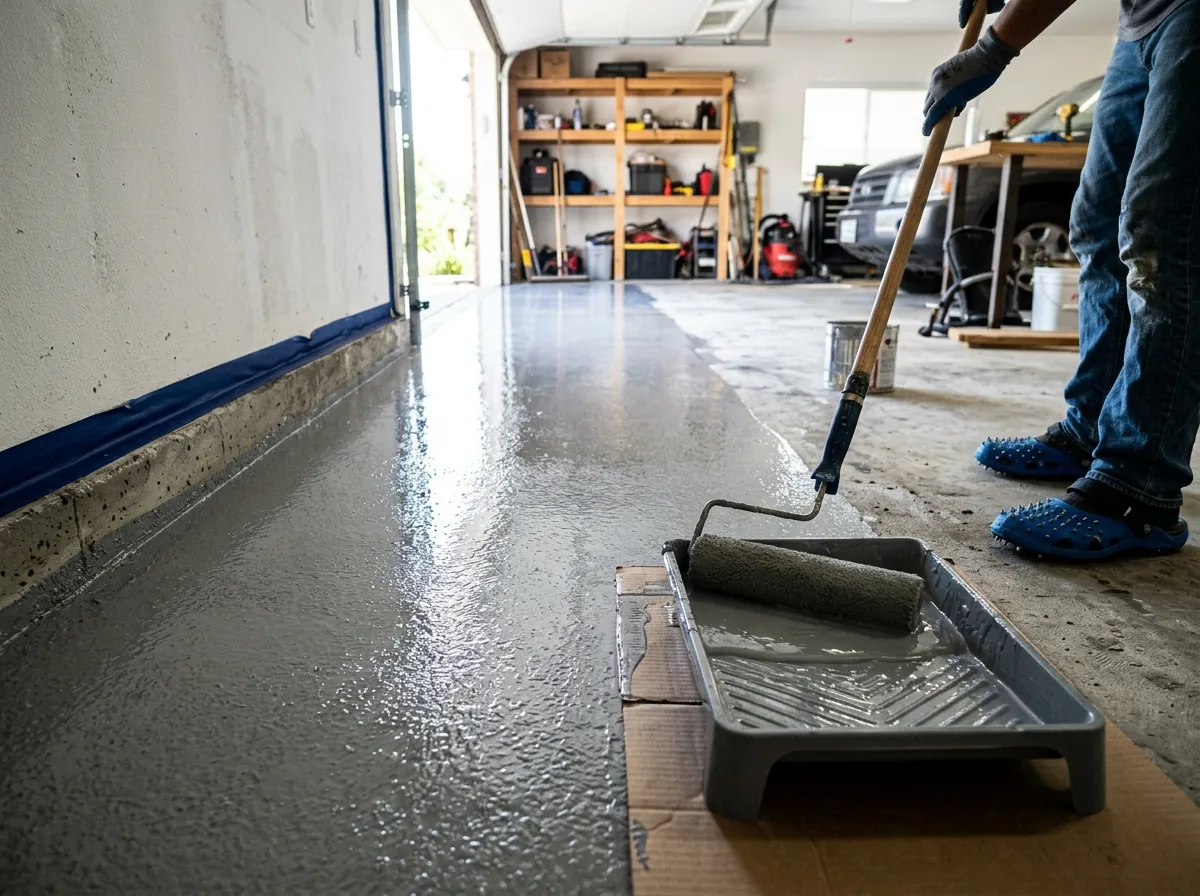
The typical garage job looks like this: a two-car garage, a slab with oil spots and a few hairline cracks, and an owner tired of tracking concrete dust into the house. A proper garage system starts with diamond grinding, not acid etching, so the coating has an open surface to bite into. Cracks and pits get filled, then a pigmented epoxy base coat goes down, usually with vinyl flakes broadcast into it, and a clear topcoat seals the lot.
The topcoat is where quotes differ most. Ask whether it's epoxy, polyurethane or polyaspartic, how many coats go down, and how long you'll wait before parking. Solid epoxy needs 2 to 7 days before a car goes back in, and the clock runs slower on a cold slab.
Polyaspartic Garage Floor Coating
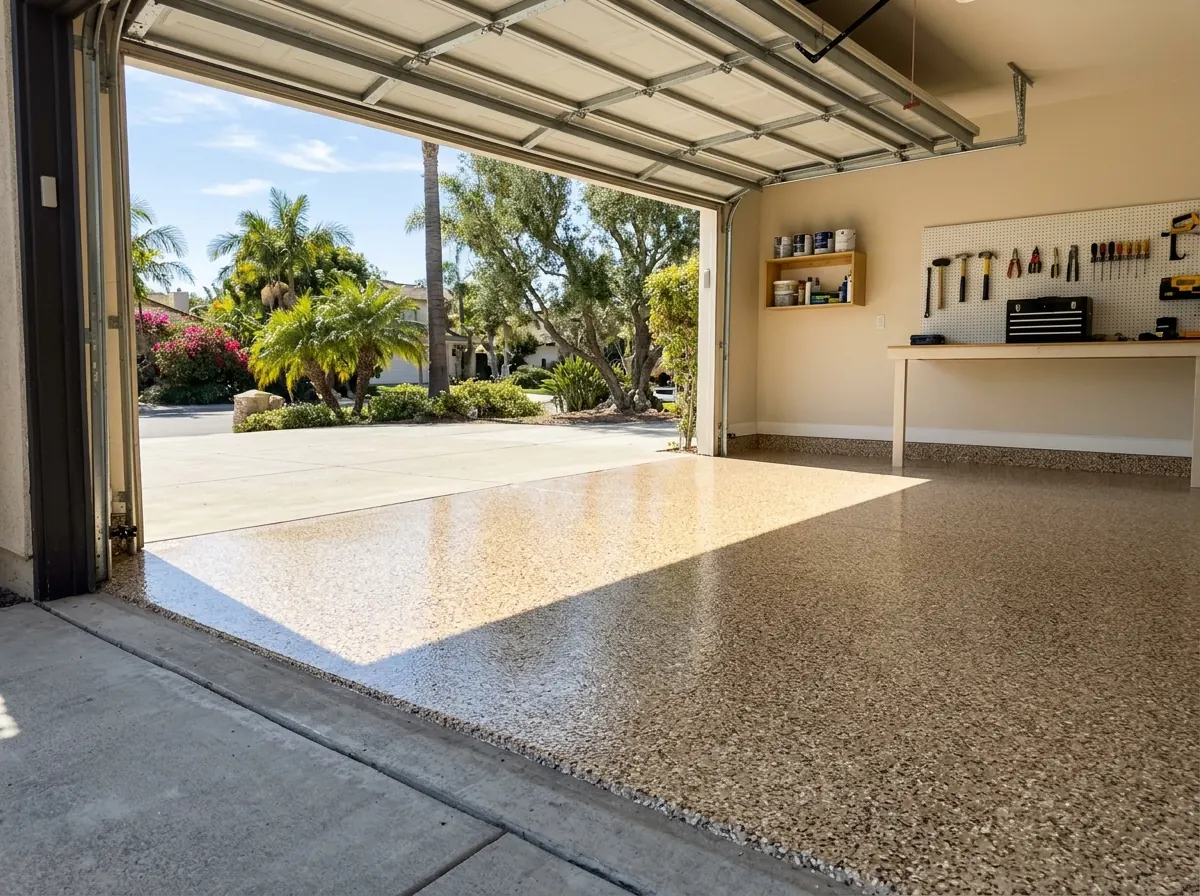
Polyaspartic is the coating behind "one-day garage floor" offers. It cures much faster than epoxy, so the grind, base, flakes and topcoat often fit in one visit, and cars can usually go back in after 24 to 48 hours. It also holds its color in sunlight, where epoxy is rated poor to fair. The trade-off is working time: it sets quickly, so crews mix small batches and move fast, and a rushed job shows as roller lines or patchy flakes.
It costs a little more, about $5 to $12 a square foot nationally against $4 to $10 for epoxy. For a garage that faces the afternoon sun with the door up, that's usually money well spent. Some polyaspartic products are rated to go down far colder than epoxy, though others want the same mild range, so on a winter job check the product sheet.
Flake (Chip) Epoxy Floors
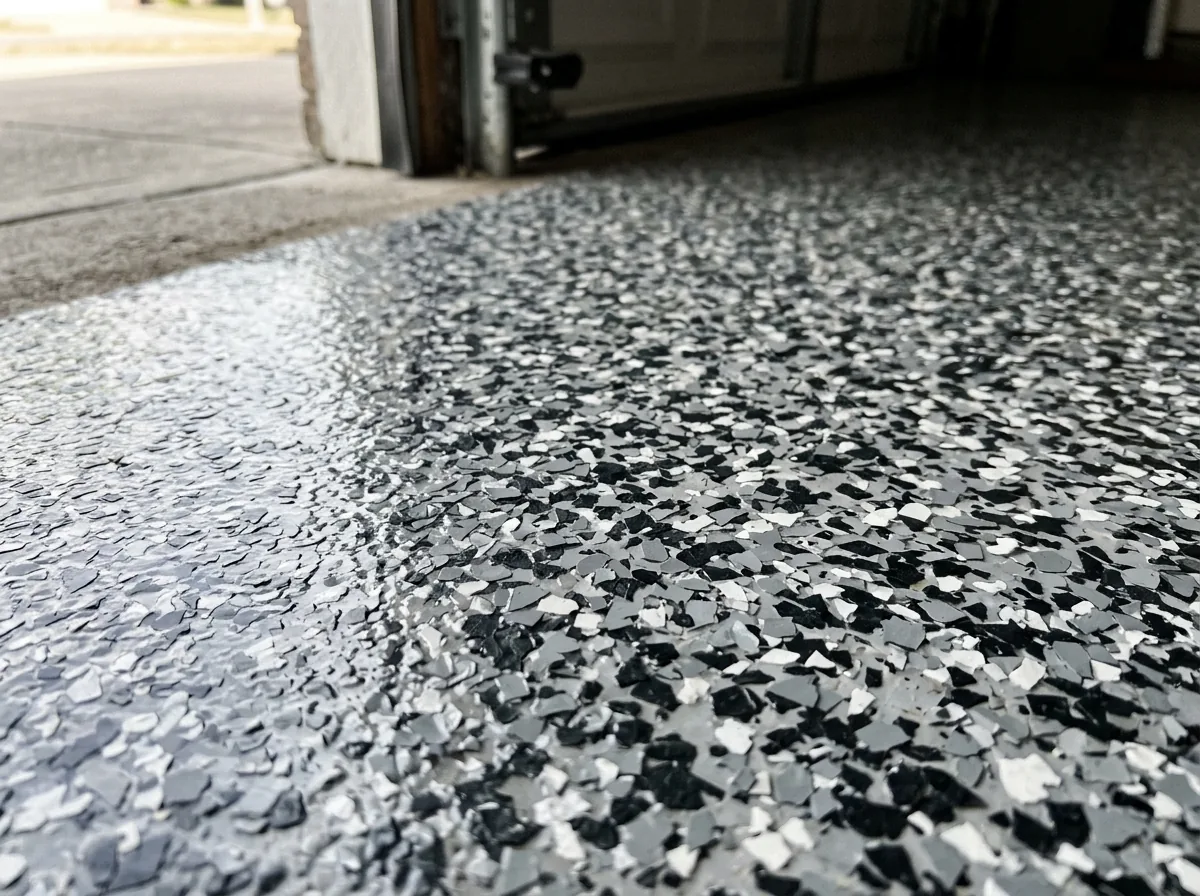
Flake floors are the speckled finish you see in a lot of finished garages. The installer throws vinyl chips into the wet base coat, either a light partial broadcast or a full broadcast that covers every inch of the base. Full broadcast uses more material, and it gives the clear topcoat a slight texture that helps with grip.
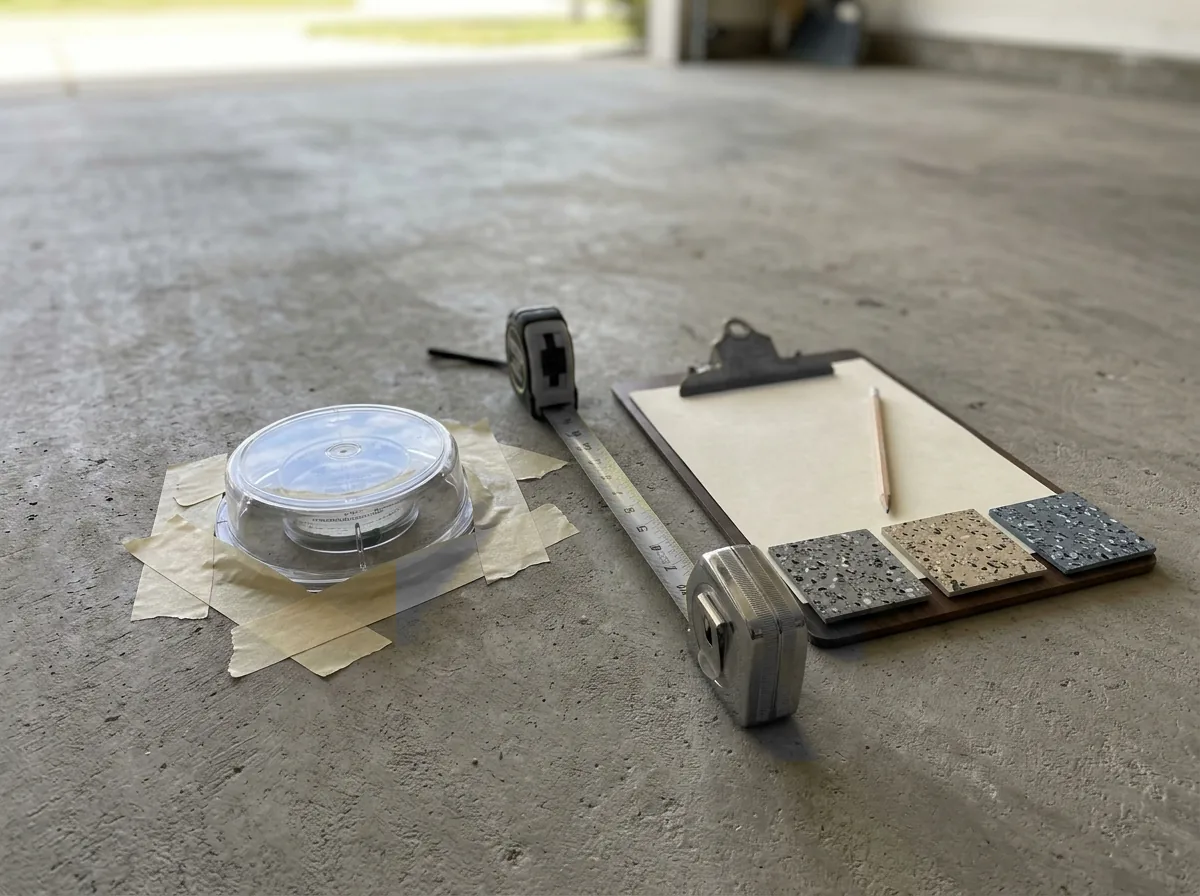
Pick the blend in daylight, on the actual slab if you can. A chip sample under a showroom light looks lighter than the same blend in a garage.
Metallic Epoxy Floors
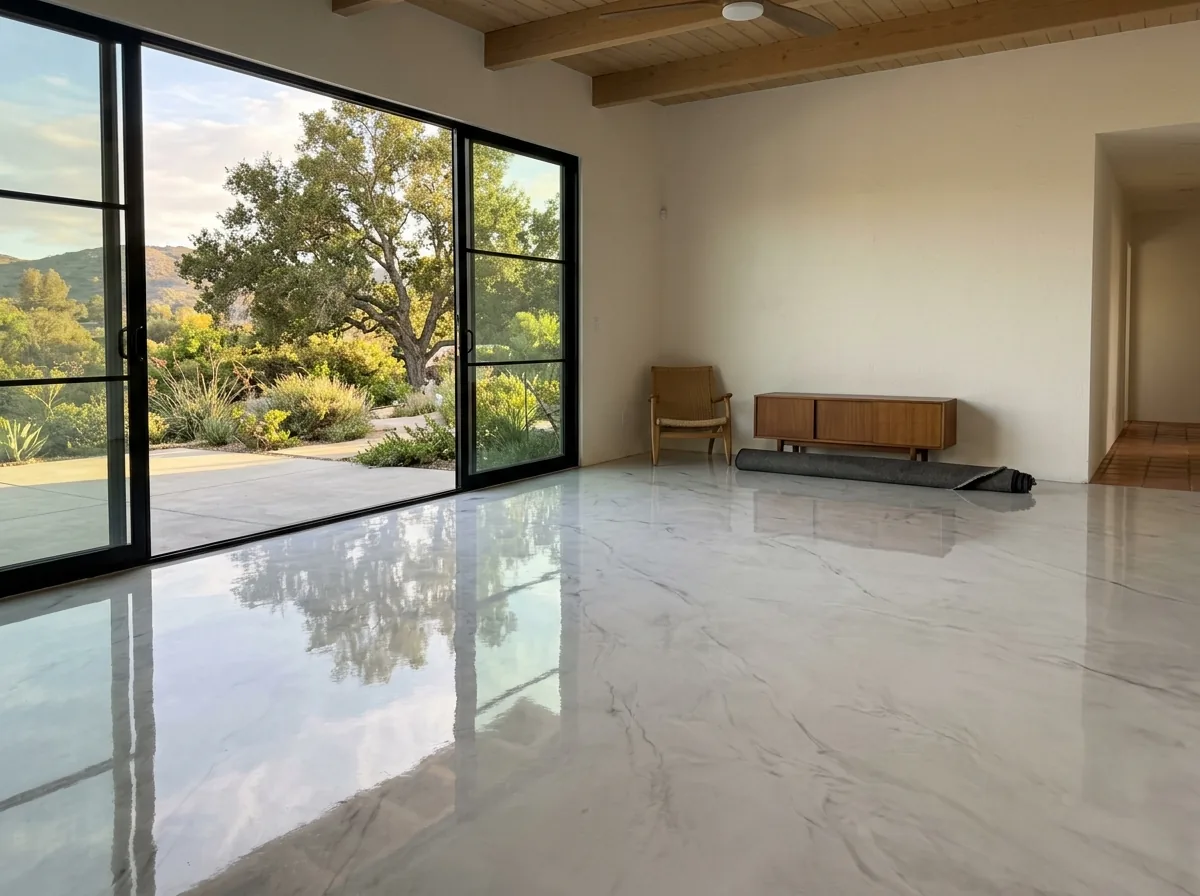
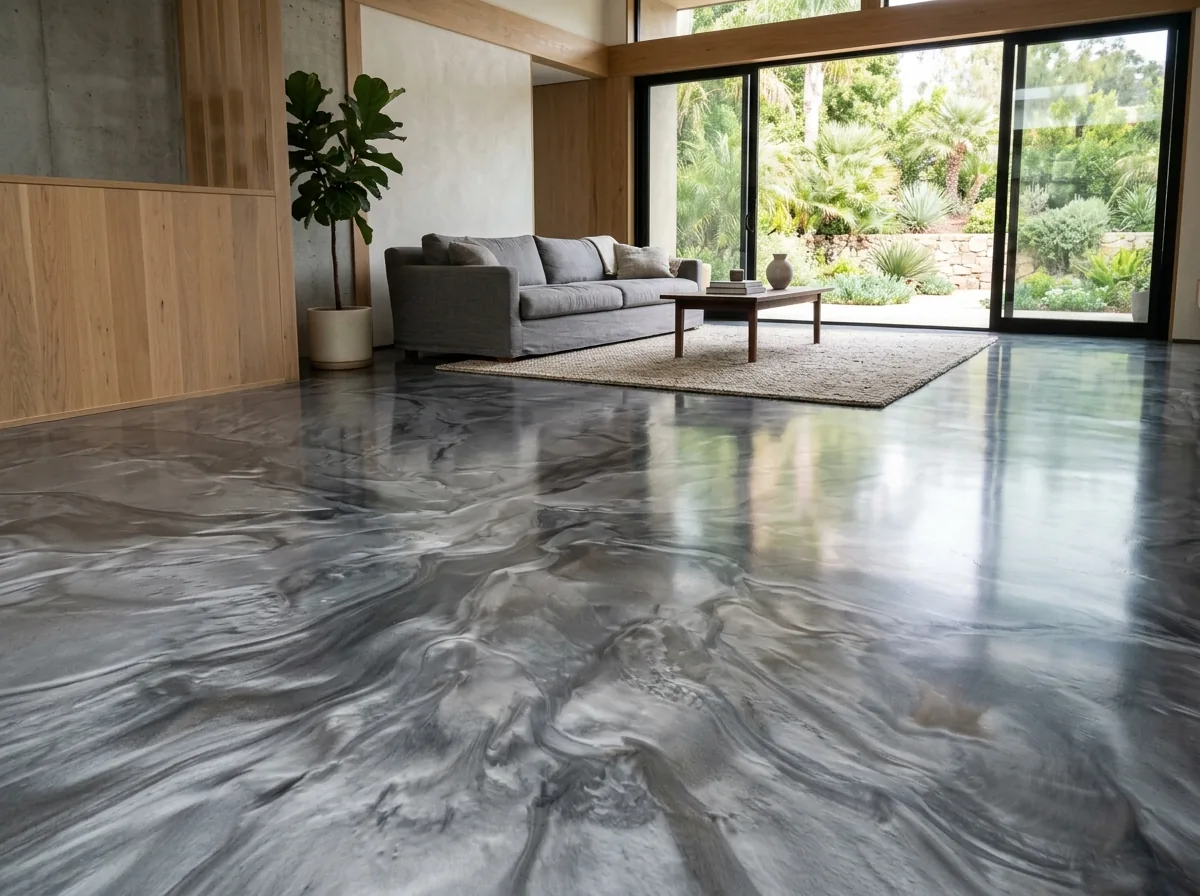
Metallic epoxy mixes mica pigments into a clear resin, and the installer works the wet coat with rollers, brushes and sometimes a blower to make the swirls. No two floors come out the same, which is the appeal. It's a better fit for living spaces, home gyms, studios and showrooms than for a working garage: the high gloss shows scratches and grit, and it needs a UV-stable topcoat anywhere sunlight reaches it.
Ask to see photos of a metallic floor the installer did a year ago, not only on the day it was finished.
Quartz Epoxy Flooring
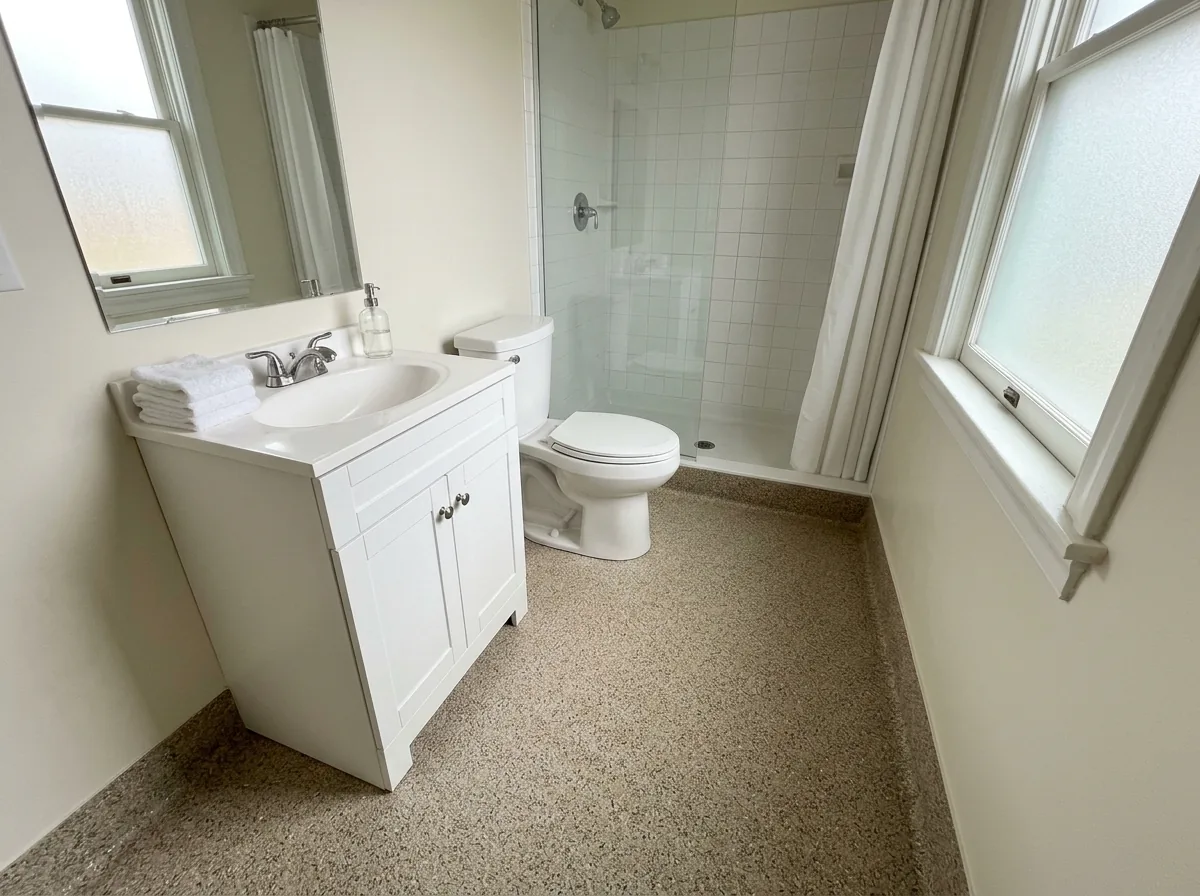
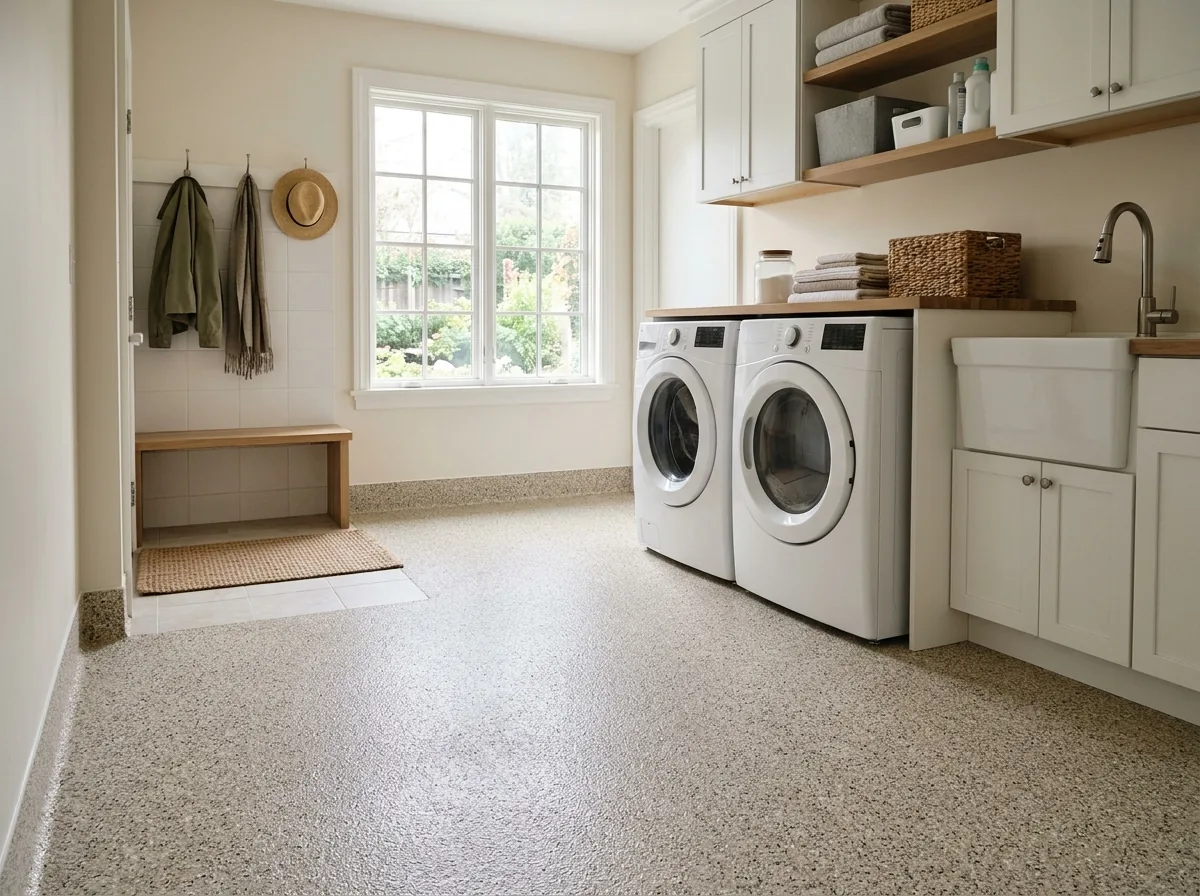
Quartz systems broadcast colored quartz sand into the epoxy, often in two layers, then lock it in with clear coats. The result is harder and grippier than a flake floor, which is why you see it in laundry rooms, mudrooms, locker rooms and commercial bathrooms. A cove base, where the coating curves up the wall a few inches, keeps water and mop slop out of the joint between floor and wall.
Basement Floor Epoxy
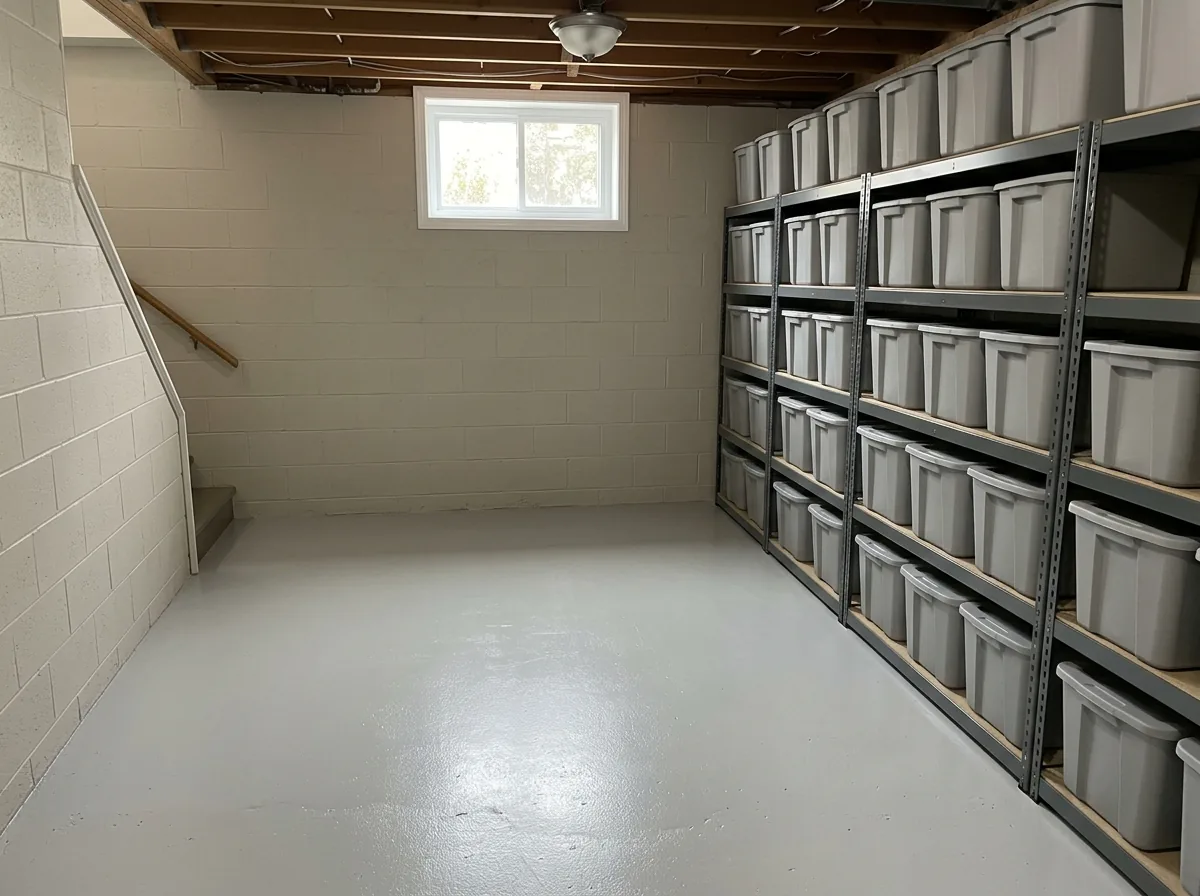
Below-grade rooms, sunken garages and slab-on-grade family rooms share one problem: moisture moving up through the concrete. Vapor pushing on the underside of a coating is a common reason a floor blisters and lets go. Ask the installer how they'll test the slab before quoting: a calcium chloride dome (ASTM F1869) or relative humidity probes drilled into the slab (ASTM F2170). Moisture and hardness testing runs about $50 to $300. If the readings come back high, the quote should include a moisture-vapor barrier primer.
See Epoxy Kitchen Floors in Hayward, which also covers lower-level and other interior slabs.
Epoxy Floors for Kitchens, Laundry Rooms and Living Spaces
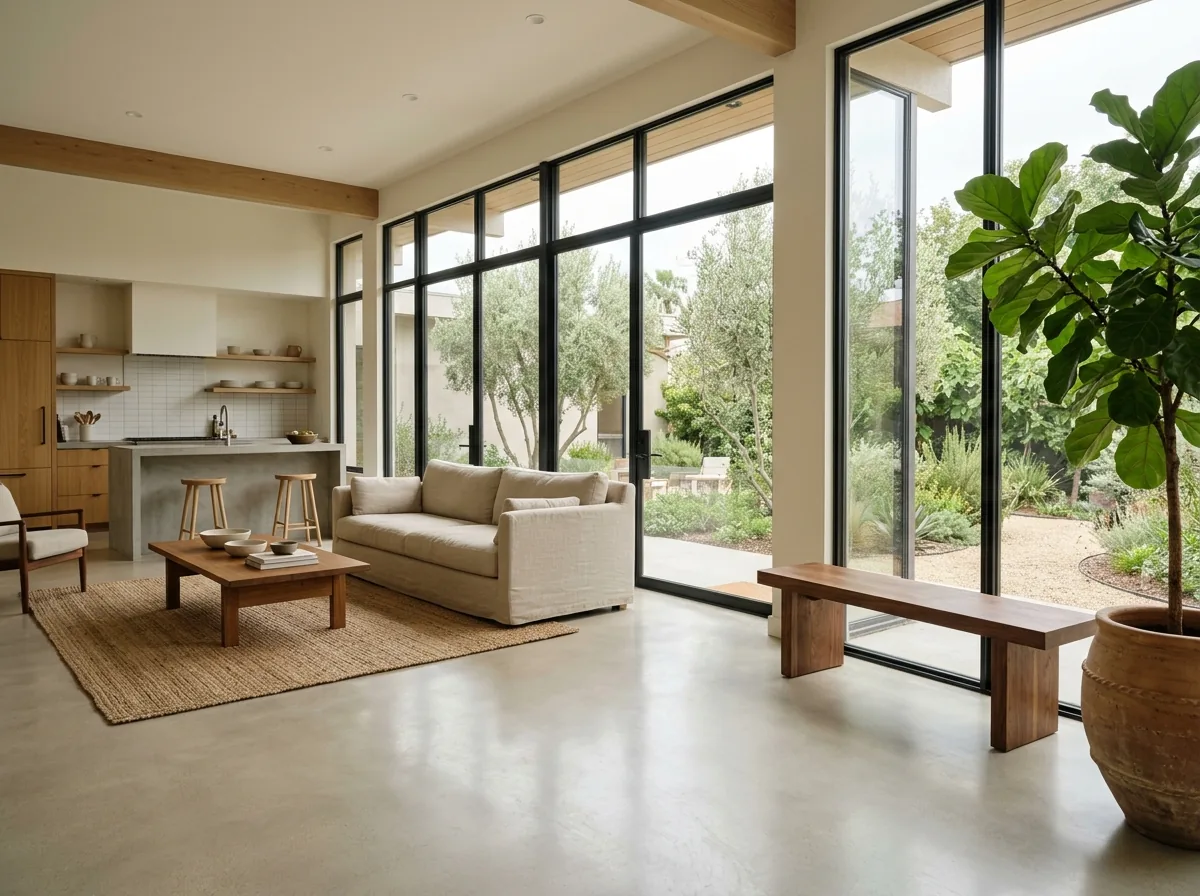
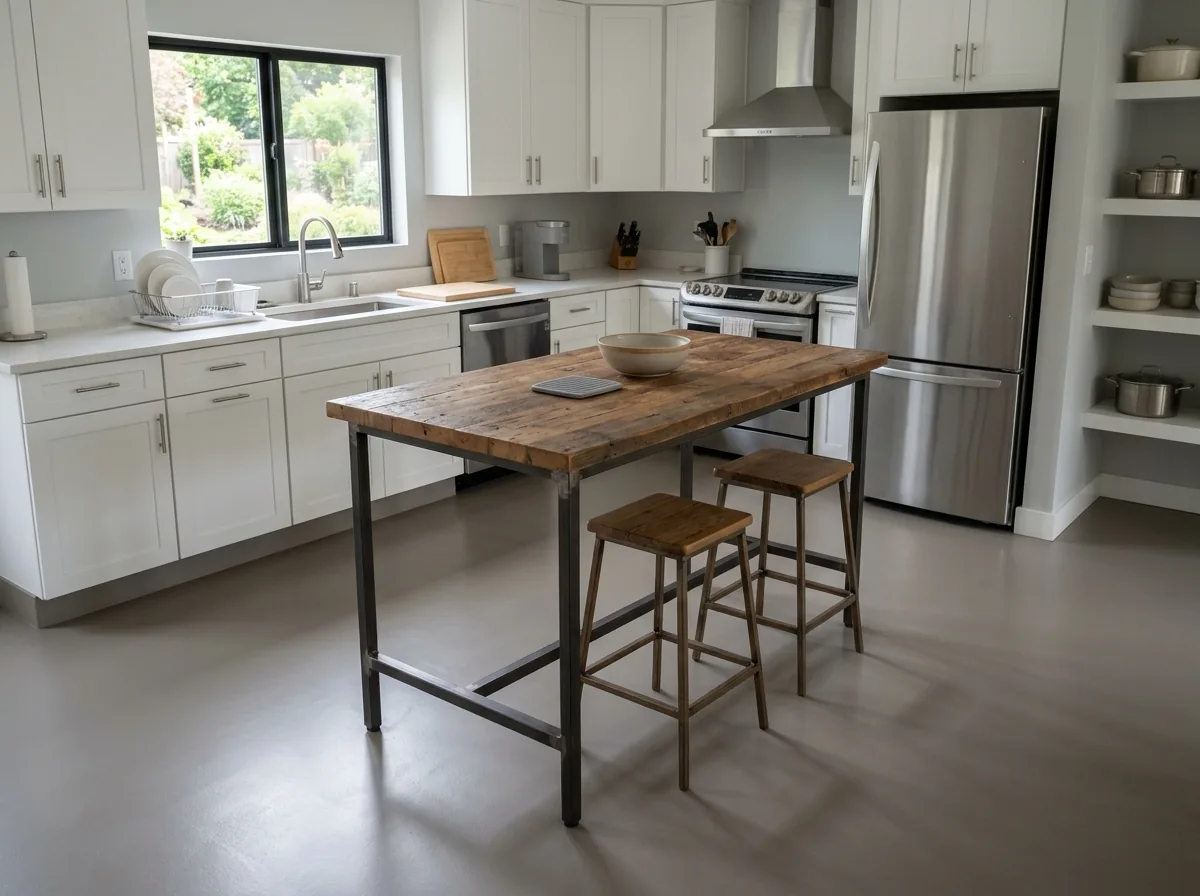
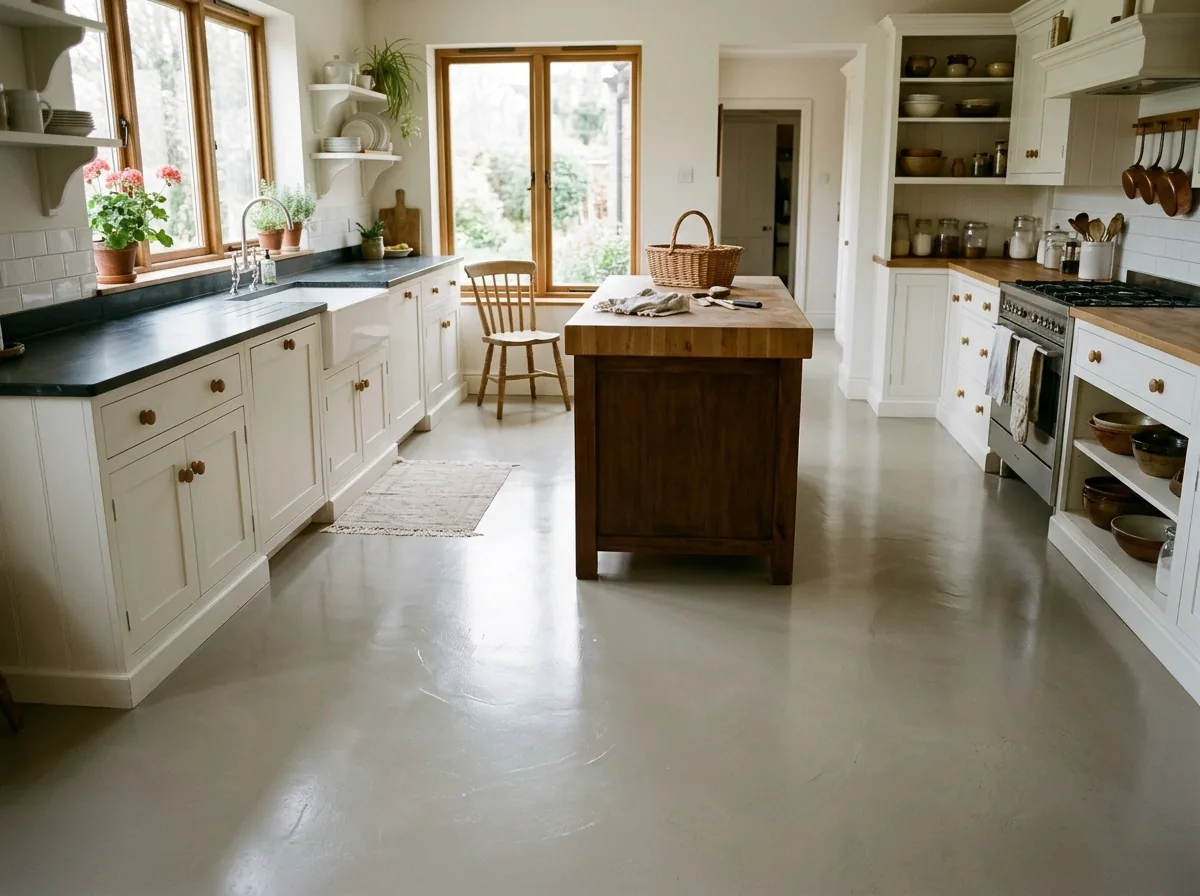
Inside the house, epoxy goes over a concrete slab as a seamless, wipe-clean floor with no grout lines. Solid colors, flake and metallic finishes all work indoors. For living areas, a satin finish is worth considering over full gloss: gloss shows every footprint. Furniture has to come out, and the room is off limits until the coating cures, so plan it like any other flooring job.
See Epoxy Kitchen Floors in Hayward for interior rooms of every kind.
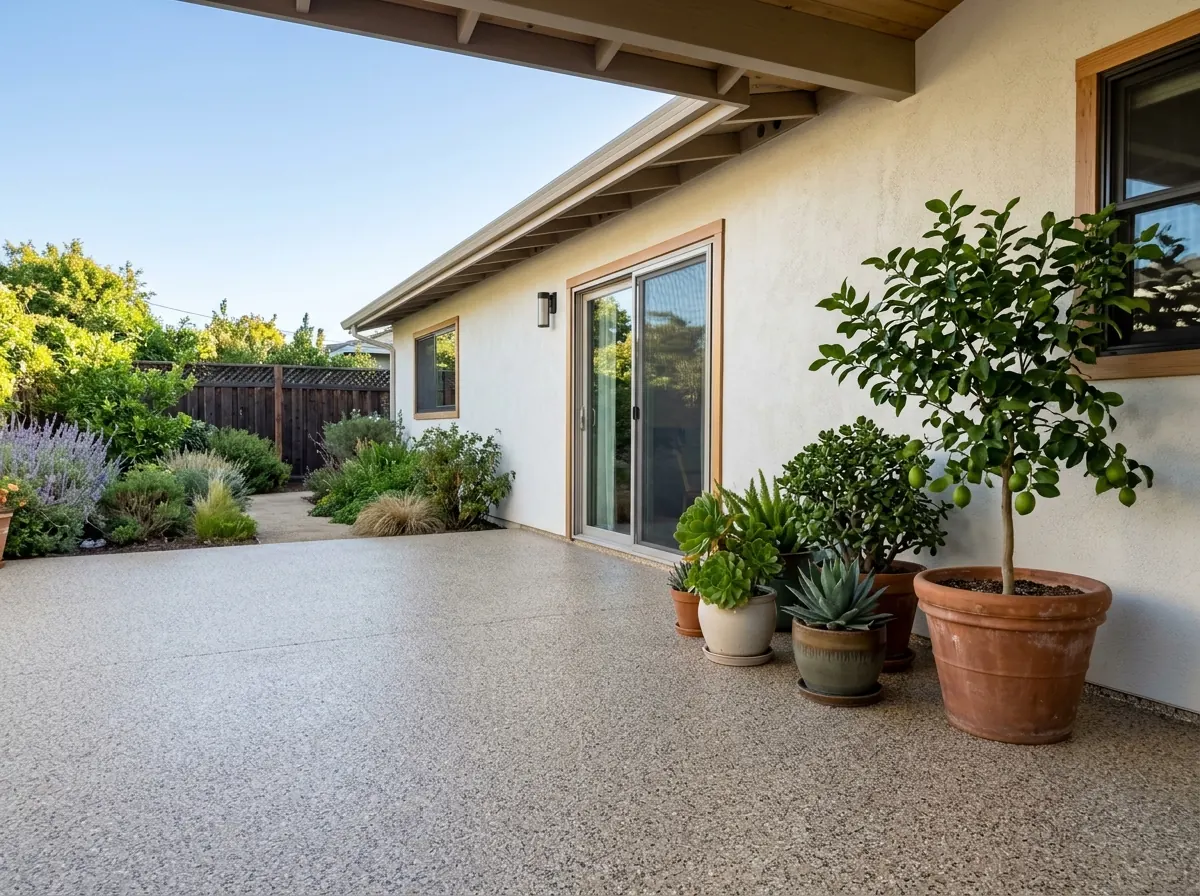
Patio, Pool Deck and Outdoor Concrete Coatings
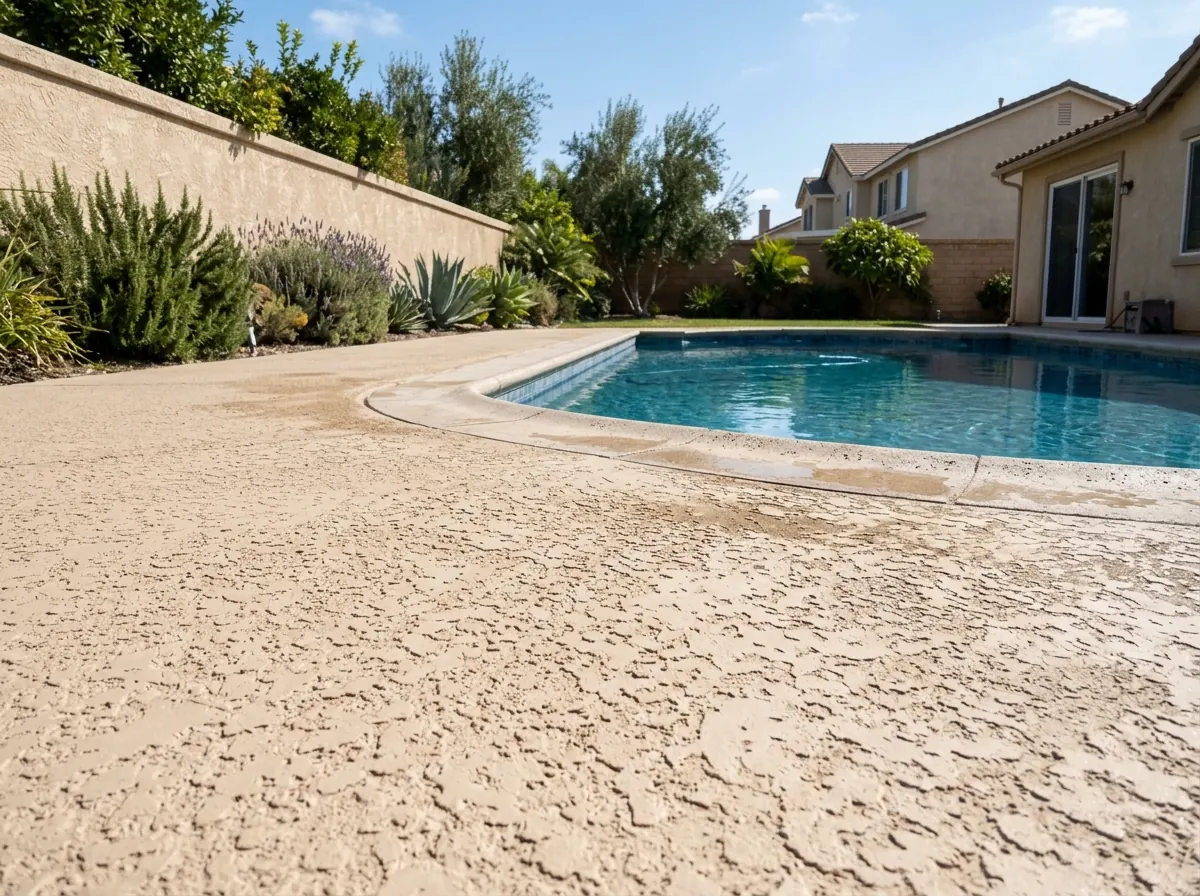
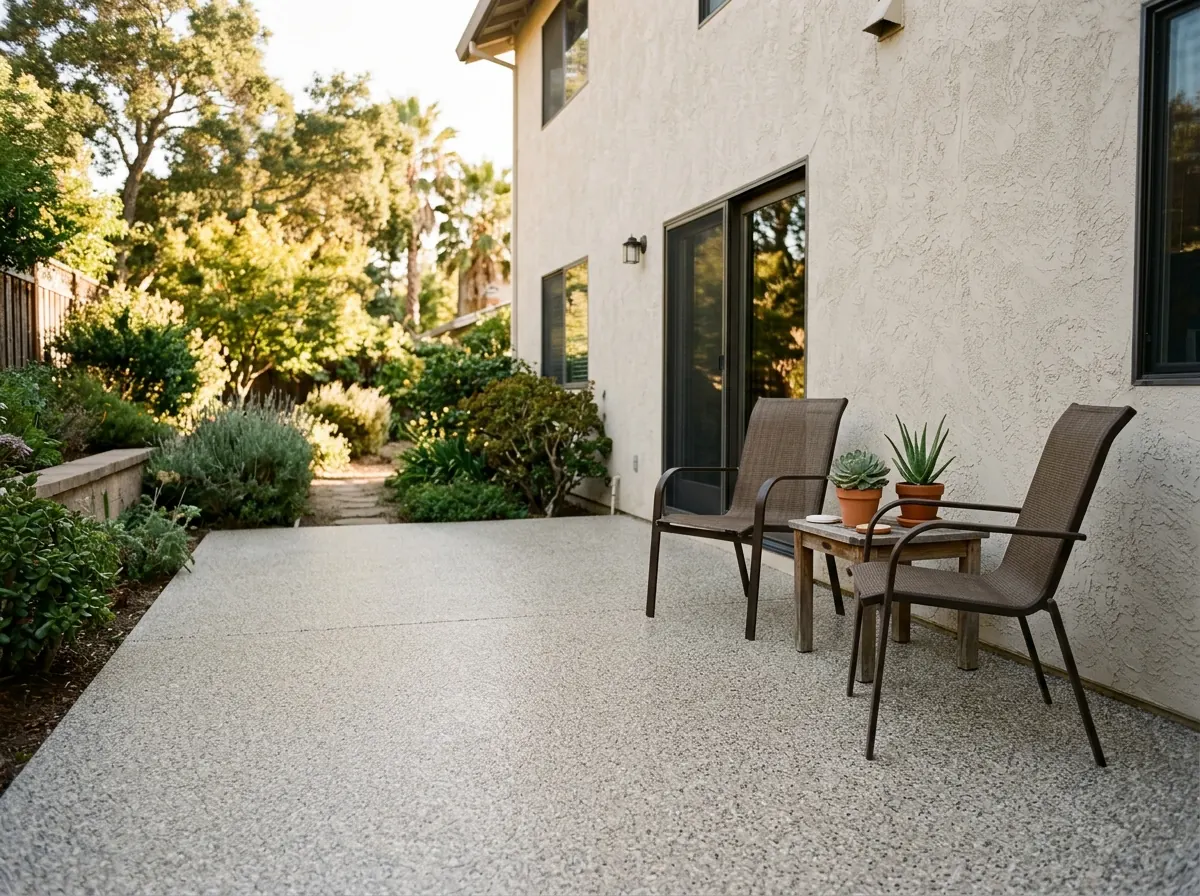
Standard epoxy isn't made for full sun: it discolors over time in UV light. Patios, pool decks, porches and walkways get polyaspartic or polyurea systems instead, usually with a flake or texture broadcast so wet feet don't slip. Outdoor slabs also move more and collect water at low spots, so ask how control joints and drainage edges will be handled before you pick a color.
See Pool Deck Coating in Hayward for the area around a pool, or Outdoor Concrete Coatings in Hayward for patios, porches and driveways.
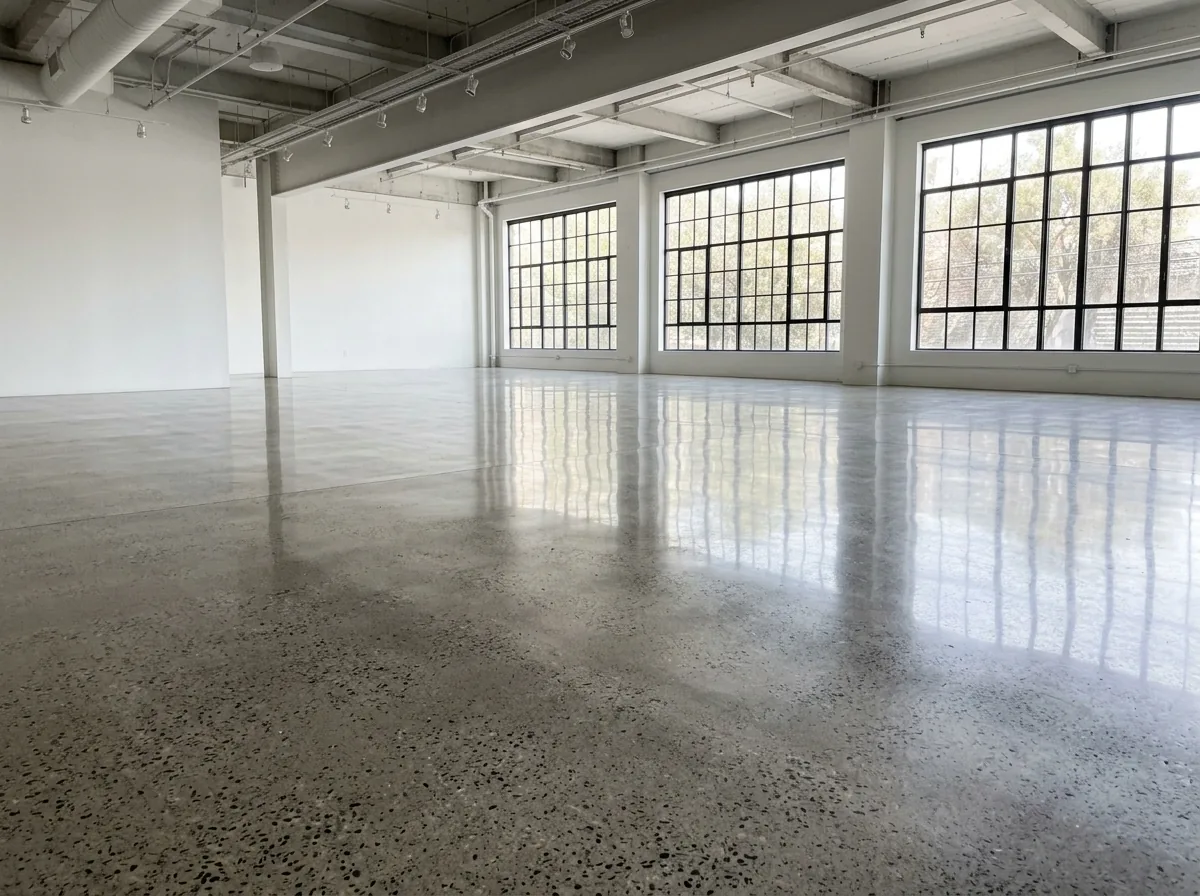
Polished Concrete Floors
Polishing isn't a coating at all. A crew grinds the slab through progressively finer diamond tooling, applies a chemical densifier that hardens the surface, and polishes it to the sheen you choose, from matte to a high gloss. The finish depends on the slab you already have: aggregate exposure, old patches and cracks all show. It's common in shops, showrooms, offices and modern homes where the concrete itself is the look.
See Concrete Polishing in Hayward, or Stained Concrete Floors in Hayward if you want color in the slab without a coating.
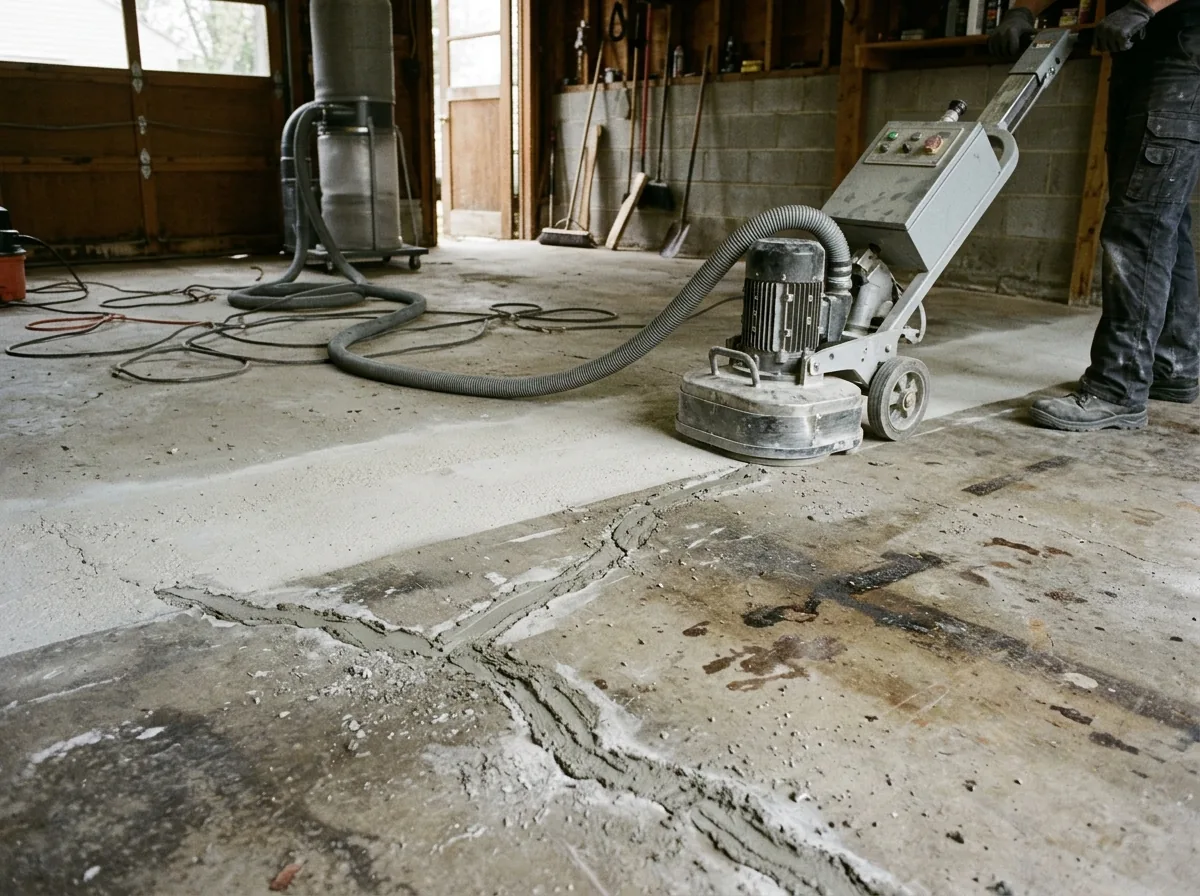
Concrete Grinding, Crack Repair and Resurfacing
Prep decides whether a coating lasts, and it's the step cheap quotes skip. Coating specs call for diamond grinding to a set concrete surface profile (CSP 2 to 4 on the industry's ICRI scale, depending on the product) and warn against acid etching. Grinding also strips sealers and old paint and takes down high spots. A dust shroud and a HEPA vacuum on the grinder keep the dust out of the house. Cracks are chased and filled, and spalled areas patched; patching runs about $25 to $250. Badly worn slabs can be resurfaced first, at roughly $3 to $7 a square foot.
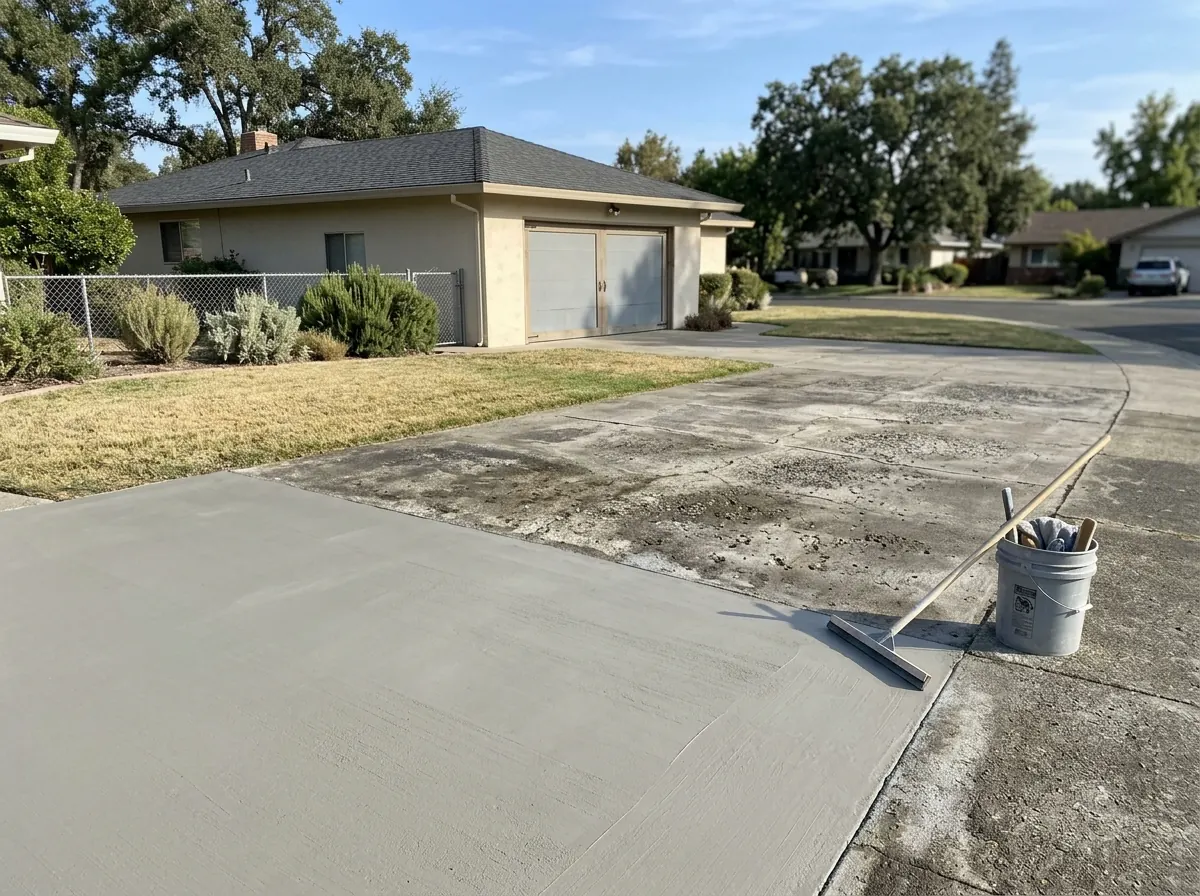
See Concrete Grinding in Hayward for surface prep. Cracks and spalls have their own page, Concrete Crack Repair in Hayward, and worn slabs are covered under Concrete Resurfacing in Hayward.
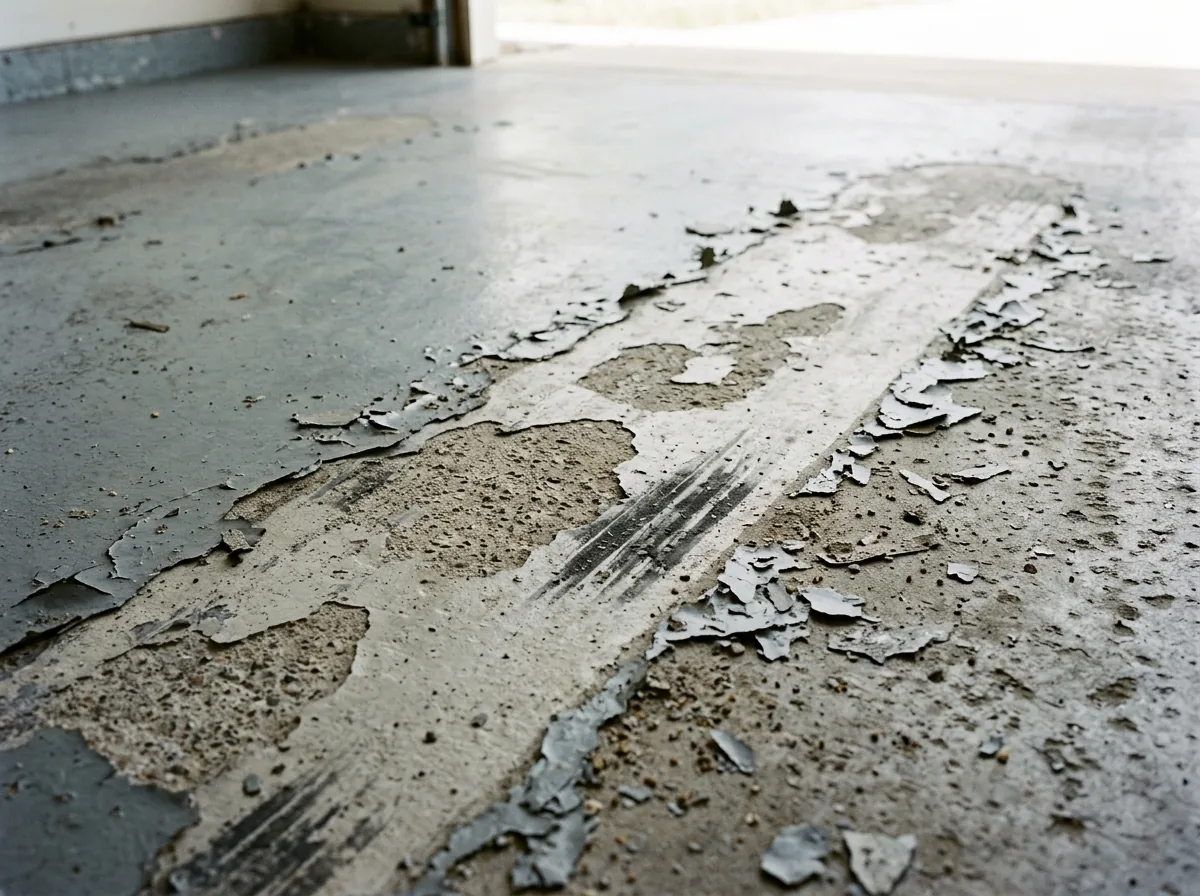
Epoxy Floor Repair and Coating Removal
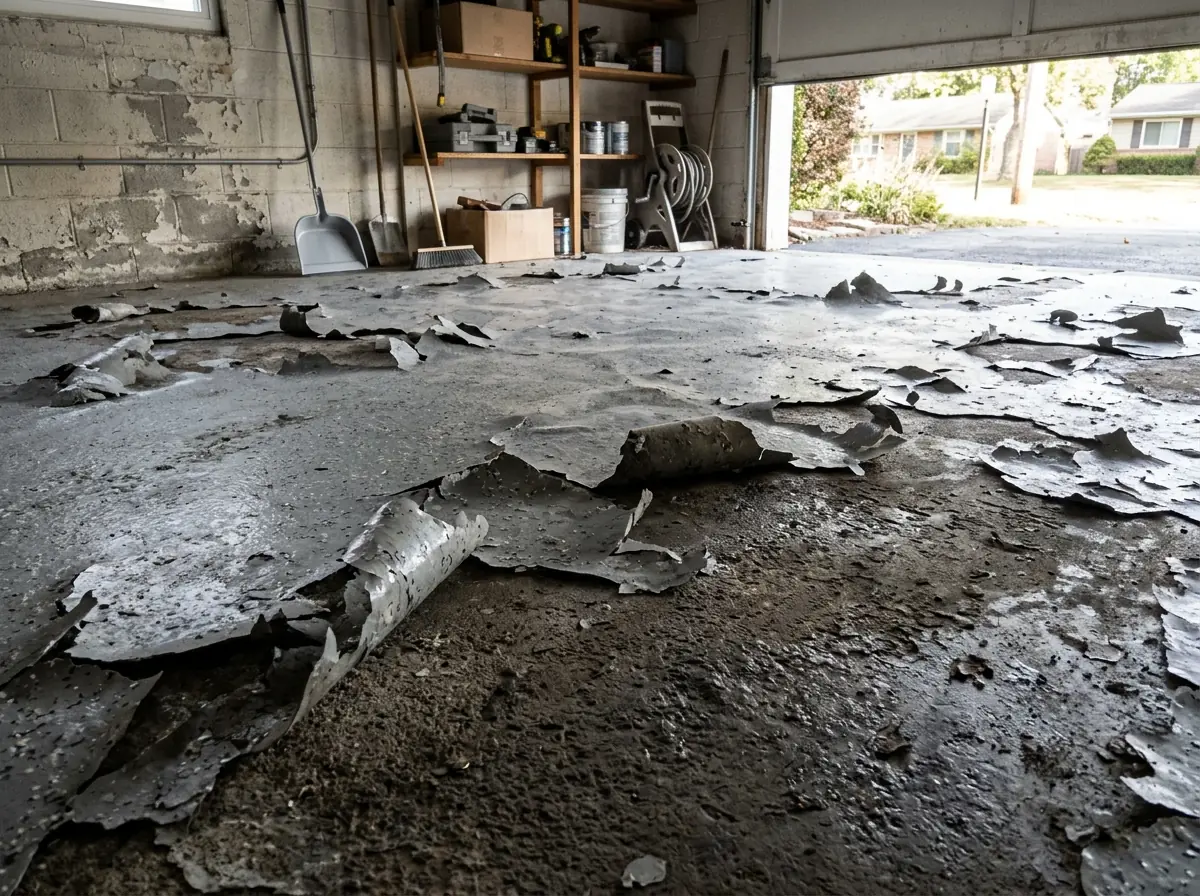
When a garage floor peels, look first at three suspects: a thin water-based kit coating (these last three to five years, against 10 to 20 for solid epoxy), concrete that was etched instead of ground, or moisture pushing up from below. Patching over a failed coating rarely holds, because the old layer keeps letting go around the patch. The fix is usually grinding it all off and starting again on clean concrete. A small chip or gouge in a sound professional floor, on the other hand, can often be cut out and patched.
Commercial Epoxy Flooring in Hayward
Hayward's 3,500-acre Industrial Technology & Innovation Corridor holds warehouses, biotech labs and food manufacturers, and the city actively recruits more of both. Owners there tend to care most about how long the floor is out of service and whether it passes inspection, so the system has to match the room's traffic and chemicals.
Warehouse and Industrial Floors
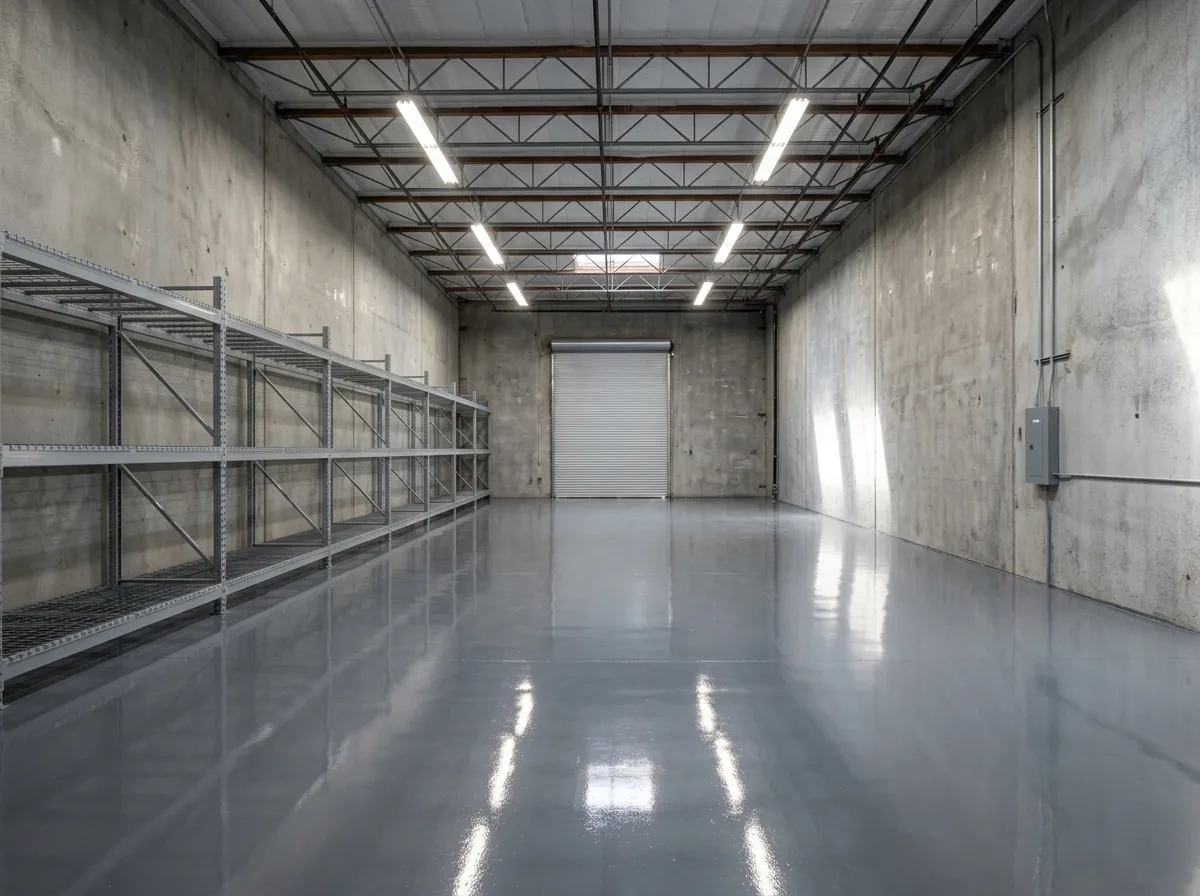
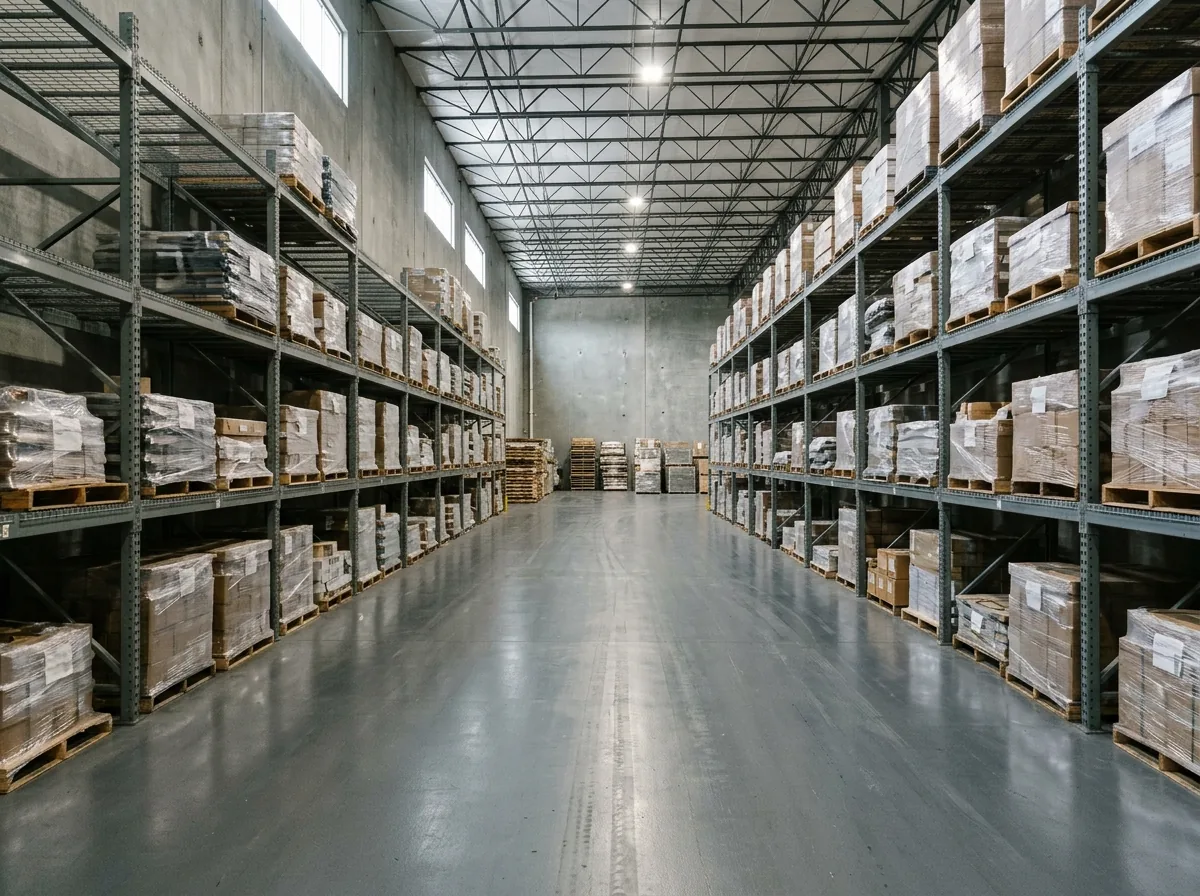
Forklift traffic, pallet jacks and dropped loads need thicker, harder systems than a garage: high-build or trowelled epoxy, sometimes novolac where chemicals are stored, and painted safety lanes and aisle markings. National guides put 100% solids commercial epoxy at $12 a square foot or more. The scope should list the system, the total thickness and how the crew handles expansion joints that forklifts cross.
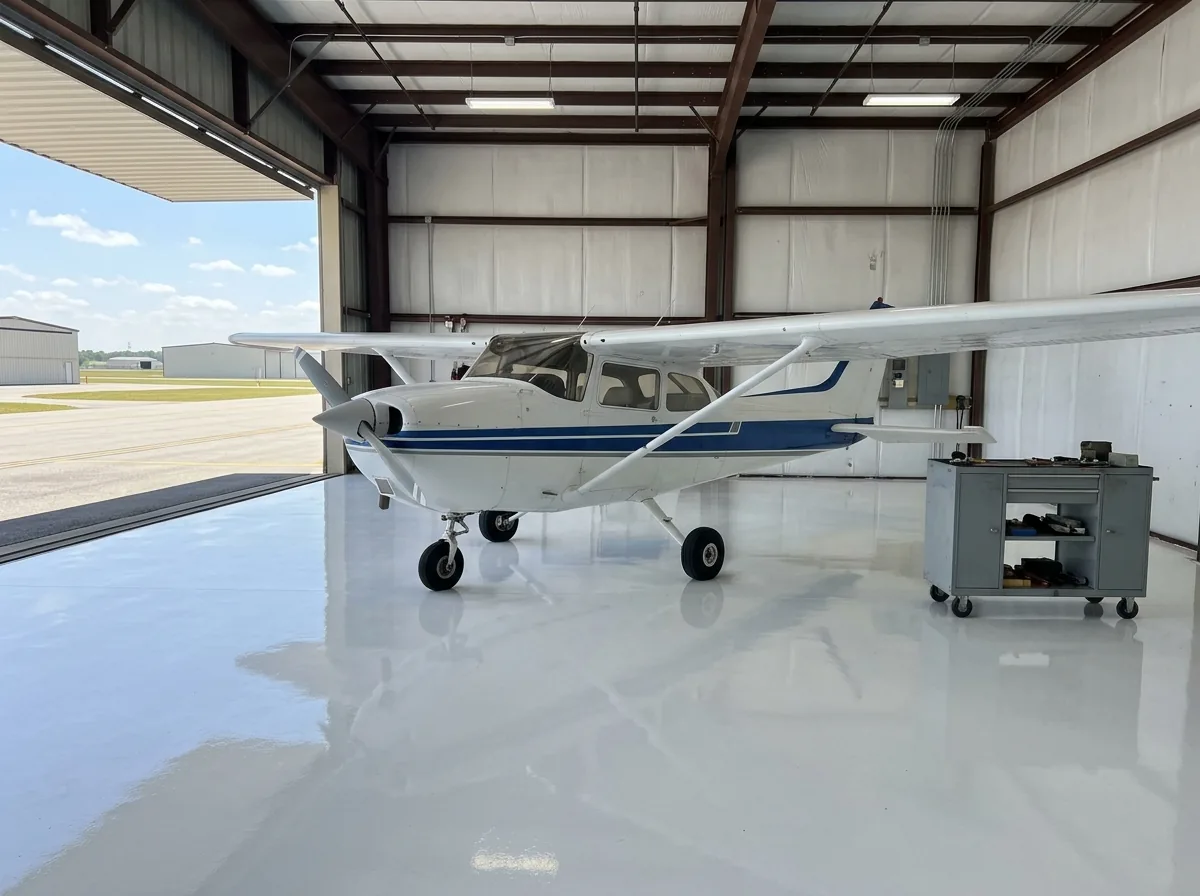
See Industrial Epoxy Flooring in Hayward, or Aircraft Hangar Floor Coating in Hayward for hangars at Hayward Executive Airport.
Commercial Kitchens and Food Plants
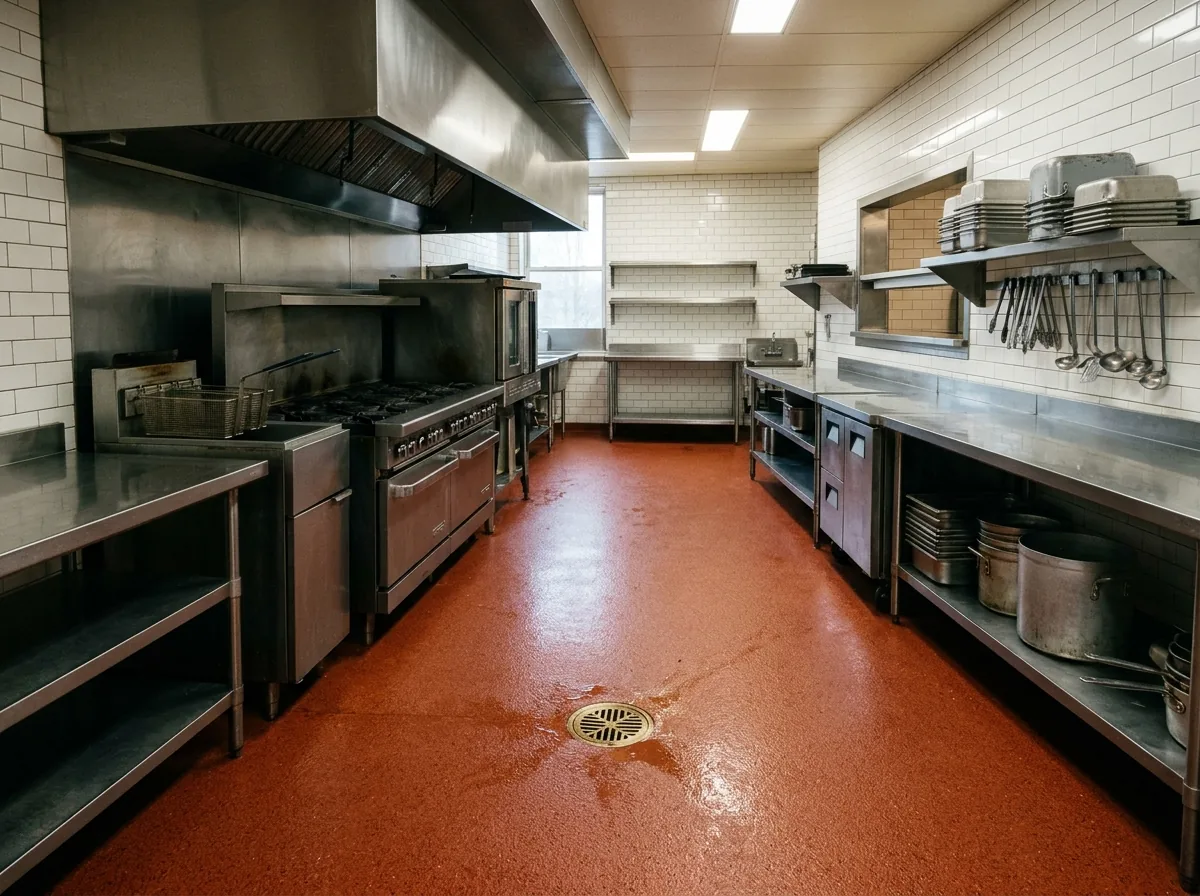
Kitchens, breweries and food production rooms face hot washdowns, fats, sugars and acids. Urethane cement (urethane concrete) is made for that thermal shock, which is why it shows up in commercial kitchens, food plants and freezers. Alameda County's health inspectors have their own rules for Hayward restaurant floors, down to the coating thickness and the cove at the wall, and epoxy paint doesn't pass.
Auto Shops, Showrooms and Garages
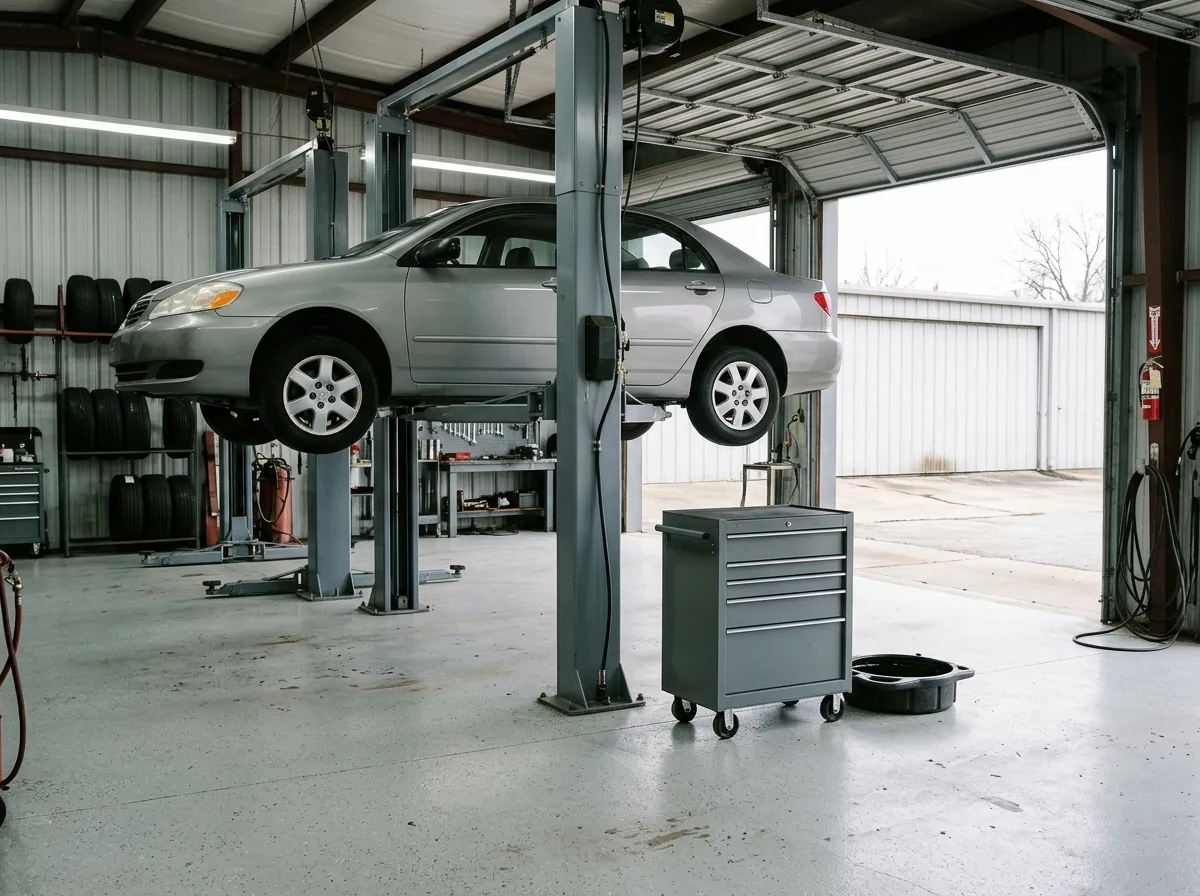
Repair bays need resistance to oil, brake fluid, coolant and hot tires, plus a texture that stays grippy when the floor is wet. Showrooms tend to want a high-gloss flake, metallic or polished finish that looks good under lights and cleans with a dust mop.
Labs, Clean Rooms and ESD Floors
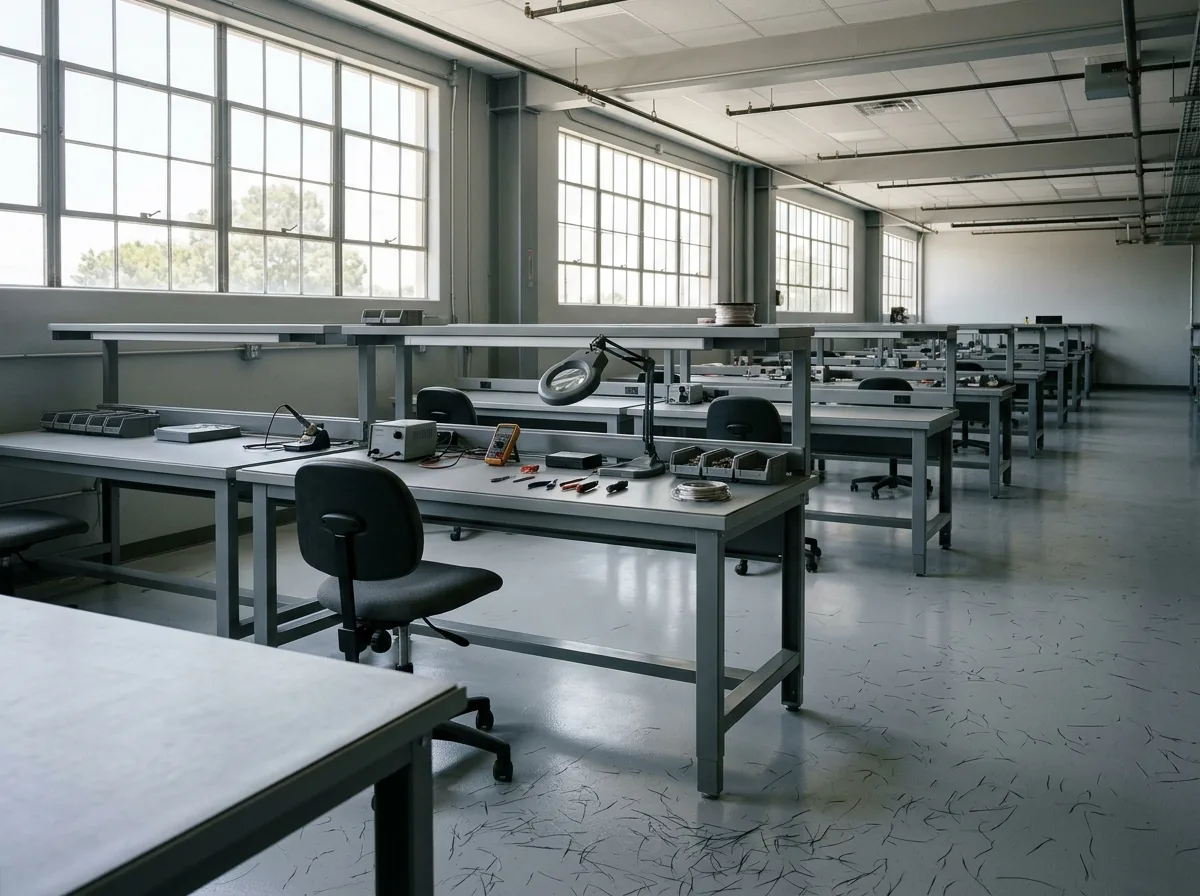
Electronics assembly and some labs need static-dissipative or conductive (ESD) flooring, built with conductive resins and a ground connection. The floor is tested after install against the resistance and walking-voltage limits of the ESD control program the building follows. Clean rooms and labs also value seamless floors with cove bases that leave nowhere for dust or spills to collect.
Retail, Offices and Fitness Floors
Stores, offices, salons and gyms want a floor that looks finished and survives foot traffic, rolling carts and dropped weights. Flake, quartz, metallic and polished concrete all show up here, chosen as much for looks and cleaning as for strength.
Floor Coating Details and Add-Ons
Anti-Slip Textures
Aluminum oxide or polypropylene grit broadcast into the wet topcoat gives a wet floor more grip; plain gloss epoxy can be slippery when wet. More texture means more grip but harder cleaning, so match it to the room.
Cove Base and Stem Walls
Running the coating a few inches up the wall, or over the short concrete stem wall at the edge of a garage, finishes the edge and keeps water out of the joint.
Moisture Vapor Barrier Primers
Where a slab tests high for moisture, a vapor-mitigation epoxy primer goes on first so the coating above isn't pushed off.
Safety Striping and Floor Markings
Aisle lines, walkways, parking stalls and hazard zones are painted or coated in after the main system, in colors that match the site's safety plan.
Joint Filling
Control joints can be left open, filled flush with a semi-rigid filler, or coated over. Filled joints look cleaner and keep dirt out; open joints let the slab move.
UV-Stable Topcoats
Epoxy discolors over time in sunlight; polyaspartic topcoats are sold as non-yellowing. Any floor that sees sun through an open door or window should have one.
Get a free epoxy flooring estimate in Hayward
- No fee to you for the referral
- Your request goes to one local installer, not a list
- Ask for a written scope: system, coats and cure time
- Free estimate after the slab is looked at
How an Epoxy Floor Job Runs
- 1
Tell Us About the Floor
Call or use the form: the room, rough size, what's on the floor now (bare concrete, paint, an old coating) and the finish you have in mind. Photos help.
- 2
Site Visit and Slab Testing
The installer measures, looks at cracks and old coatings, and checks the slab for moisture. A calcium chloride test or RH probes take time, so the written quote may follow a day or two later.
- 3
Written Quote
Ask for the system by name, the number of coats, the prep method and the cure time before parking. The contract follows California's home improvement rules: a deposit of no more than $1,000 or 10%, whichever is less, and no payments ahead of the work.
- 4
Prep Day
Diamond grinding with dust extraction, crack and spall repair, and taping off the walls. Empty the garage the day before.
- 5
Coats and Cure
Base coat, flakes or quartz if you chose them, and the topcoat. Epoxy wants a slab between about 60°F and 85°F and humidity under 85%. Polyaspartic ranges vary by product.
- 6
Walk-Through
Walk the floor with the installer before the final payment, and get the care instructions and the date you can park in writing.
Epoxy Floor Cost in Hayward, CA
No public cost guide prices Hayward on its own. These are the closest published ranges, installed, with labor making up most of the price:
| System | Per sq ft | Two-car garage | Source area |
|---|---|---|---|
| Epoxy (Bay Area) | $7-$10 | $3,300-$5,200 | Bay Area |
| Epoxy | $4-$10 | $1,600-$5,800 | National |
| Polyaspartic | $5-$12 | $2,000-$6,900 | National |
| Polyurea | $5-$10 | $2,000-$5,800 | National |
| Metallic epoxy | $5-$12 | not published | National |
| 100% solids commercial epoxy | $12 or more | n/a | National |
| DIY kit (materials only) | $2-$5 | kits $200-$700 | National |
What moves a Hayward price most: the size and shape of the room, how much crack and spall repair the slab needs, whether an old coating has to be ground off, moisture readings that call for a vapor-barrier primer, and the topcoat. Flakes and custom colors add about $0.50 to $2.00 a square foot.
Things to Know Before Coating a Garage Floor in Hayward
New concrete has to cure first
Sources disagree on how long: product specs test at 28 days, while some installers wait 60 days or longer. Ask the installer what their product's sheet requires.Winter nights slow the cure
Hayward's January lows average about 42°F, below the 60°F that epoxy wants. Expect longer cure times, heaters, or a product rated for cold slabs on winter jobs.Bay Area air rules limit solvent content
The Bay Area Air Quality Management District caps floor coatings, garage floors included, at 100 grams of VOC per liter. Ask whether the product on your quote meets it.Check the license
California requires a CSLB license for any job of $1,000 or more, and a typical garage coating costs more than that. Look the number up on the CSLB site before you sign.A building permit usually isn't needed
Hayward lists flooring and paint finishes as permit-exempt work.Clear the space early
The garage has to be empty for prep day and stays off limits until the coating cures, so plan where the car and storage go for the week.
Epoxy Flooring Service Area in Hayward
Requests come from across Hayward: the ZIP codes 94541, 94542, 94544, 94545 and 94546, from the Hayward hills down to the Industrial Technology & Innovation Corridor. Homes, garages, shops and commercial buildings all qualify.