
Cost
National guides price 100% solids commercial epoxy at $12 or more a square foot installed; one Houston guide puts industrial systems at $5 to $12. No Bay Area figure is published.Downtime
Most published systems take foot traffic at about 24 hours and equipment at about 72.Build
From 30 to 50 mils for a roll-coat floor up to 1/4 inch (about 250 mils) for a troweled mortar.Choices
Standard epoxy or novolac for chemicals, a smooth or sand-broadcast finish, and an epoxy or urethane topcoat.
Hayward Epoxy Floors routes your request to an independent installer who quotes resinous floors for shops, offices, stores, gyms and production rooms. Commercial systems are 100% solids epoxy built in layers: a primer, one or more body coats or a troweled mortar, often a sand or quartz broadcast, and a topcoat chosen for wear, chemicals or sunlight. The slab is mechanically profiled first, by diamond grinding or shot blasting, and tested for moisture before any resin goes down.
Commercial Epoxy Flooring Systems by Thickness and Use
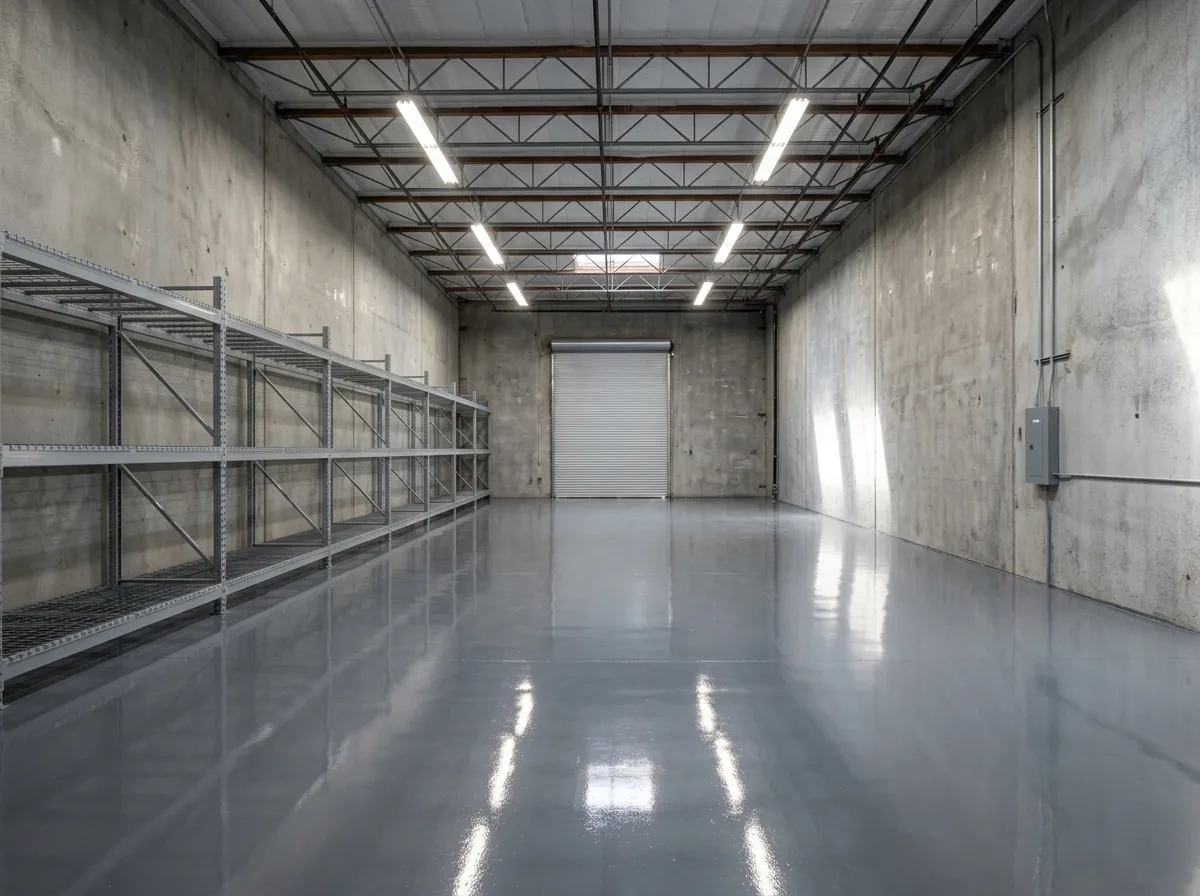
Roll-Coat (Thin-Film) Commercial Epoxy
The entry-level commercial floor is two or three rolled coats of pigmented epoxy. It's the right fit for back rooms, storage, light assembly and showrooms where the floor sees carts and foot traffic but no heavy impact. One manufacturer's medium-duty spec shows the build:
- Base coat 10 to 12 mils, topcoat 16 to 20 mils
- Total system 30 to 50 mils, smooth high-gloss
- Moisture primer (18 mils) only when the slab tests above the base coat's tolerance
Where traffic is heavier, the same maker's high-traffic version broadcasts 20/40 mesh sand into the base and builds to 60 to 70 mils, about 1/16 inch.
Self-Leveling Epoxy at About 1/8 Inch
Self-leveling (the manufacturers' word is self-smoothing) epoxy is poured and spread, then flows out to a smooth, even surface. One manufacturer's sheet puts its self-smoothing floor at 1.5 to 3 millimeters, about 1/16 to 1/8 inch, for warehouses, workshops, loading ramps and assembly halls, and adds a sand broadcast at 3 to 4 millimeters for wetter or heavier areas. A pour that thin can't hide much, so ask whether high spots will be ground and low spots filled before it goes down.
Trowel-Applied Epoxy Mortar
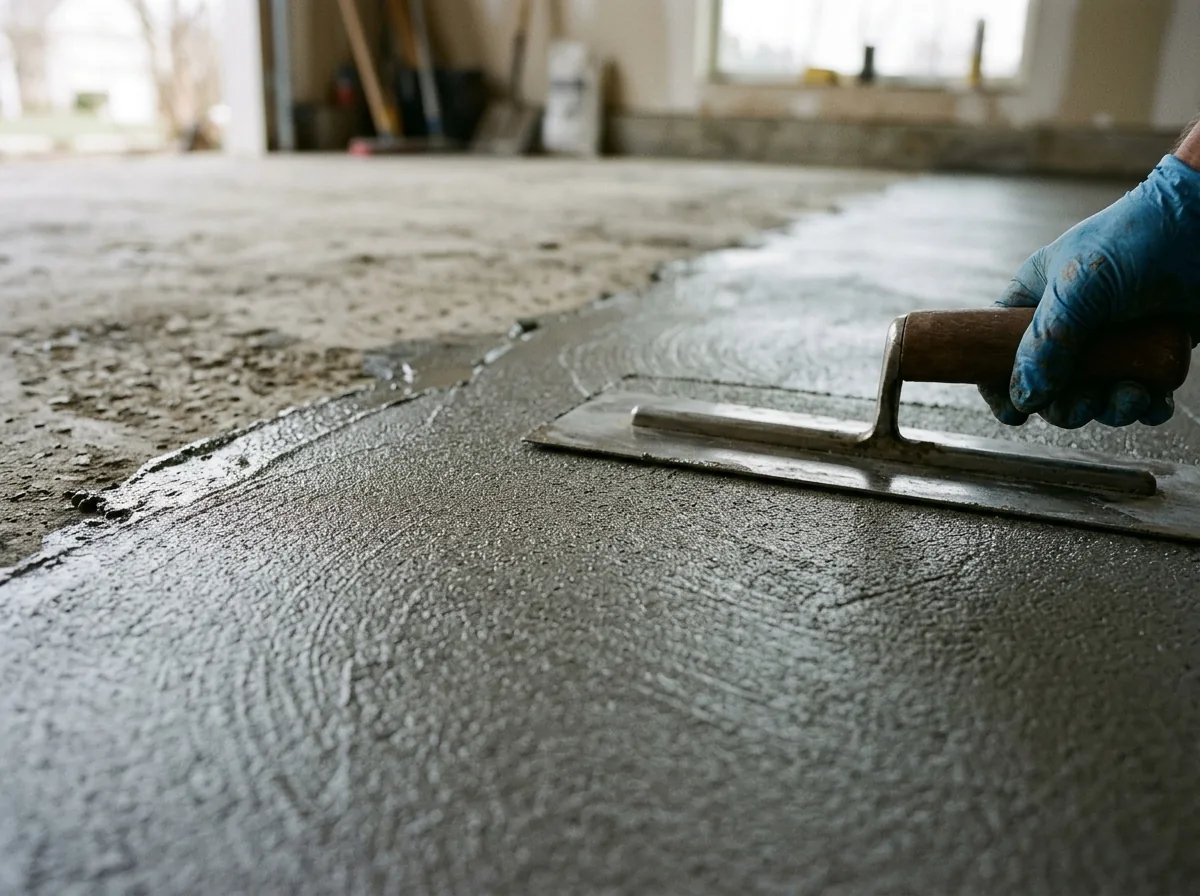
Epoxy mortar is resin mixed with graded aggregate and troweled on like a thin concrete topping. It's the system for floors that take impact or need rebuilding: shops where tools and parts drop, or worn slabs with shallow surface damage. One four-component troweled mortar goes on at 1/8 to 1/4 inch, covers about 200 square feet per unit at the full 1/4 inch, and is rated for normal operations after 24 hours. A sealer coat goes over it to close the texture for cleaning.
Novolac Epoxy for Chemical Exposure
Standard epoxy handles oil, mild cleaners and the odd spill. Concentrated acids and some solvents call for novolac, a type of epoxy made for chemical resistance. One manufacturer describes its 100% novolac floors as resisting 98% sulfuric acid and 37% hydrochloric acid, and its resistance chart shows the gap: glacial acetic acid is rated "not resistant" on the maker's other epoxy floors but good for splash and spill on the novolac ones. The maker lists chemical process and drainage areas, wastewater plants, loading docks, and food and beverage plants as uses. Bring the list of chemicals to the site visit so the installer can check them against the product chart.

Epoxy with a Urethane Wear Topcoat for Retail, Office and Fitness Floors
For stores, offices, salons and gyms, a good build is an epoxy body coat under an aliphatic polyurethane topcoat. The urethane is the layer the shoppers actually walk on. One such topcoat goes on at 3 to 3.5 mils over the epoxy, is listed as non-yellowing for UV exposure, and is designed for light to heavy duty traffic. In a gym, put rubber flooring where weights drop and keep the coated floor for the rest of the room.
Why Hayward homeowners call Hayward Epoxy Floors
- No fee to you for the referral
- Your request goes to one local installer, not a list
- Ask for a written scope: system, coats and cure time
- Free estimate after the slab is looked at
Commercial Epoxy Flooring Cost per Square Foot
Commercial pricing is thinner on the ground than garage pricing. The published national figure is $12 or more a square foot for the 100% solids epoxy that commercial and industrial floors require, and the same guide says commercial-grade materials add 20% to 30% to a job. A Houston cost guide puts industrial systems for chemicals, forklifts and temperature swings at $5 to $12. Labor is billed at $50 to $150 an hour nationally. We found no Bay Area or Hayward commercial figure. For a mixed residential and commercial overview, see the cost table on the home page.
What moves a commercial quote:
System thickness
A 30-mil roll coat and a 1/4-inch mortar are different jobsPrep
Grinding or shot blasting, crack and joint repair, removing old coatingsMoisture
A vapor primer when the slab fails its test (moisture testing and grinding)Resin
Novolac and urethane topcoats cost more than standard epoxyScheduling
Nights, weekends or phased areas to keep the business open
Commercial Epoxy Lifespan and What Wears It Out
Residential solid epoxy is rated for 10 to 20 years, but one cost guide warns that commercial epoxy under heavy foot traffic may last only two to three years. Much of that gap is the finish coat: one system spec expects finish coats to need reapplying over time as traffic, UV and chemicals wear them. A sound floor with a worn topcoat can be sanded and recoated rather than stripped. Plan for a recoat cycle in the budget, and ask the installer which topcoat lasts longest in your traffic.
Hayward's commercial base adds its own demands. The city actively recruits biotech and food processing businesses. Labs may need chemical resistance or static control (ESD and lab floors). Food rooms answer to Alameda County's environmental health inspectors, who do not accept epoxy paint (commercial kitchen flooring).