
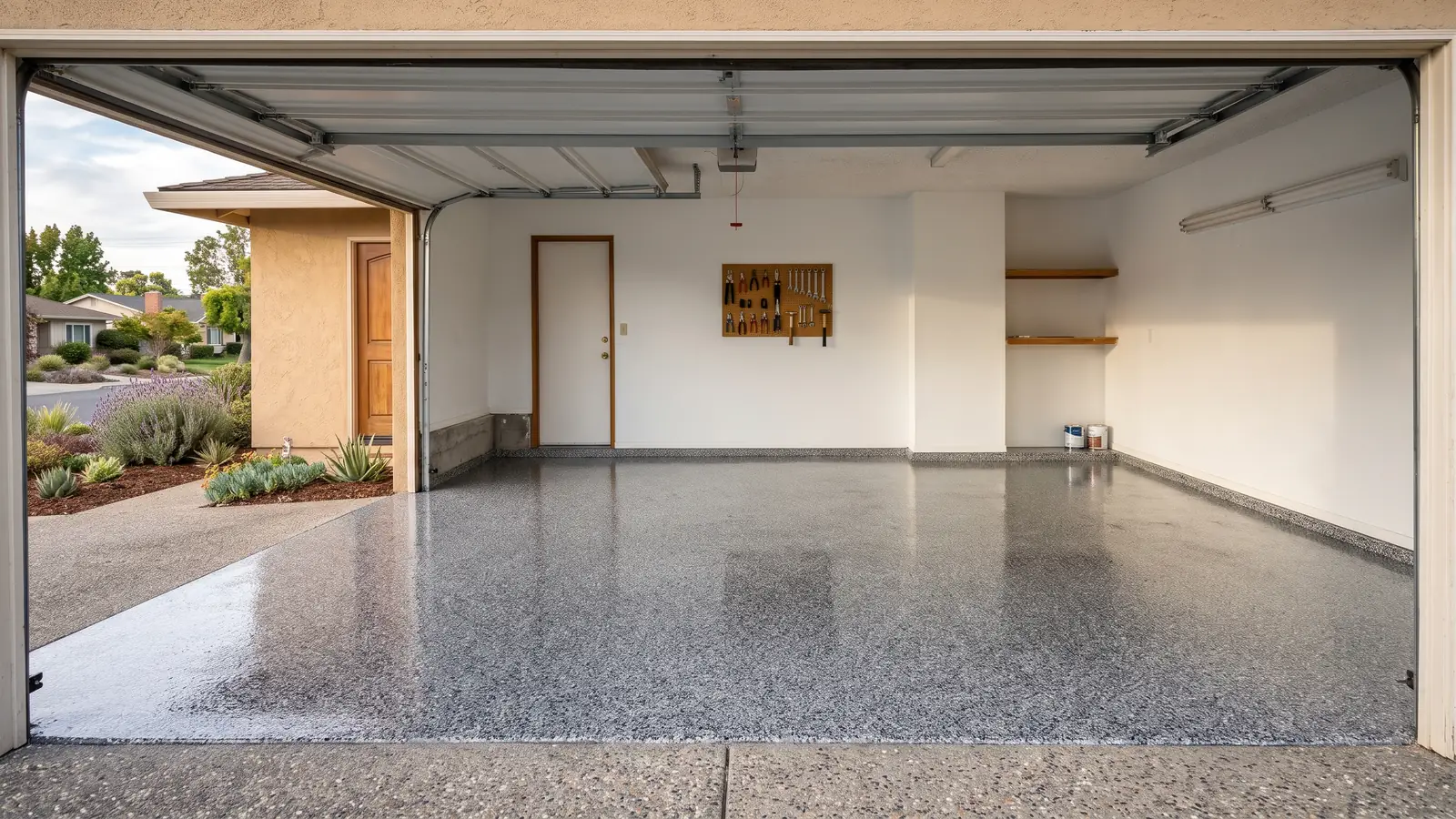
Cost
national guides put decorative flakes at about $0.50 to $2.00 a square foot on top of the base coating. The base system's range is in the cost table on our homepage.Time on site
most garage coating jobs take one to three days. A flake floor sealed with polyaspartic often fits in one.Chip size
one major flake maker sells six standard sizes, from 1/32 inch up to 1 inch. The 1/4-inch chip is the most popular.Coverage
full broadcast uses roughly one 40-lb box of chips per 200 to 250 square feet. A partial broadcast stretches the same box over 400 to 2,000.What goes down
primer or base coat, the chips, and at least one clear topcoat.
Hayward Epoxy Floors lines you up with an independent local installer for vinyl chip floors in garages, laundry rooms, workshops and patios. The system is a diamond-ground slab, a colored epoxy or polyaspartic base, chips broadcast into the wet base, and a clear coat over the top. Three choices set the look and most of the price: chip size, how heavily the chips go down, and which resin seals them. Ask for a quote that names each of those, layer by layer.
Flake Epoxy Floor Types and Chip Choices
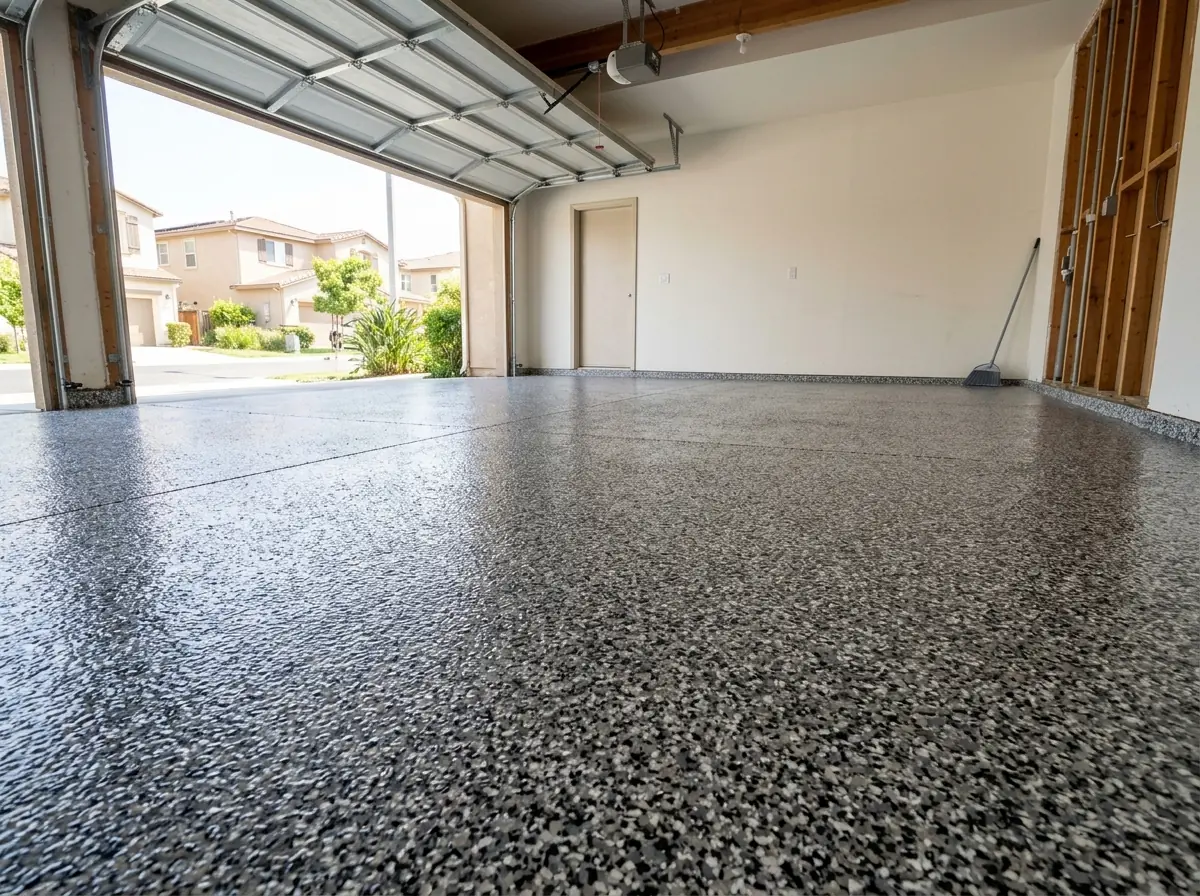
Full-Broadcast Chip Floors
In a full broadcast, the installer throws chips into the wet base until it can't take any more. The trade calls this point "refusal": no shiny or wet spots left anywhere. It's the most common way to do a flake floor. Supplier rates for a typical job:
- Base coat: about 100 to 150 square feet per gallon
- Chips: about 5 to 7 square feet per pound, or 200 to 250 square feet per 40-lb box
Partial (Random) Broadcast
A partial broadcast scatters chips over a colored base, so the base stays the main color and the chips read as speckles. One box covers 400 to 2,000 square feet depending on how dense you want it, which cuts the chip bill. It suits a laundry room or hobby space where the base color is the point. For a working garage, we'd still lean toward full coverage.
Quarter-Inch Chip Blends
The 1/4-inch chip is the default for a reason. At that size each color in the blend shows on its own, so a blend with a pop of blue or red actually reads as blue or red from standing height. Half-inch and 1-inch chips push that further, into a bold, graphic pattern.
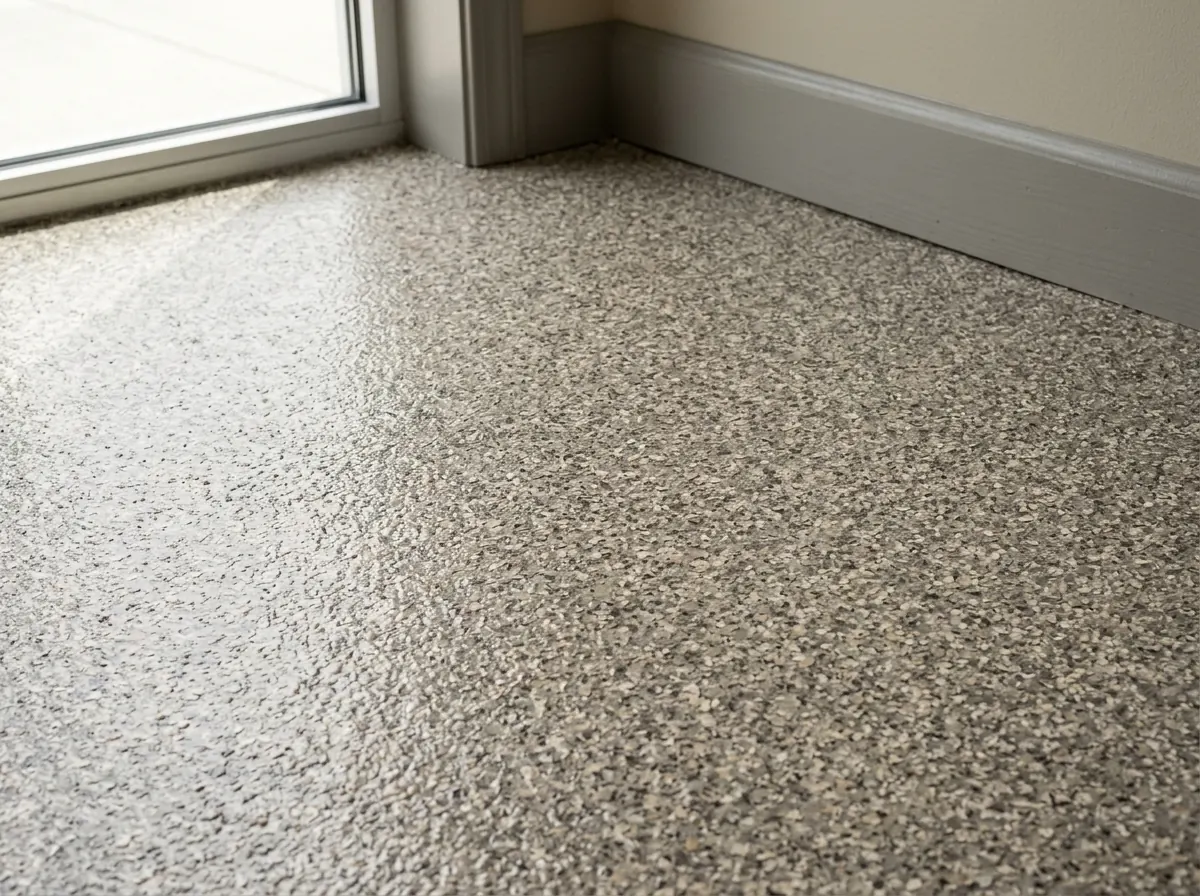
Fine 1/8-Inch and 1/16-Inch Flake
Smaller chips give a quieter floor. The colors blend into an even tone that looks more like stone or aggregate than confetti, especially in gray or brown blends. The catch is material: small flake takes more product to cover the base completely, so a 1/16-inch full broadcast costs more in chips than the same floor in 1/4 inch.
Hybrid Blends and Mica Accents
Hybrid blends mix two or three chip sizes, typically 1/4, 1/8 and 1/16 inch, in one box. The mix of sizes gives a speckled look close to polished concrete or terrazzo, without grinding the slab to a polish. Decorative flakes come in mica as well as vinyl; ask to see both before you pick.
Flake on Stairs and Steps
Garage-to-house steps and covered entry steps can take the same system as the floor beside them. Steps are coated by hand, and the edges and nosings take the most wear, so ask how the installer will finish them. The chip texture helps grip. For wet steps, ask about extra grit; our quartz flooring page covers slip resistance.
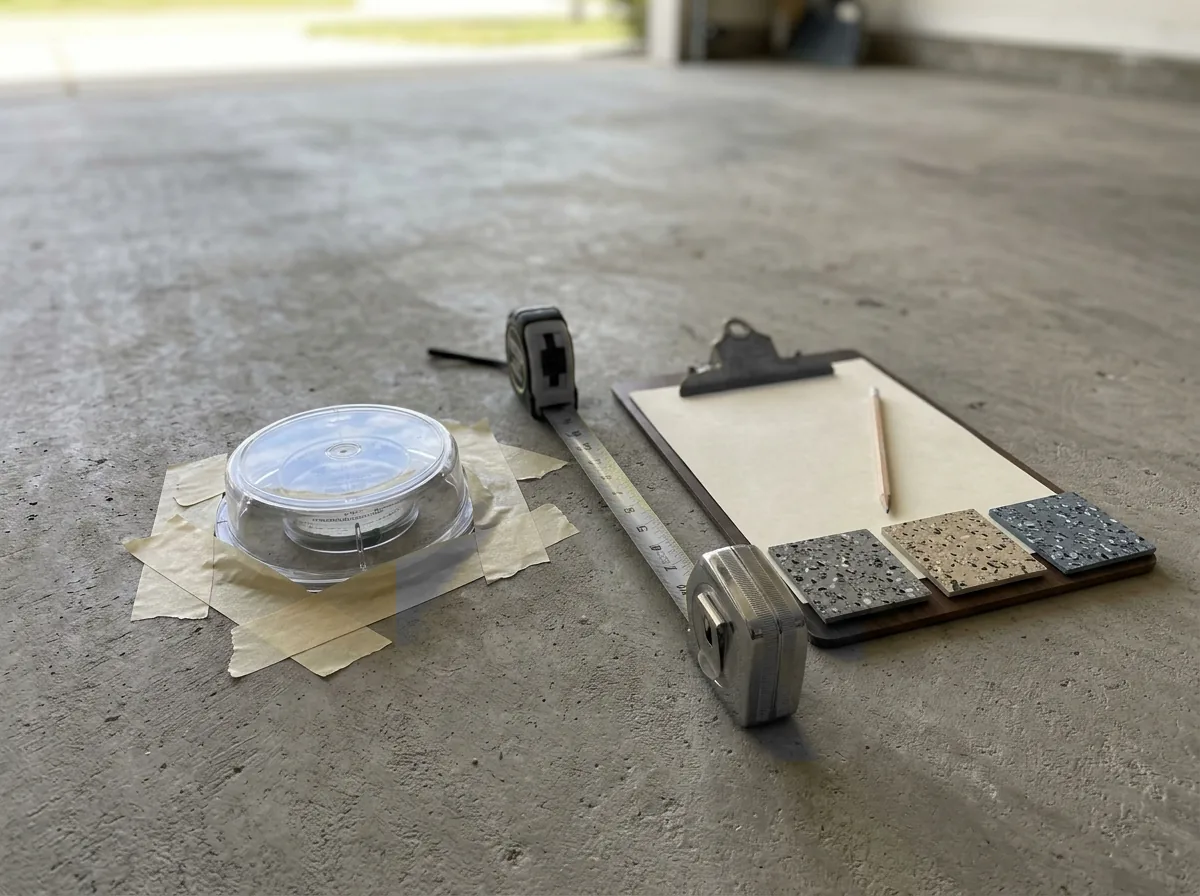
Why Hayward homeowners call Hayward Epoxy Floors
- No fee to you for the referral
- Your request goes to one local installer, not a list
- Ask for a written scope: system, coats and cure time
- Free estimate after the slab is looked at
Flake Floor Quotes: What to Get in Writing
Two quotes for "a flake floor" can describe very different jobs. Ask each installer to write down:
- The chip size and blend name, so you can match it to the sample you liked.
- Full or partial broadcast, and roughly how many boxes for your square footage.
- The base coat (epoxy or polyaspartic) and its color.
- The topcoat resin and how many clear coats are priced. Each chip is about 5 mils thick, and the flake maker recommends a clear coat that fully encapsulates the chips. Skimp on it and chip edges stay exposed.
How the slab is ground and patched
Our concrete grinding page explains surface profile and moisture tests.When you can drive on it
That depends on the topcoat, and the polyaspartic page compares cure times.
Flake Floor Lifespan and Upkeep
A flake floor is only as durable as the resin under and over the chips. National guides give solid epoxy 10 to 20 years and thin water-based epoxy three to five. The clear topcoat is the wearing surface, and a worn one can be sanded dull and recoated before traffic reaches the chips. Think of it like the clear coat on a car: you look after it so the color underneath never has to.
The flake maker calls its pigments UV stable, but says the coating system, not the chips, decides whether a floor can go outside. A patio needs a UV-stable resin as well as UV-stable chips. Our outdoor concrete coatings page covers those systems.