
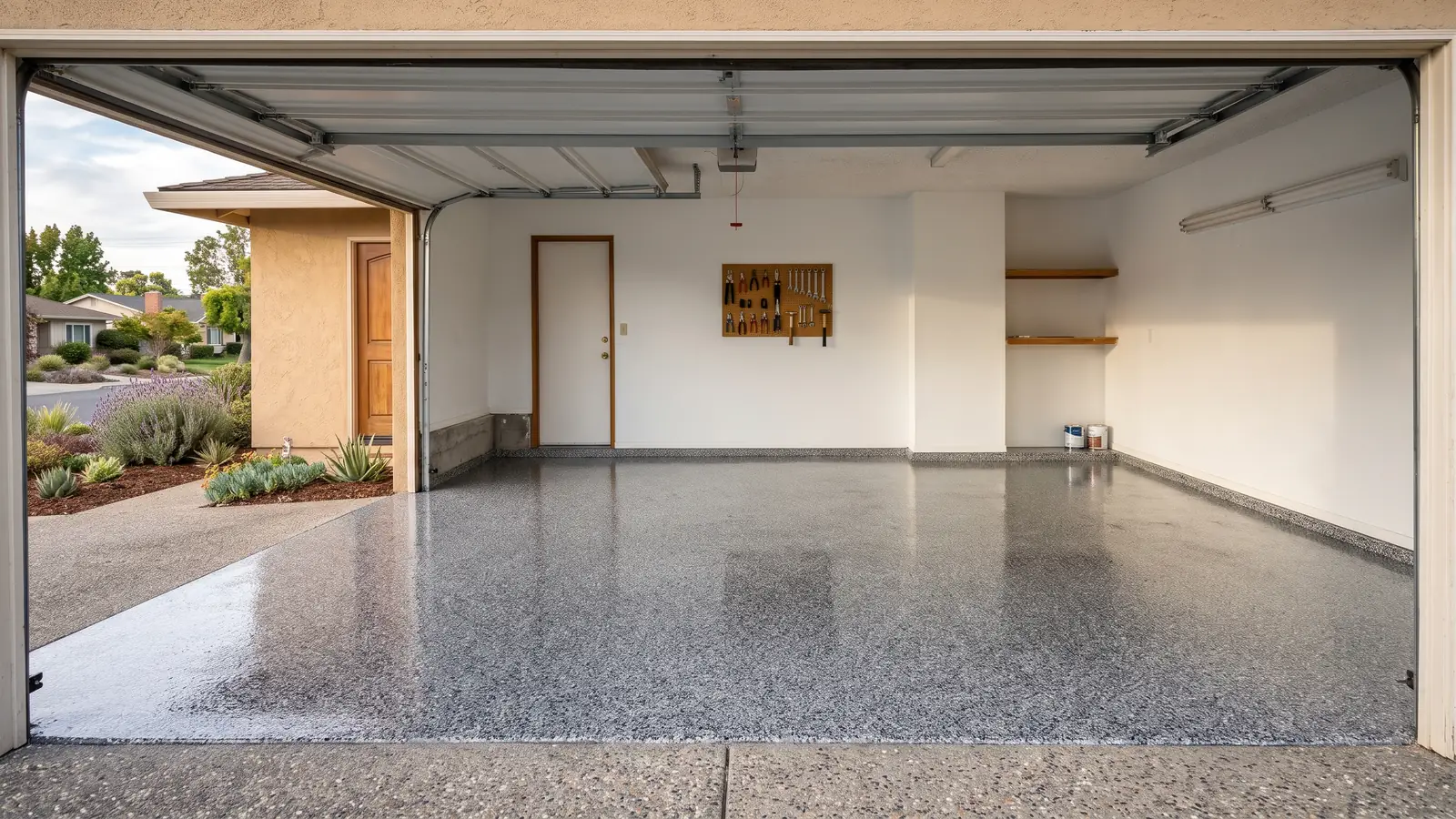
- One contractor's 2026 pricing guide puts installed urethane cement at about $8 to $16 a square foot, with a trowel-applied 1/4 to 3/8 inch floor at the upper end.
- Integral cove base is priced by the linear foot, roughly $15 to $25, and sloping a floor to drain adds about $2 to $5 a square foot in the same guide.
- A typical urethane cement floor goes down 1/4 to 3/8 inch thick and takes light traffic about a day after the pour.
- Alameda County's food inspectors accept a two-part epoxy resin pour at least 1/4 inch thick and reject epoxy paint, so a thin "kitchen epoxy" coating won't pass.
- The decisions that shape the quote are the resin (urethane cement or epoxy), thickness, cove height, and how many drains and edges need detailing.
Hayward Epoxy Floors arranges an estimate with one independent local contractor who installs seamless resin floors for restaurant kitchens, commissaries, walk-ins and food production rooms. The two systems you'll see quoted are urethane cement (also called urethane concrete) and a poured two-part epoxy. Both have to meet the FDA Food Code rule that floors be smooth, durable and easily cleanable, and nonabsorbent wherever they get wet. Where they differ most is heat tolerance.
Commercial Kitchen Flooring Types by Zone
Urethane Cement for Cook Lines
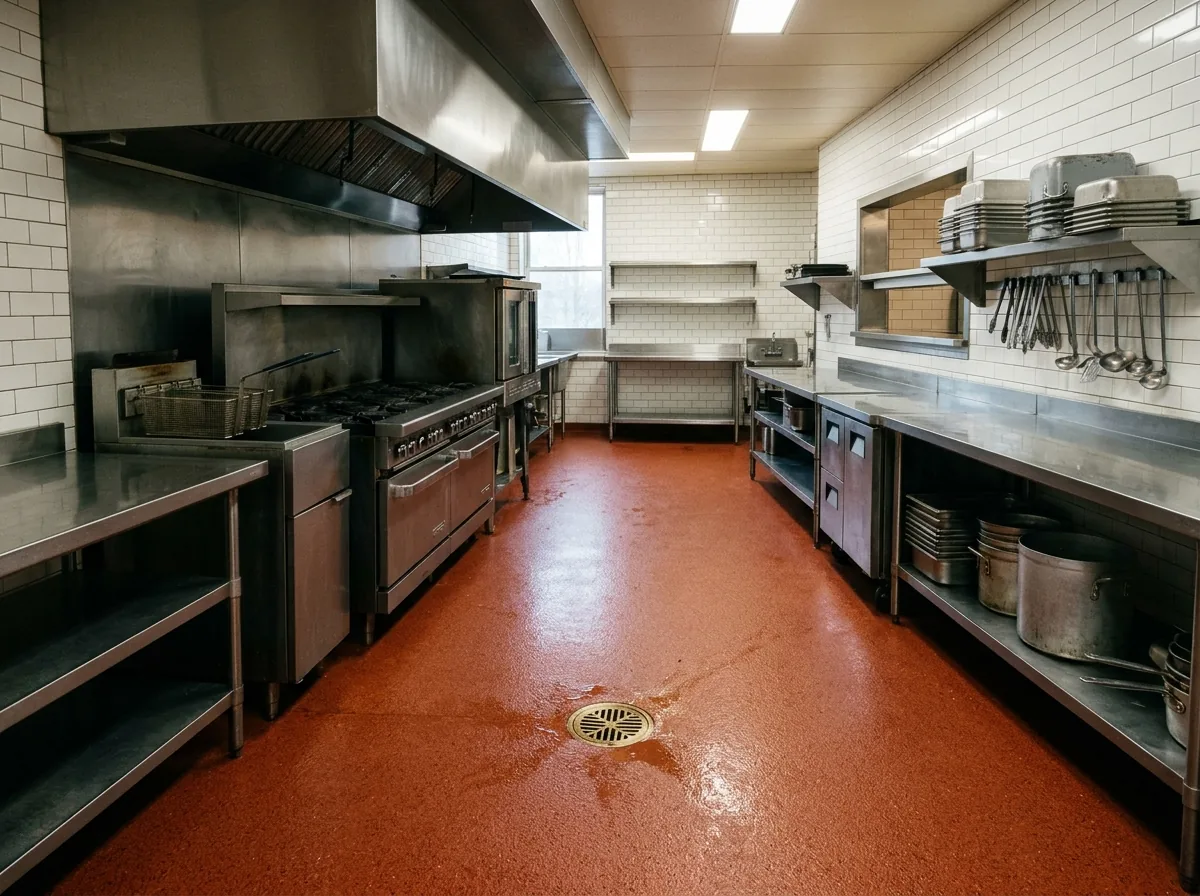
The cook line is where floors fail first. Boiling water from kettles, steam cleaning and hot fryer oil shock the surface every shift, then a cold mop follows. Urethane cement is built for that cycle. Sika's data sheet for one common product rates it from -40°F to 248°F and as steam cleanable at 1/4 to 3/8 inch thick. Epoxy is usually the cheaper bid and can suit a dish room or dry storage. If a bidder proposes it under the fryers, ask why.
Integral Cove Base
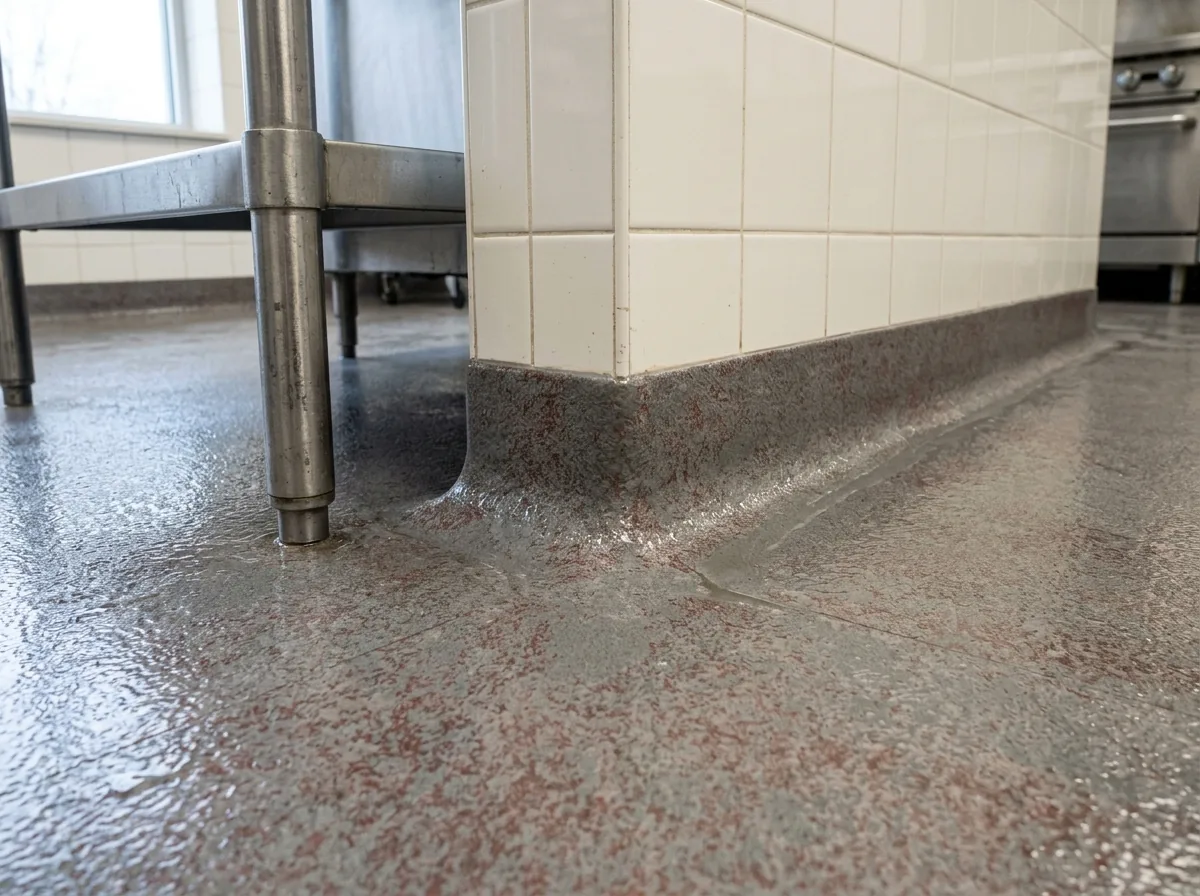
Alameda County wants it integral, with at least a 3/8-inch radius and 4 inches of height, and it lists rubber, wood or vinyl topset base as unacceptable. A resin cove is formed from the floor material itself, which leaves no joint at the wall line for grease to sit in. Ask whether the price covers coving around equipment legs and floor sinks as well as the room perimeter.
Floors Sloped to Floor and Trench Drains
Kitchens that hose down the floor must have drains and a floor graded to drain under the Food Code, with the wall junction coved and sealed. If the existing slab holds puddles, the installer can build slope into the new floor with a thicker trowel-applied layer, which is why slope work is priced separately. The edge detail at each drain matters as much as the slope. The coating should turn down into a cut groove at the drain body instead of thinning out to nothing.
Walk-In Cooler and Freezer Floors
Walk-in refrigerators and freezers appear on Alameda County's list of areas that need an approved floor finish. Urethane cement data sheets list freezers and coolers among their uses, and its low-temperature rating is the reason. The tricky part is the threshold. Ask how the floor ties into the walk-in's existing floor or insulated panel, and whether the box can be emptied and warmed for the install.
Breweries and Food Plants
Production rooms add pallet jacks, forklifts and cleaning chemicals to the hot water. The same urethane cement family is sold for breweries, wineries, dairies and food processing plants. Food processing is one of the industries Hayward's economic development office actively courts, so these floors come up often on the city's west side. For chemical storage or lab rooms in those plants, the commercial epoxy page covers novolac epoxy.
Why Hayward homeowners call Hayward Epoxy Floors
- No fee to you for the referral
- Your request goes to one local installer, not a list
- Ask for a written scope: system, coats and cure time
- Free estimate after the slab is looked at
Before the Floor Goes In: Inspection, Downtime and the Quote
Alameda County asks food businesses to check a new floor finish with their district inspector before buying or installing it, and may ask for spec sheets and samples. Get that answer before you sign. Then compare quotes line by line:
- the resin system by product name and thickness, and where each one goes (cook line, dish room, walk-ins, storage);
- cove base by linear foot, with height and radius;
- number of drains, trench drains and door thresholds to be detailed;
- slope corrections, priced separately;
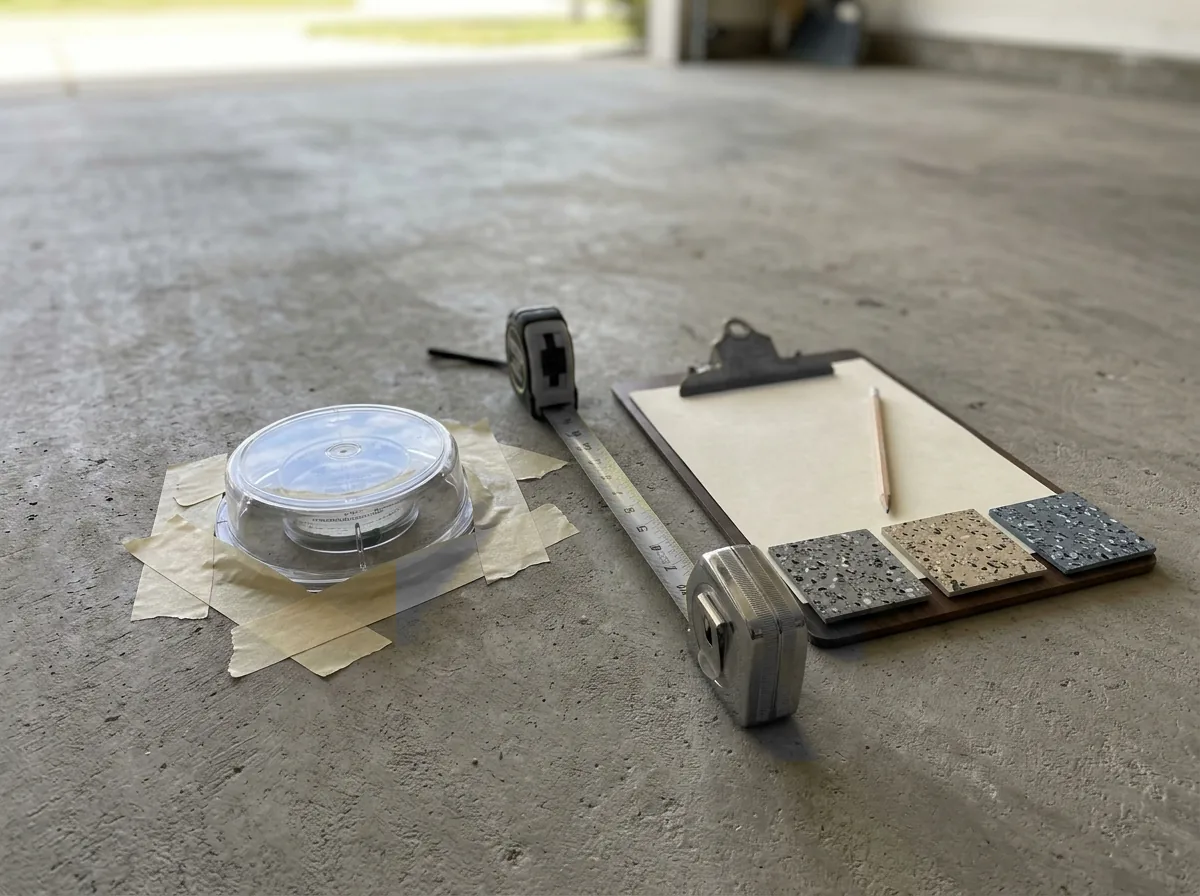
- prep, including a slab moisture test (see concrete grinding for the test methods);
the closure plan
The day work starts, and the day staff can walk, roll carts and reopen.
Weather matters too. The urethane cement sheet calls for air and slab between 45°F and 100°F, with the slab at least 5°F above the dew point. Hayward's January nights average about 42°F, so a winter job in an unheated room needs a plan for heat.