
Patch cost
basic concrete patching runs about $25 to $250 in national guides. In a coated floor, the coating over the patch is extra.Removal cost
an existing coating that has to come off adds to the bill. The one published figure we found, from a Houston cost guide, is $1 to $2 a square foot.Time
a full removal and new coating follows the normal install, one to three days for most garage floors.What's included
finding the cause, cutting or grinding back to sound coating or bare concrete, patching, priming and recoating.The choice that matters
spot repair, recoat, or full removal. That depends on how much of the coating is still bonded.
Hayward Epoxy Floors introduces you to an independent local installer who works on failed and worn coatings: peeling garage floors, lifted tire spots, chips and gouges, worn topcoats and coatings that have to come off entirely. A repair starts with the cause, because a patch over moisture or a contaminated slab fails again. The methods are mechanical, either diamond grinding or shot blasting, followed by primer and a new coat on clean concrete or on sanded, well-bonded coating. Photos of the worst spots and the whole floor help the installer judge which fix you need before the visit.
Epoxy Floor Repair Types
Peeling and Delamination Repair
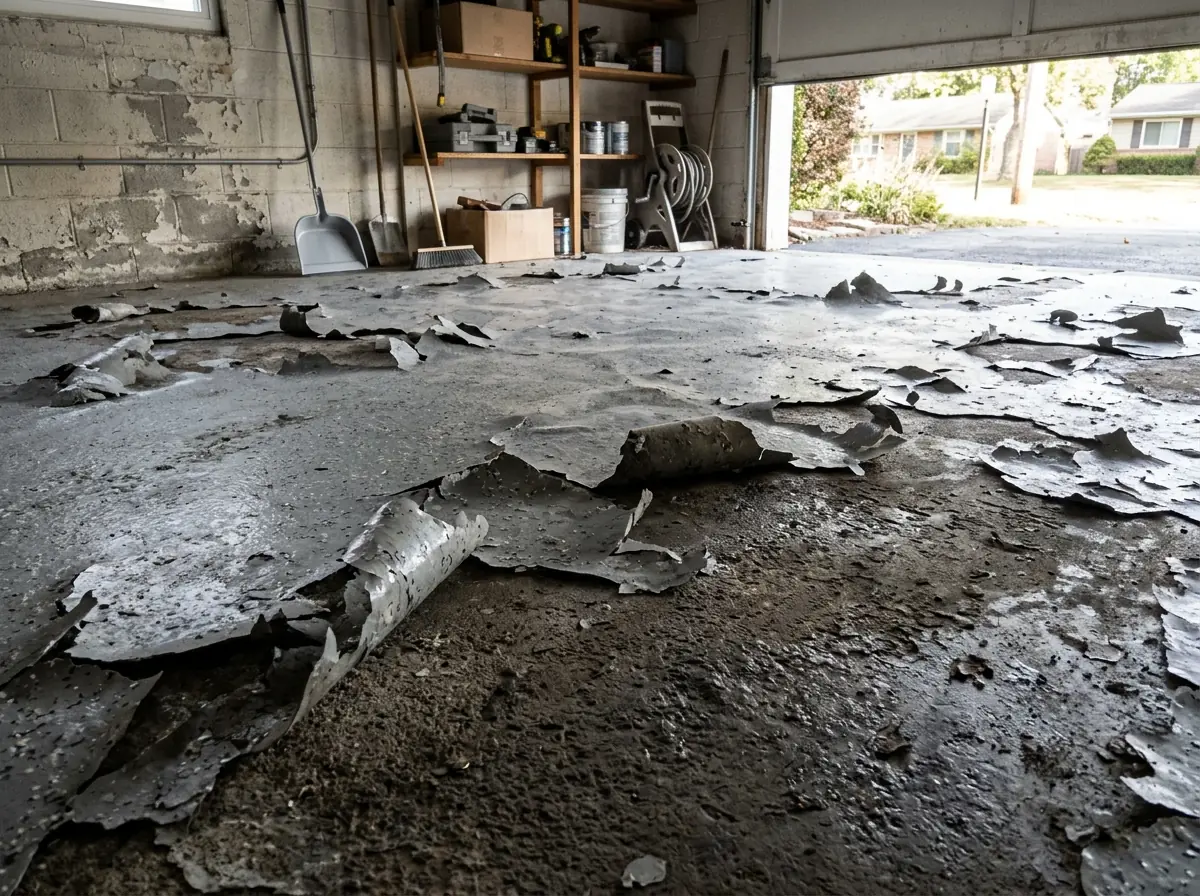
Peeling means the coating has let go of the concrete, or one coat has let go of another. One maker's troubleshooting guide names three causes for coating that lifts off the slab:
- The concrete wasn't cleaned of dirt, grease or other contaminants
- The primer was skipped
- Moisture vapor pushed up through the slab, which often leaves the concrete under the lifted coating dark and damp
The fix for all three is the same: remove the coating by grinding or blasting, prepare the concrete, prime and recoat. Where moisture was the cause, the slab gets measured first, and a vapor-barrier primer goes down if readings are high.
Lifted Tire Spots
Coating that comes up where the car parks is a garage problem with its own causes; our garage floor epoxy page explains hot-tire pickup and how to prevent it. The repair is local. The installer removes the loose and unbonded coating around each spot, grinds the edges back to well-bonded material, patches and recoats. Not every tire mark is a lift, though. Warm tires can leach plasticizer into an epoxy surface and leave a stain, and a rubber mat where the tires rest is the usual prevention.
Chip, Gouge and Crack Patching
A dropped tool or a dragged trailer jack can knock a chip out of a sound floor. The damaged area is cut back to well-bonded coating, filled and coated over. Cracks are different, because the coating is only showing a crack in the concrete below it. A moving crack is a concrete problem before it's a coating problem, and our concrete crack repair page covers how to tell.
Full Coating Removal by Grinding
When the coating is failing across the floor, or it's a thin kit coating under a planned professional system, it all comes off. A walk-behind diamond grinder or a shot blaster takes the coating down to bare concrete and leaves the open surface profile a new coating needs. Cost guides list an existing coating as a cost factor, since it has to come off before any new coat goes down. Ask the installer to quote removal and the new system together, since the grinding step does double duty as prep.
Recoat over Sound Epoxy
A worn but well-bonded floor doesn't need stripping. Each coat has a recoat window: within it, the next coat bonds chemically, and outside it the surface has to be sanded or diamond-ground dull, cleaned and wiped before recoating. One maker sets that limit at 36 hours. For a floor that's years old, that means a light grind, a solvent wipe and a fresh topcoat. It renews a dull or scratched floor as long as the coating underneath is solidly stuck, so ask how the installer will check the bond before quoting.
Why Hayward homeowners call Hayward Epoxy Floors
- No fee to you for the referral
- Your request goes to one local installer, not a list
- Ask for a written scope: system, coats and cure time
- Free estimate after the slab is looked at
How an Installer Diagnoses a Failed Floor
Before quoting, ask the installer to explain what failed and why. A good diagnosis covers:
Where the coating is lifting
Everywhere, along tire paths, or in patches- Whether it came off bare concrete or off a lower coat
What the concrete looks like underneath
Clean, oily, or dark and damp- A moisture test result if damp concrete is suspected (methods are on our concrete grinding page)
- What product is on the floor now, if anyone knows
If a quote proposes coating over a peeling floor without explaining the cause, get a second opinion. Patching is cheaper only until it fails again.
Repair or Replace?
Spot repair makes sense when the failure is small and the cause is clear, such as a single gouge or a few tire spots. Recoating fits a floor that's worn on top but still bonded. Full removal is the right call when peeling is widespread, when moisture is involved, or when the old coating was a thin kit product. In Hayward, where many garages have older slabs, it's worth asking for a moisture test before deciding, since a slab that failed one coating can fail the next for the same reason.