
Cost
National cost guides put installed polyaspartic at about $5 to $12 a square foot, roughly a dollar or two above epoxy at each end of the range.Time
Many garage jobs are ground, coated and finished in a single day, though some need a second.Return to service
Cars usually go back on in 24 to 48 hours; some product sheets ask for longer.Choices
A full polyaspartic system, a polyurea or epoxy base under a polyaspartic topcoat, flake or clear, and the product's VOC content.
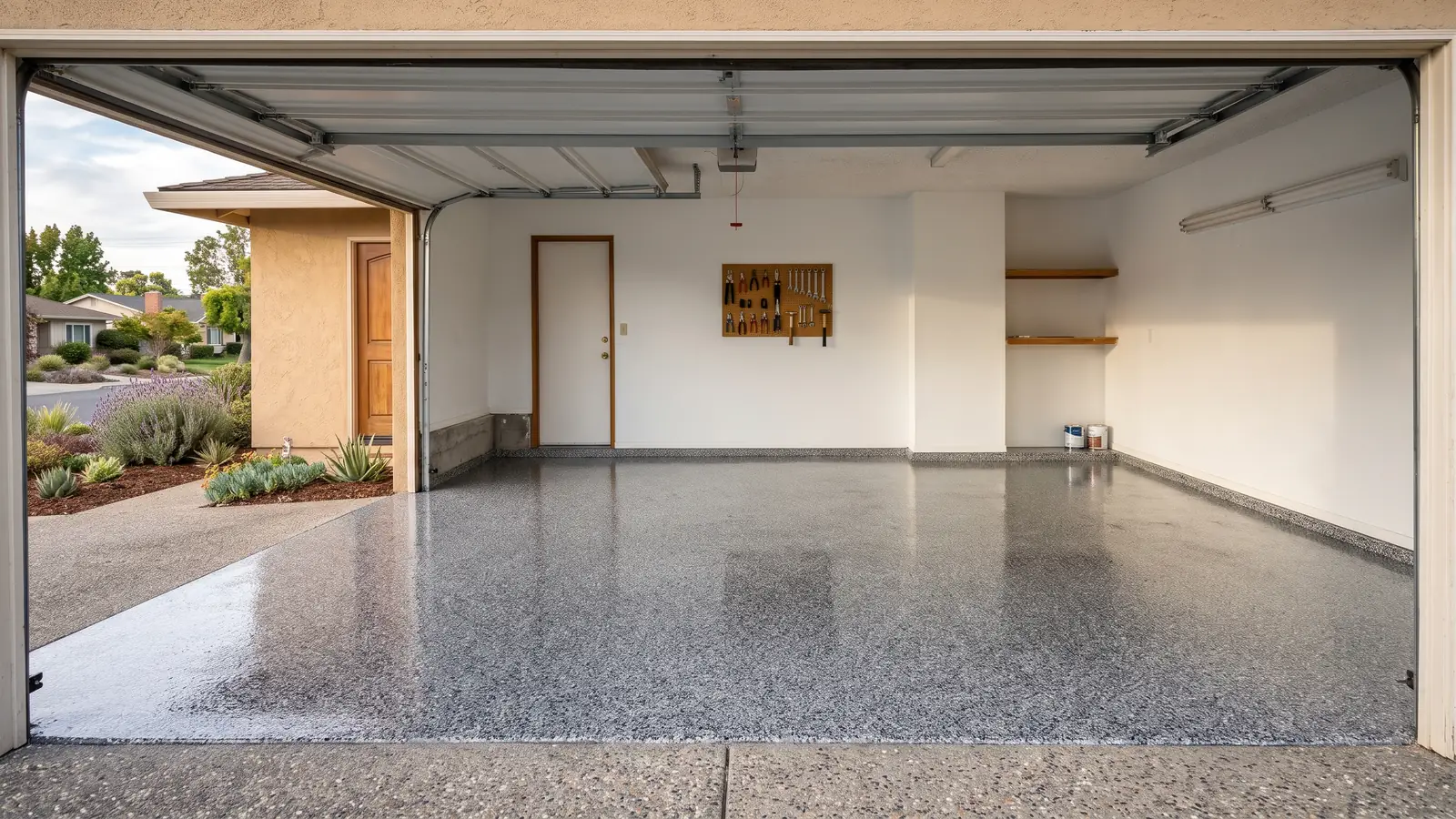
Hayward Epoxy Floors is a free referral line to an independent local installer who works with polyaspartic and polyurea floor systems. Polyaspartic is an aliphatic polyurea: it cures in hours rather than days, doesn't yellow in sunlight, and goes on in thin coats of about 2 to 6 mils each, which is why it's used as a flake system, a clear sealer or a wear coat over an epoxy base. Prep is the same as for any coating, mechanical grinding to an ICRI profile of CSP 2 to 3.
Polyaspartic Floor Coating Systems and Where Each One Fits
One-Day Polyaspartic Flake Floors
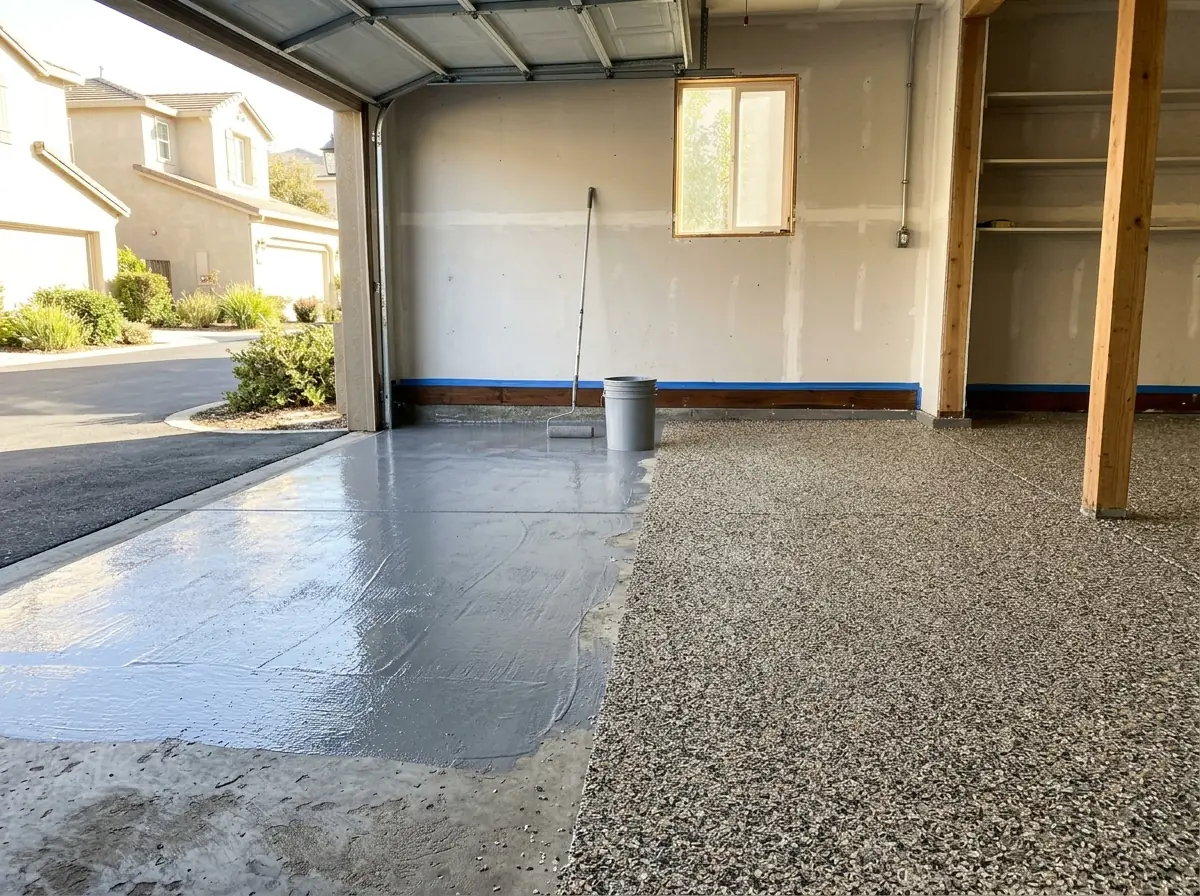
This is the system behind most one-day garage offers. The crew grinds, fills cracks, rolls a pigmented polyaspartic base, broadcasts flakes into it, scrapes and applies a clear polyaspartic topcoat, all in one visit when the weather cooperates. Speed has a cost on the crew's side. One high-solids product gives 40 to 50 minutes of pot life in the bucket at 73°F, and its sheet says to mix only what can be used right away. Think of it as icing a cake that sets while you spread it: experience shows in the finish.
- Published system build: 35 to 50 mils
- One system spec: light foot traffic at 12 hours, heavy traffic at 48 hours
- Not intended for continuous forklift traffic
Polyurea Base Coat Systems
Some installers lay a polyurea base and finish with polyaspartic. Both belong to the same chemical family. Polyurea is the more flexible of the two, which helps on a slab that moves with temperature, while polyaspartic is rated as bonding better to concrete and being easier to apply. Cost guides put polyurea at $5 to $10 a square foot, with light foot traffic after 24 hours and cars after 72. If a quote says "polyurea," ask which layers are which, because the word covers a range of products.
Clear Polyaspartic over Bare or Stained Concrete
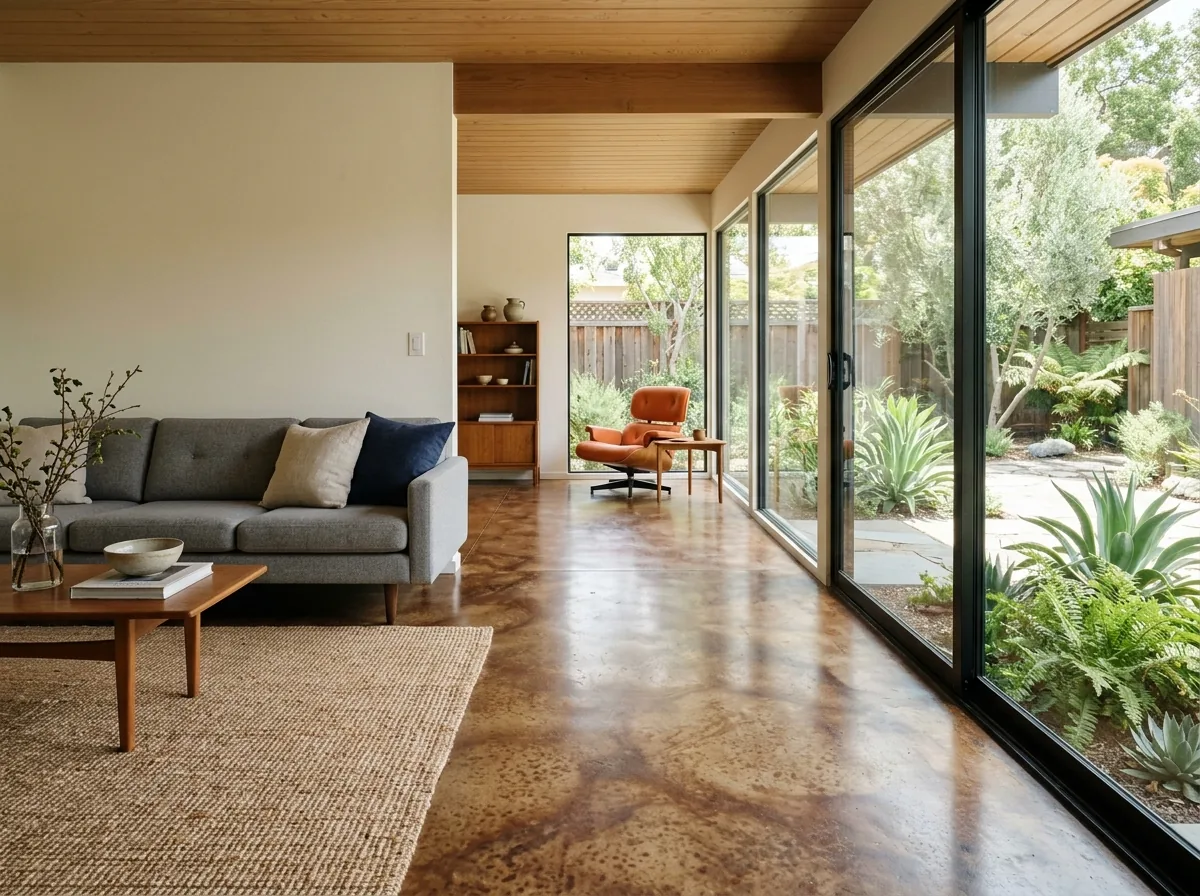
A clear polyaspartic coat protects concrete you want to keep looking like concrete: a stained or dyed floor, a ground slab with exposed aggregate, or a patio. Because it's aliphatic, it stays clear where an epoxy sealer would amber. One clear polyaspartic rated for decorative work lists walk-on in 4 hours, return to service in 24, and "retains optical clarity." For the stain itself and other sealer types, see stained concrete floors.
Polyaspartic Recoat over a Worn Epoxy Floor
A dull, scratched epoxy floor that's still well bonded can often take a polyaspartic topcoat instead of a full tear-out. The old surface has to be sanded or ground to a light profile first, since polyaspartic won't grip a glossy film. That rule applies even between new coats: one data sheet allows 24 hours to recoat, after which the surface must be abraded. A coating that's peeling or lifting is a different job. It has to come off, which is covered under epoxy floor repair and removal.
Low-VOC, High-Solids Polyaspartic
The Bay Area Air Quality Management District's coatings rule (Regulation 8, Rule 3) caps floor coatings at 100 grams of VOC per liter, and its definition of a floor coating names garage floors, decks, porches and steps. Floors in harsh industrial service can fall under the separate "industrial maintenance" category, capped at 250 g/L. A statewide model rule from the California Air Resources Board cuts floor coatings to 50 g/L, but the district's rule still shows its 2009 amendment, so 100 g/L remains the local limit. High-solids polyaspartics sit far below either number: one kit lists 98.5% solids and under 5 g/L. Low VOC isn't the same as no fumes, so the garage still needs ventilation while the crew works.
Why Hayward homeowners call Hayward Epoxy Floors
- No fee to you for the referral
- Your request goes to one local installer, not a list
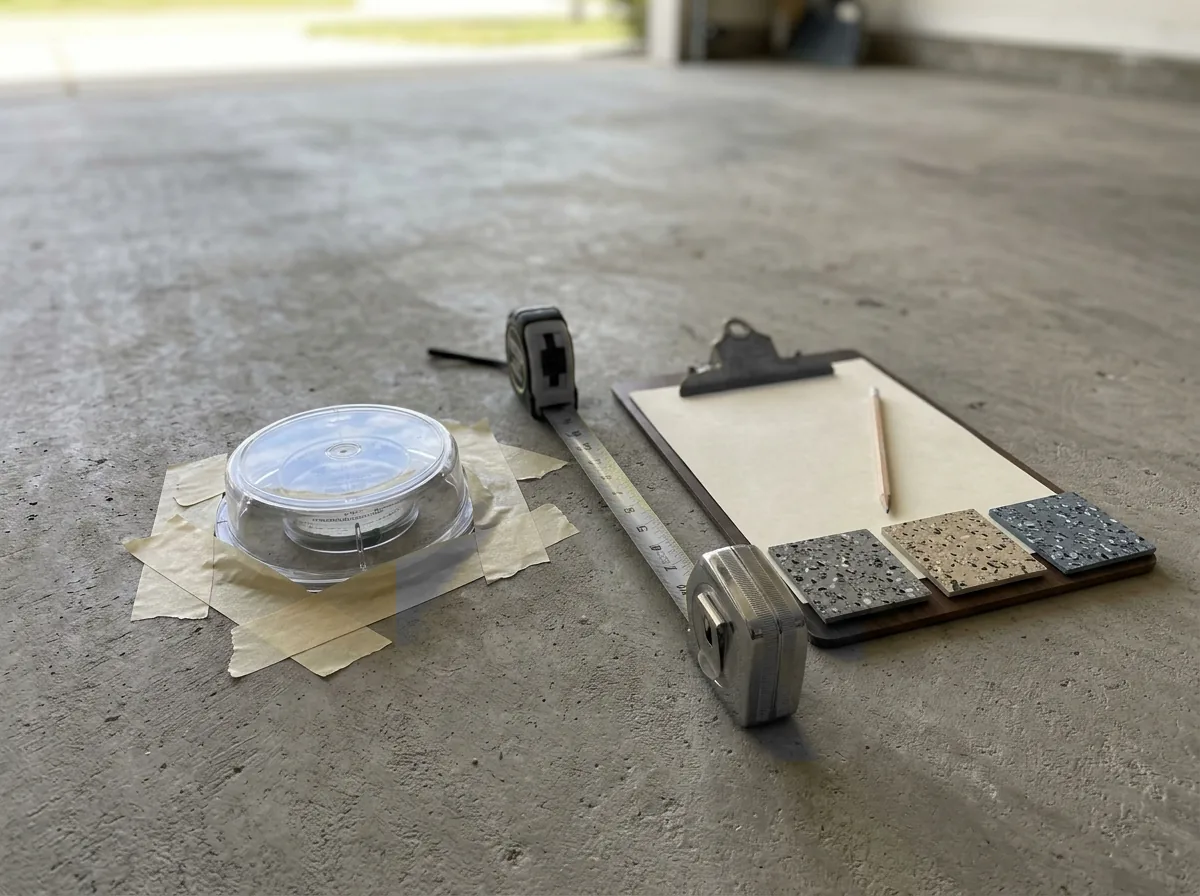
- Ask for a written scope: system, coats and cure time
- Free estimate after the slab is looked at
Polyaspartic vs Epoxy Cure and Return-to-Service Times
Cure times are where quotes differ most, and the product data sheet is the only reliable number. Published figures:
| System and source | Walk on | Vehicles or normal traffic | Full cure |
|---|---|---|---|
| Solid epoxy, cost guide | 16-24 hours | 2-7 days | 7 days |
| Epoxy, manufacturer sheet at 73°F | about 24 hours | about 5 days (normal traffic) | not stated |
| Polyaspartic, cost guide | dry to touch in hours | 24-48 hours | 1-2 days |
| Clear polyaspartic, manufacturer | 4 hours | 24 hours (return to service) | not stated |
| High-solids polyaspartic kit at 77°F | 4-6 hours (light foot) | 5-7 days | not stated |
| Polyaspartic flake system spec | 12 hours (light foot) | 48 hours (heavy traffic) | 5-7 days |
| Polyurea, cost guide | 24 hours | 72 hours | not stated |
Two things stand out. First, "one-day floor" describes the installation, not the cure: even fast products are often rated for vehicles a day or two later, and one asks for nearly a week. Second, cold slows everything, and one epoxy sheet lists longer times at 50°F than at 73°F. On a winter job in Hayward, add time to whatever the sheet says, and get the park-by date written into the contract.
Polyaspartic UV Stability: Why It Doesn't Yellow
Epoxy reacts to sunlight. One epoxy manufacturer states plainly that its product "will discolor over time when exposed to sunlight," and cost guides rate epoxy's UV resistance poor to fair against excellent for polyaspartic. The difference is chemistry: polyaspartic is aliphatic (non-aromatic), and fully aliphatic products are the ones rated for color hold. In practice, yellowing shows first along the strip of garage floor inside the door, on a sunroom or entry slab under a window, and on any outdoor surface. That's the reason to put a polyaspartic topcoat over epoxy in a sunny garage, and why outdoor concrete coatings are polyaspartic or polyurea rather than epoxy. Ask whether the topcoat on your quote is aliphatic and whether its data sheet calls it UV stable or non-yellowing.