
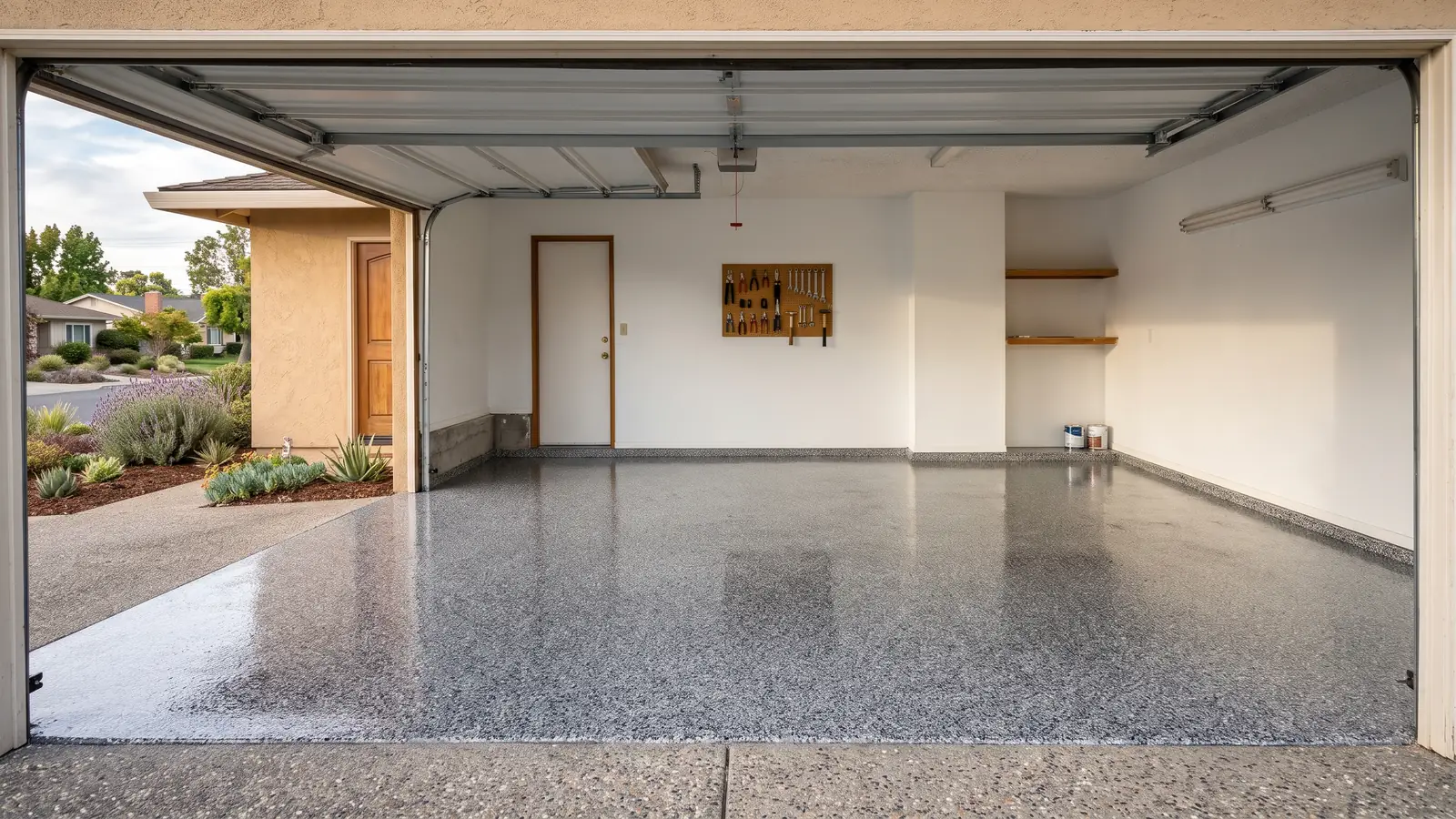
- National guides put stained concrete at about $3 to $15 a square foot installed, from $3 to $5 for one color with sealer up to $15 to $25 for stencils and scored patterns.
- Staining takes 1 to 3 days including drying, and only on concrete that has fully cured.
- Sealing alone runs about $1 to $3 a square foot. Plan to reseal or wax every 1 to 3 years.
- With that upkeep, the color lasts roughly 5 to 20 years.
The choices that matter
Acid or water-based stain, one color or several, and the sealer's sheen and durability.
Hayward Epoxy Floors takes your request to one independent local contractor who stains and seals concrete floors indoors and out. Stain soaks into the concrete instead of sitting on top like a coating, so it can't chip or peel the way paint does. The look depends on the slab you already have: old patches, trowel marks and cracks all show through the color. The sealer on top decides how it wears.
Stained Concrete Floor Types and Sealers
Acid Stain
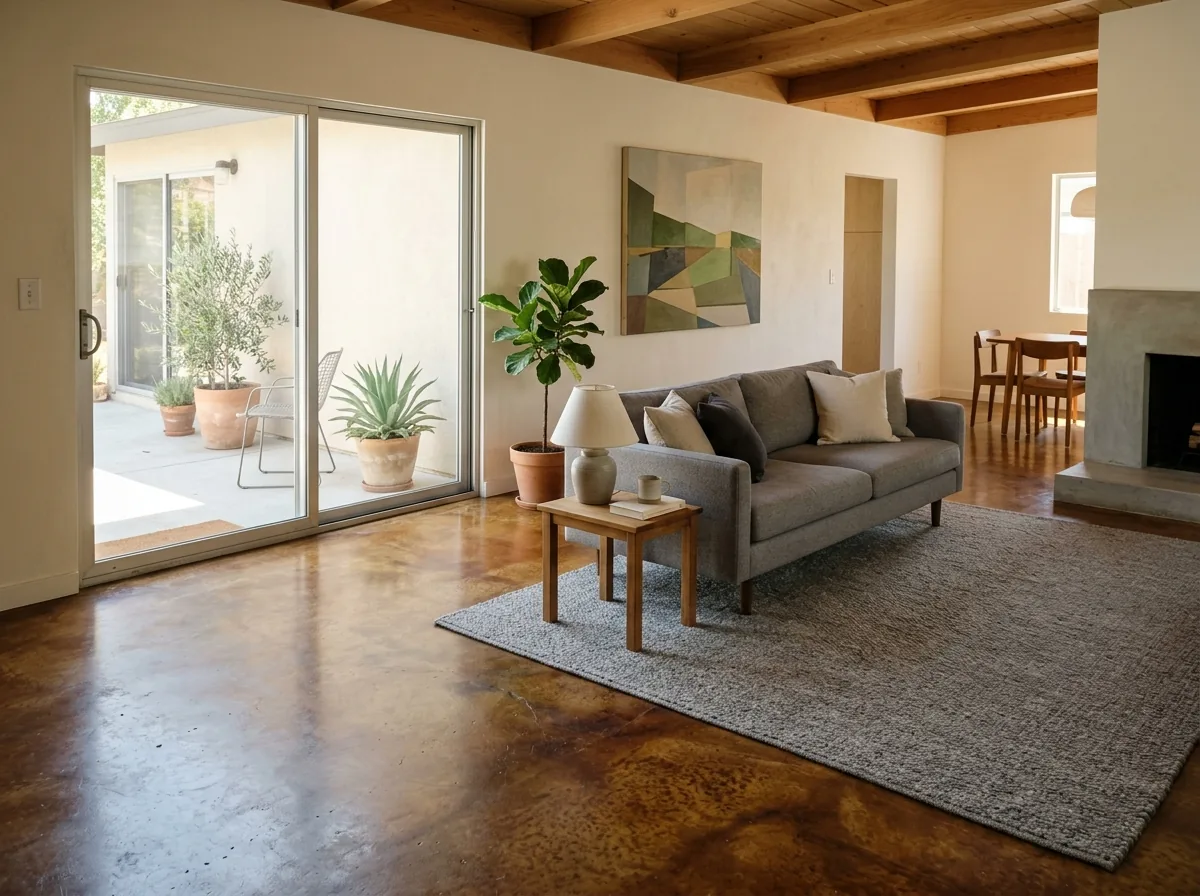
Acid stain, also called reactive stain, contains hydrochloric acid and metallic salts that react chemically with the concrete. The result is a marbled, uneven finish in earthy colors, and no two floors come out alike. Basic acid-stain work runs about $2 to $6 a square foot in one national guide. Because the color comes from a reaction, the installer can't promise an exact shade. Ask for a test patch in a closet or under where the fridge will go.
Water-Based Stain
Water-based (nonreactive) stains are water, polymers and pigment. They come in a wider range of colors with a more uniform finish than acid stain, and one guide puts them around $2 a square foot installed for basic work. They suit people who want a predictable color, or a floor that matches cabinets or tile nearby.
Concrete Dye
Dye dries faster than stain and costs in the same broad range, about $3 to $25 a square foot. The catch is sunlight: dye fades in the sun, and guides say it isn't suitable for outdoor concrete. Keep it to rooms away from strong window light. The concrete polishing page covers dyed polished floors.
Penetrating Sealers (Siloxane and Silicate)
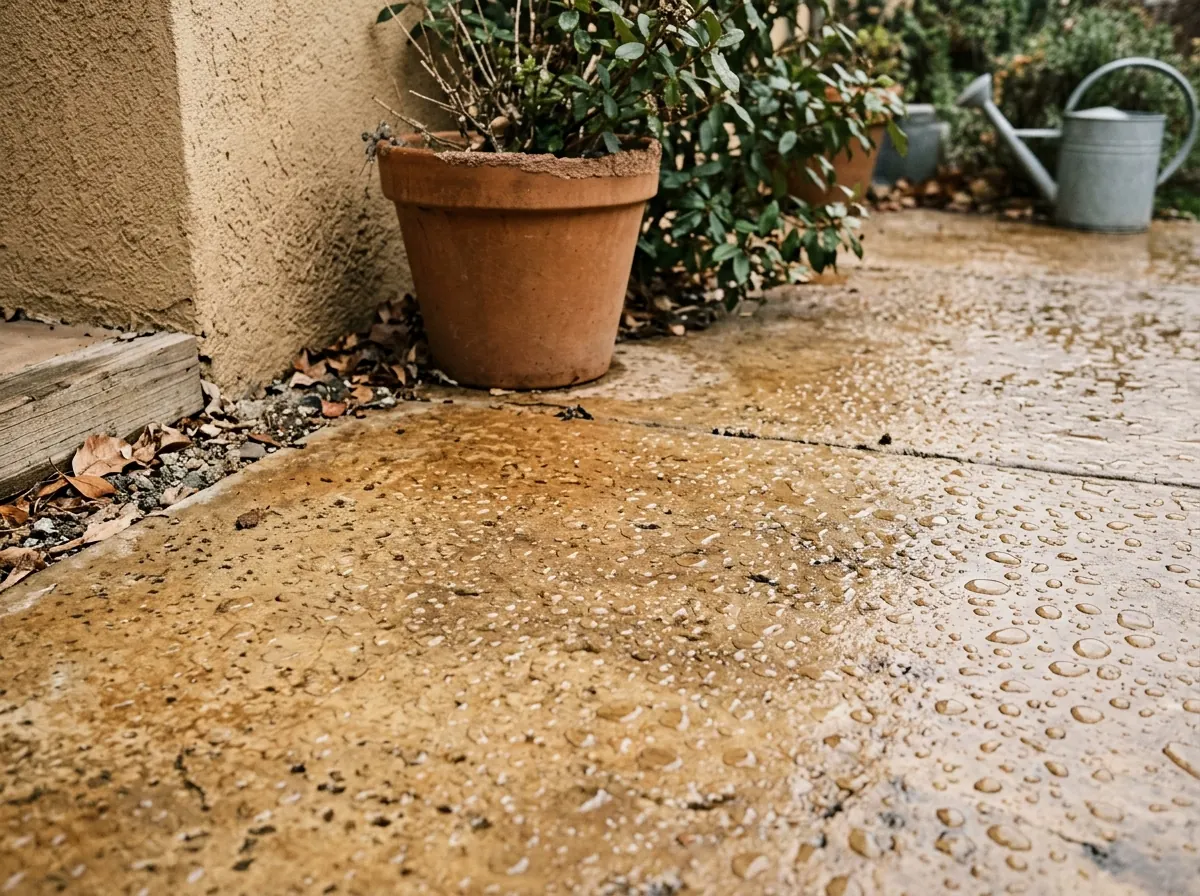
Penetrating sealers soak in and leave no film on the surface. They give a matte, non-slip finish that looks natural and repels water, chemicals and salts, which is why guides recommend them for driveways, walkways and patios. They leave the surface matte, so if you want the stain to look richer or glossier indoors, that takes a topical sealer.
Acrylic and Urethane Topical Sealers
Topical sealers form a film that brings out the color and adds sheen. Acrylic is the common, affordable choice, about $0.85 to $1.15 a square foot in one guide, but it lasts only 1 to 3 years. Urethane and epoxy sealers cost more (epoxy about $3 to $7 a square foot) and last about 5 to 15 years. For a kitchen or family room, a urethane topcoat over the stain is a sensible middle ground. For a garage with hot tires and fluids, the garage floor epoxy page compares full coatings.
Why Hayward homeowners call Hayward Epoxy Floors
- No fee to you for the referral
- Your request goes to one local installer, not a list
- Ask for a written scope: system, coats and cure time
- Free estimate after the slab is looked at
Before You Stain an Existing Slab
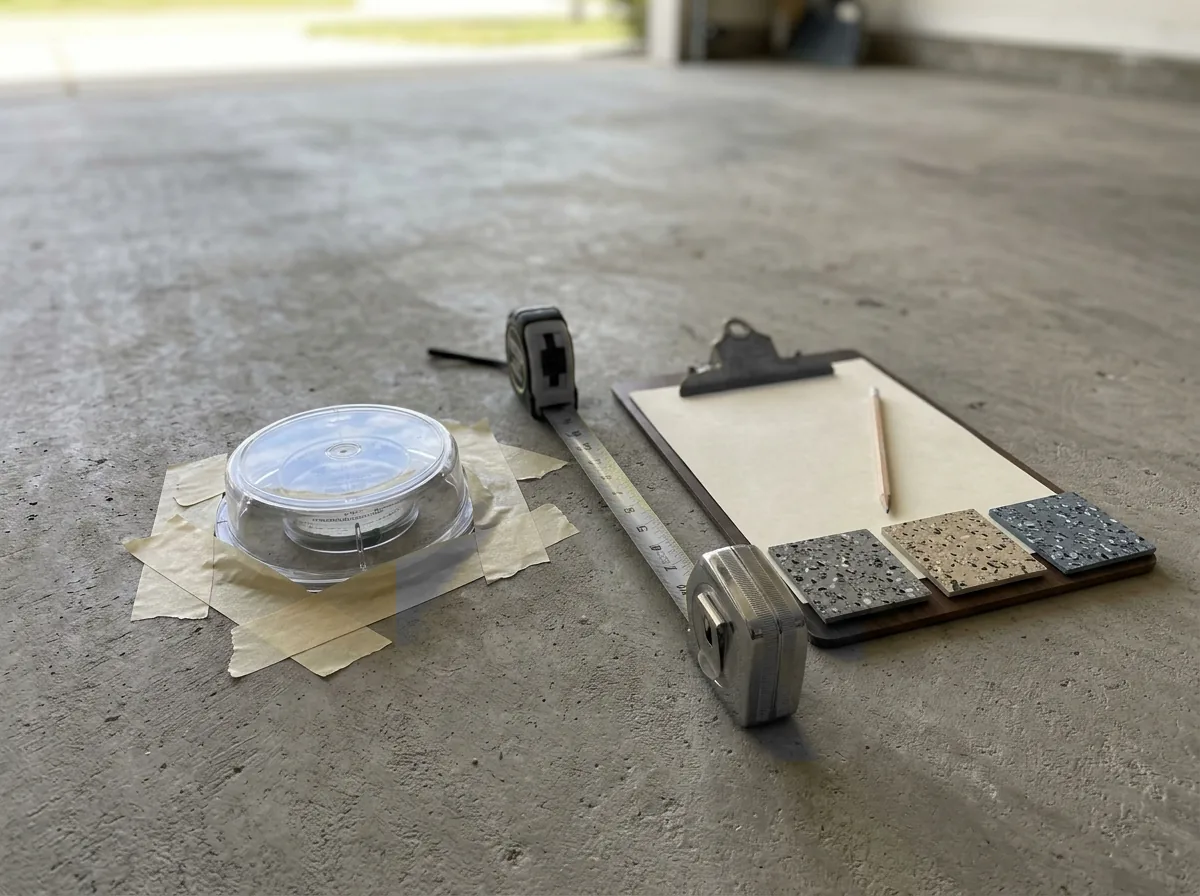
Stain can't hide what's in the concrete, so walk the floor with the installer before choosing a color. Painted concrete has to be stripped completely before it can take stain. Ask how old glue from carpet or tile and any old sealer will be removed, since the stain has to reach bare concrete. Patches and filled cracks will take the color differently from the slab around them; a busier, multi-color design or a scored pattern can work them into the look.
In Hayward's older homes, a slab that has sat under carpet for decades can have tack-strip holes along the walls and adhesive residue. Ask how the installer plans to deal with both, and whether the repair spots will be visible after staining.
Upkeep is simple but regular. Dust-mop, and wet-mop with a pH-neutral cleaner. Reseal or rewax every 1 to 3 years, and sooner in a busy entry. Guides tie the 5- to 20-year life of a stained floor to that routine.