
Cost
national guides put metallic epoxy at about $5 to $12 a square foot installed. No published guide prices it for Hayward on its own.Thickness
the metallic layer goes down thick, about 32 to 80 wet mils on one maker's data sheet, over a tinted base coat.Time
base, pour and topcoat go down on separate days, with at least 16 hours between coats on that sheet; full cure takes about a week at 72°F.What's included
slab prep, a tinted base coat, the metallic pour, and a clear protective topcoat.Choices that matter
the effect (marble, swirl or cells), how many pigment colors, and a gloss or satin topcoat.
Hayward Epoxy Floors passes your details to an independent local installer who pours decorative metallic epoxy in homes, garages, shops and showrooms. The system is a 100% solids epoxy mixed with metallic mica pigment, poured over a tinted base and moved by squeegee, roller, air or solvent until the pattern looks right. A clear polyaspartic or urethane topcoat then seals it for cleaning and sun. Send us the room and a photo of the look you like, then ask the installer which effect suits the space.
Metallic Epoxy Floor Effects and Finishes
Marble-Look Metallic
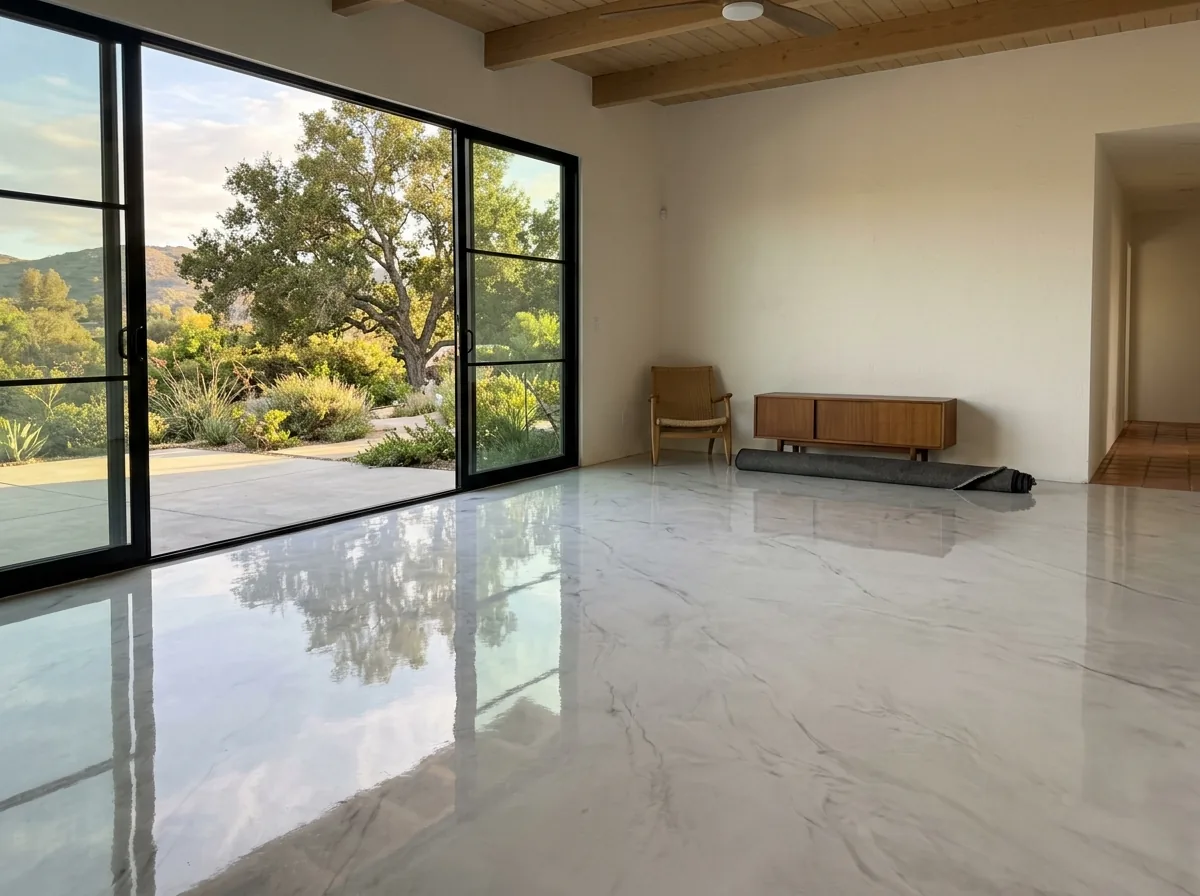
Metallic epoxy can mimic natural stone, and a white or gray marble look suits a living room. Installers get the veined effect by working two or more pigment colors against each other. One technique pours each color in opposite directions and then backrolls once, which gives a mottled, stained-stone look. Overwork it and the colors blend into one muddy shade, so this is where the installer's hand matters most.
Swirl and Wave Pours
Swirl floors are the "liquid metal" look. The crew pours lines of pigmented epoxy straight from the bucket and spreads them with a squeegee trowel, then moves the color around with rollers, a leaf blower, or a torch. The same methods can suggest waves, lake bottoms or rock edges. No two swirl floors match, which is the point. Ask to see a whole finished floor, in photos or in person, because a two-foot sample board can't show how a pattern runs across a whole room.
Cell and Lava Effects
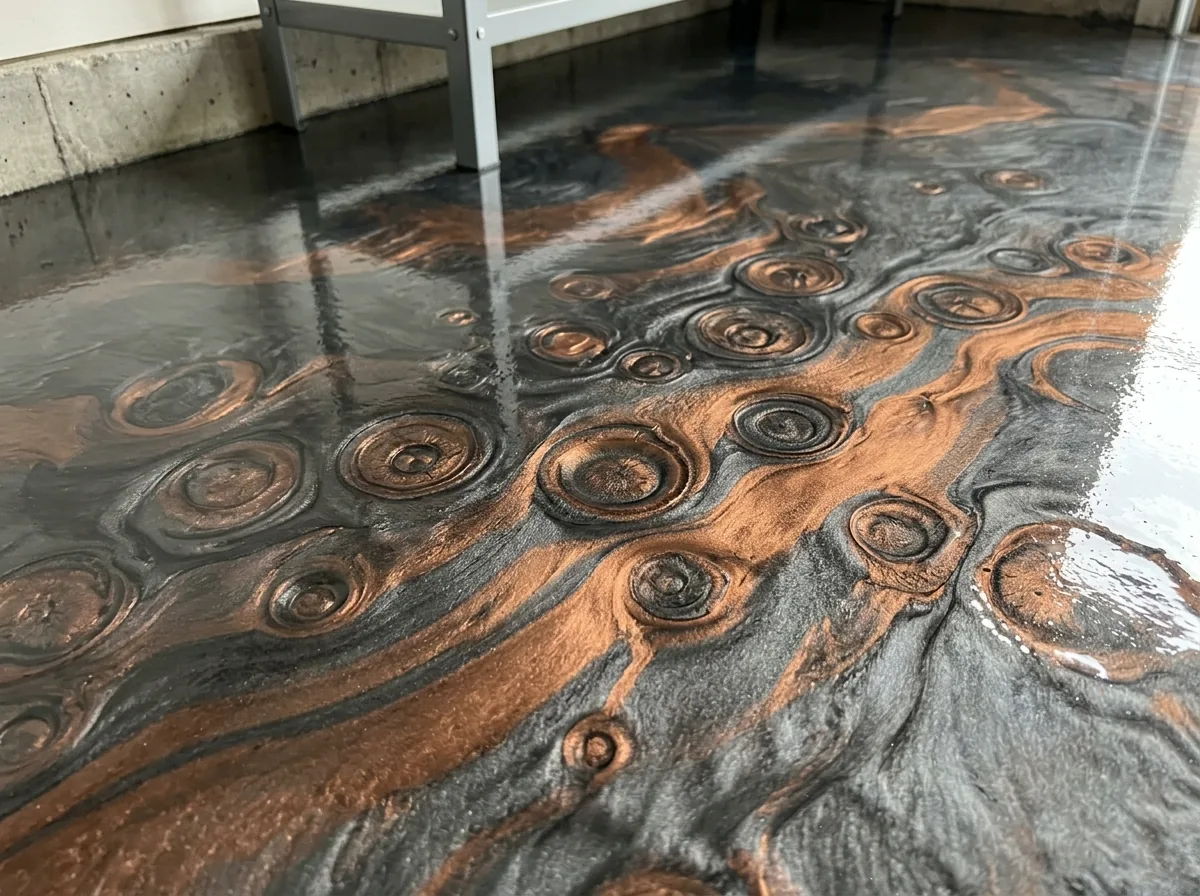
Cells are the round, crater-like spots that make a floor look like lava or a planet's surface. Once the metallic coat turns tacky, the installer applies a solvent such as denatured or isopropyl alcohol. A spray bottle gives evenly sized cells. Flicking the solvent by hand gives a looser, more random spread. It's a bold look; we'd keep it to a feature area, a bar, or a showroom rather than a whole house.
Metallic Garage Floors
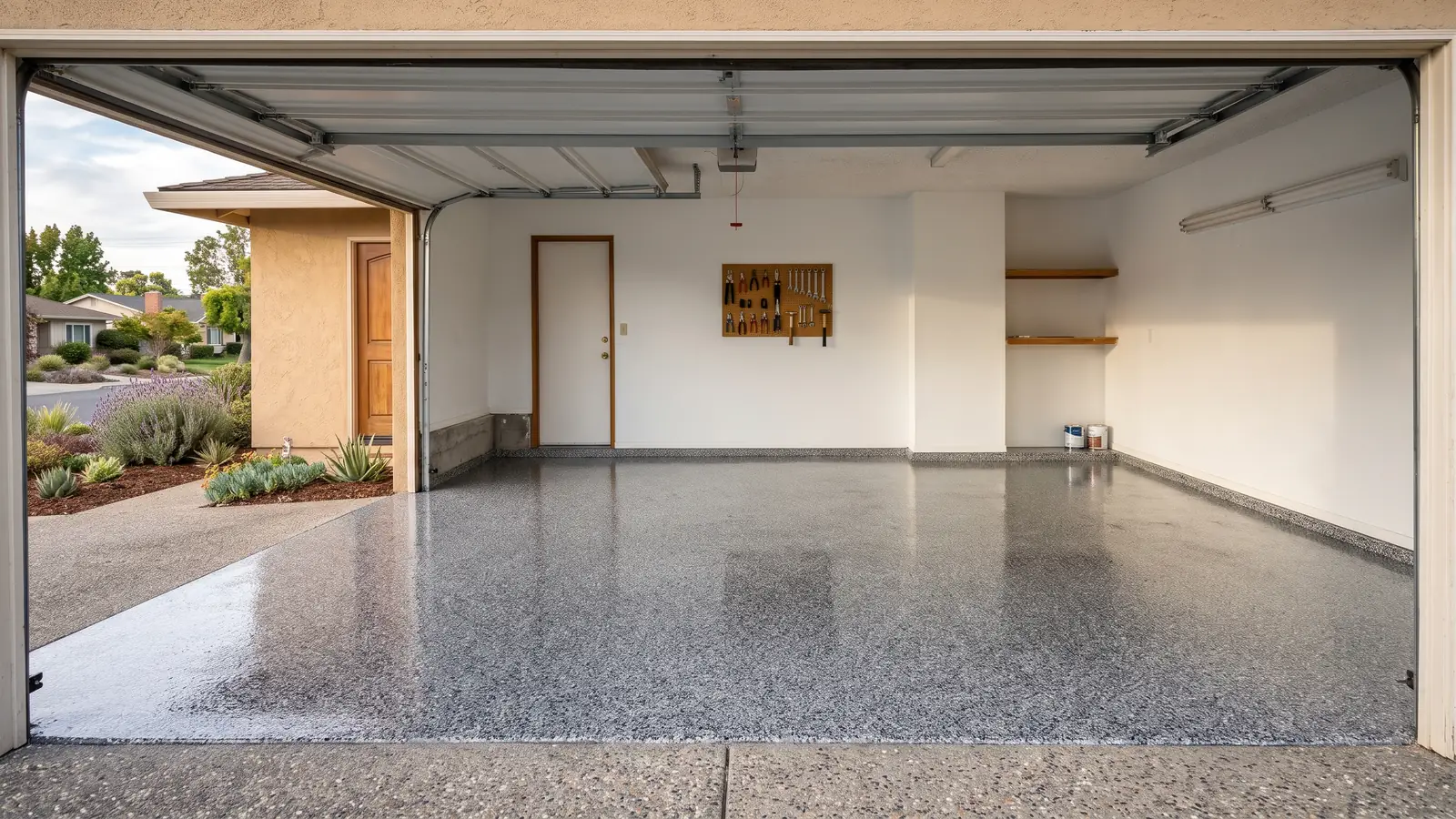
Metallic epoxy works in a garage, but two things change compared with a living room. First, the garage door lets in sun, and plain epoxy isn't made for UV exposure, so the topcoat has to be a UV-stable polyaspartic or urethane (our polyaspartic page explains why). Second, grit from tires gets dragged across a glossy surface every day. For a hard-working garage we'd still steer toward flake; a metallic garage is a choice for looks first.
Satin-Topcoat Metallic
The metallic coat itself cures to a high gloss. Some owners prefer a softer finish, and a clear urethane topcoat with a satin finish over the metallic gives that, along with added abrasion and UV resistance. You give up some of the mirror depth that makes metallic floors striking. In exchange, the floor glares less under windows and lights. It's worth seeing the two finishes side by side before deciding.
Why Hayward homeowners call Hayward Epoxy Floors
- No fee to you for the referral
- Your request goes to one local installer, not a list
- Ask for a written scope: system, coats and cure time
- Free estimate after the slab is looked at
Metallic Floor Scratches and Care
Gloss is unforgiving: on a deep, mirror-like surface, a fine scratch catches the light. One maker's data sheet warns that dirt and grit tracked onto the floor will quickly scratch and dull the surface. Its advice is plain and works: walk-off mats at the entries, regular sweeping, and mopping with soft pads and a mild cleaner.
A few habits help in a home. Put felt pads under chair and table legs. Don't drag appliances across the floor. Like other epoxy floors, a metallic floor can be slippery when wet, so ask about a textured topcoat near doors and in bathrooms. When the topcoat wears, it can be sanded dull and recoated without touching the metallic layer underneath.
Metallic Epoxy Prep and Timing
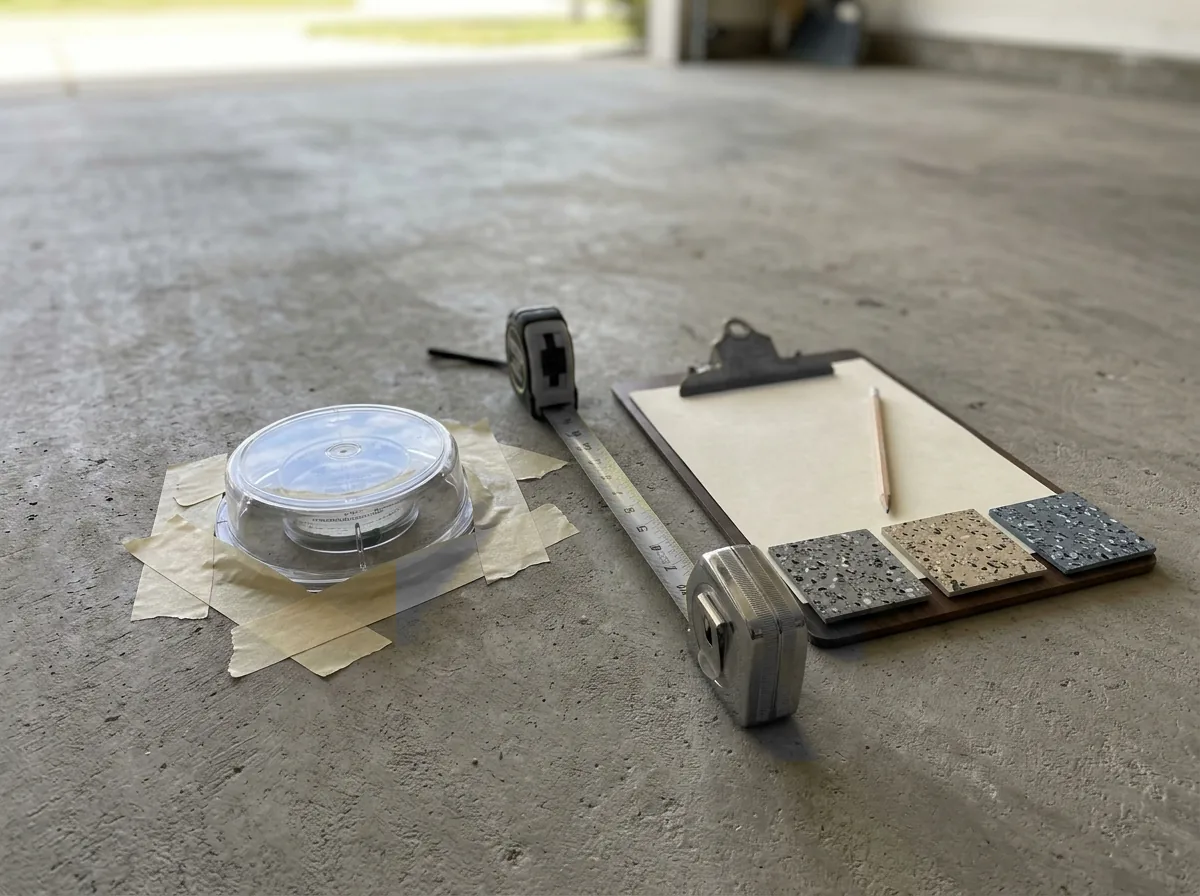
A metallic pour is a clear, self-leveling layer with no chips on top, so ask how the installer will treat cracks, ridges and old patches before the pour. Moisture matters too: the metallic data sheet we read limits slab moisture and calls for a vapor-barrier primer when readings run high. See concrete grinding for how slabs are tested.
Timing is the other limit. The metallic coat has to be topcoated within 48 hours, or the whole surface needs sanding before the topcoat goes on. It also wants air and material between 60°F and 85°F. Because the room stays empty until the cure is done, a metallic floor fits most easily into a remodel schedule.