
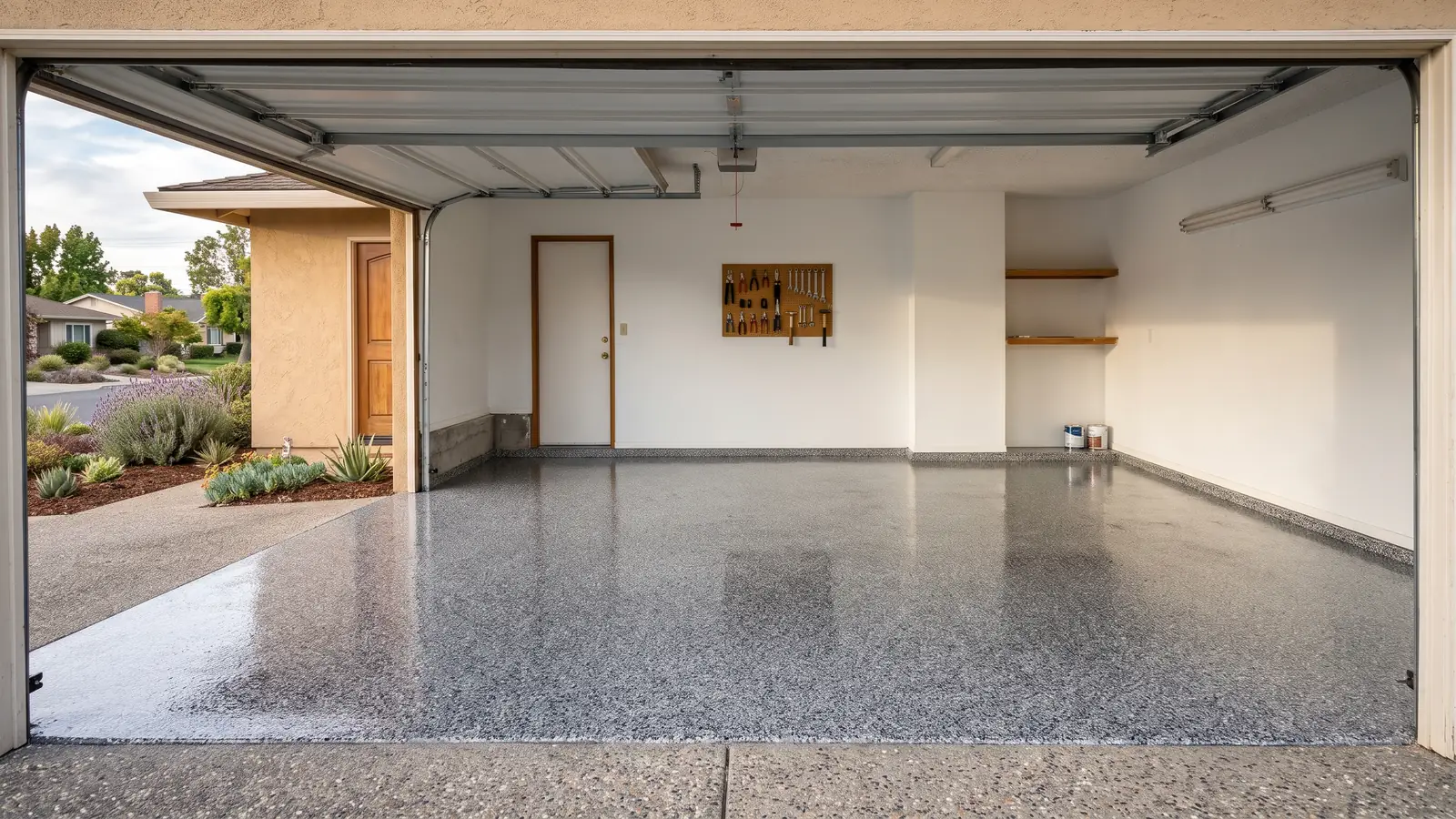
Cost
no national guide prices quartz on its own. A Houston cost guide lists quartz epoxy at $6 to $10 a square foot, against $4 to $7 for flake in the same guide. Treat that as a ratio, not a Hayward price.Thickness
broadcast systems run about 1/16 to 1/8 inch; troweled quartz mortar goes down at 3/16 to 1/4 inch.Time
each broadcast layer cures overnight, and one double-broadcast system asks for 48 hours with no traffic after the last coat.What's included
primer, one or two layers of resin with quartz broadcast to refusal, sweeping off the loose sand, and a clear seal coat.Choices that matter
broadcast or troweled, the quartz color blend, and how much texture the seal coat leaves.
Hayward Epoxy Floors matches your job with an independent local installer for quartz floors in bathrooms, wet rooms, kitchens and garages. Quartz is the grippy, hard-wearing option among decorative epoxy systems: colored quartz granules locked in a 100% solids clear epoxy, sealed with epoxy or urethane. The installer controls the texture with the seal coat, so the same floor can be left rough for wet areas or smoothed for easy mopping. How wet the room gets decides most of the system, so lead with that when you call.
Quartz Epoxy Flooring Systems
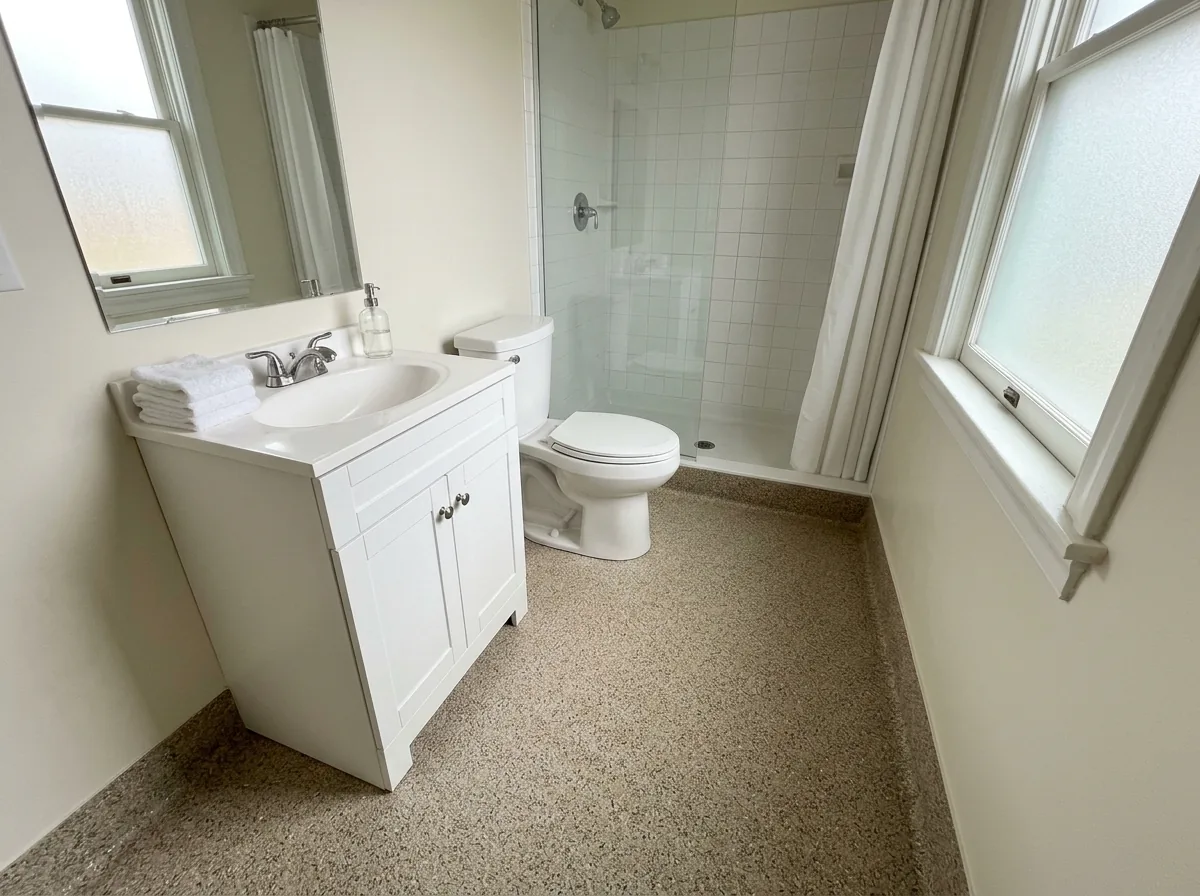
Single-Broadcast Quartz
One layer of binder resin, one broadcast of colored quartz, then the seal coat. It's the lighter build of the two broadcast systems, and in a home laundry room or powder room one layer of sand often gives all the texture you need. Because there's only one layer of sand, how the seal coat goes on decides the feel: the thicker the sealer, the smoother the finish.
Double-Broadcast Quartz
Most quartz floors are done as a double broadcast. The crew lays resin, throws quartz into it until it won't take more, lets it cure overnight, sweeps and vacuums off the excess, then repeats with a second lift before sealing. One manufacturer's double-broadcast system builds to 1/8 inch (125 mils) and asks for 48 hours with no traffic, plus five days before heavy abrasion or chemicals. Broadcast quartz has a natural non-skid texture and a little more flex than a troweled floor.
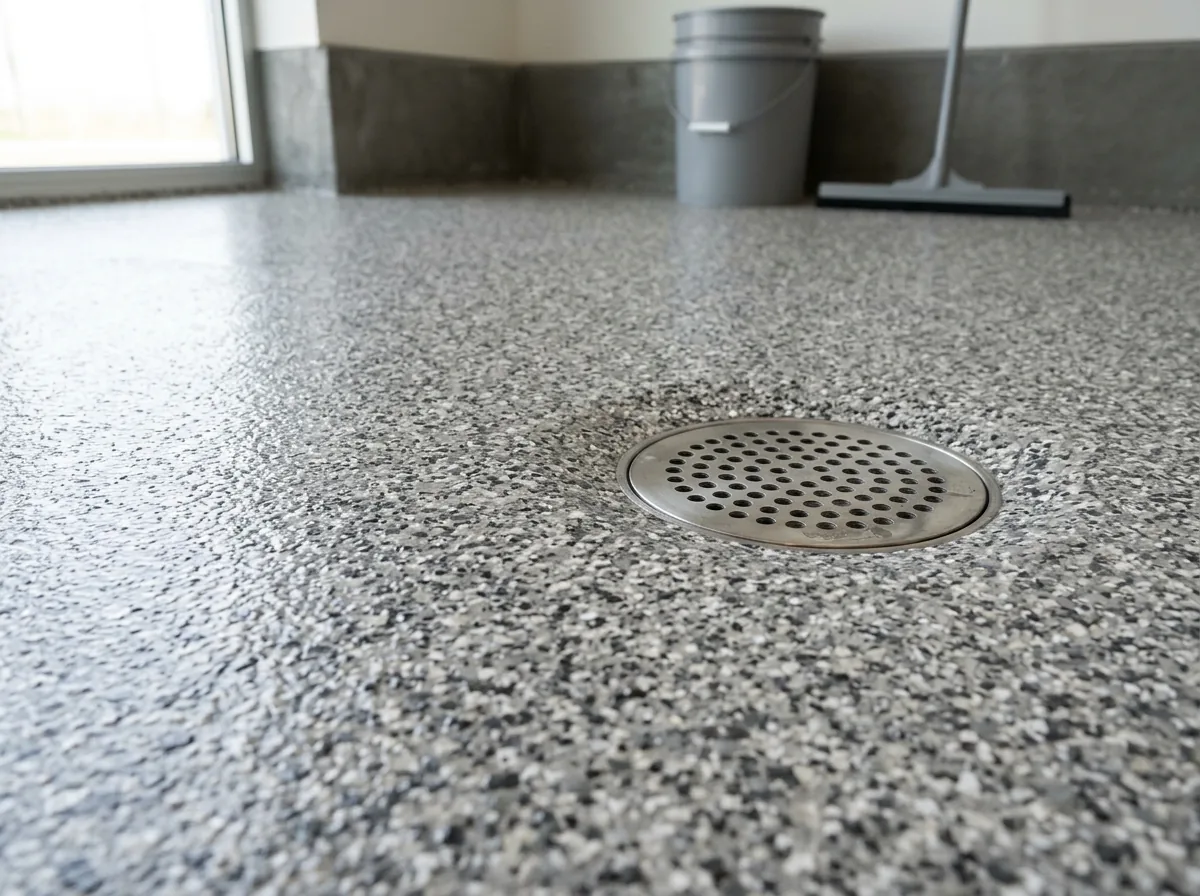
Troweled Quartz Mortar
Here the quartz is mixed into the epoxy first, like damp beach sand, and troweled on at 3/16 to 1/4 inch, then grouted with clear resin and topcoated. Contractors describe it as smoother, more colorful and more durable than broadcast, and it's also more expensive and takes more skill to keep flat. Its real advantage is control. A mortar can be sloped toward a floor drain and can bridge a rough or worn slab that a broadcast floor would show.
Quartz for Showers, Locker Rooms and Wet Rooms
Wet rooms are where quartz earns its price. Systems sold for bathrooms and locker rooms carry the coating up the wall as an integral cove base, so water has no seam to get into (our commercial kitchen flooring page covers cove details). For a shower or a room where people walk barefoot, ask for a rougher seal coat or added grit, and see the slip numbers below.
Grit Additives for Non-Slip Topcoats
Where a floor needs more grip than the quartz alone gives, installers sprinkle aluminum oxide or polypropylene grit into the wet topcoat. One quartz system's data sheet names aluminum oxide as its option for heavy-traffic areas. The same additives go into flake and solid-color topcoats, which is how other epoxy floors get their non-slip versions.
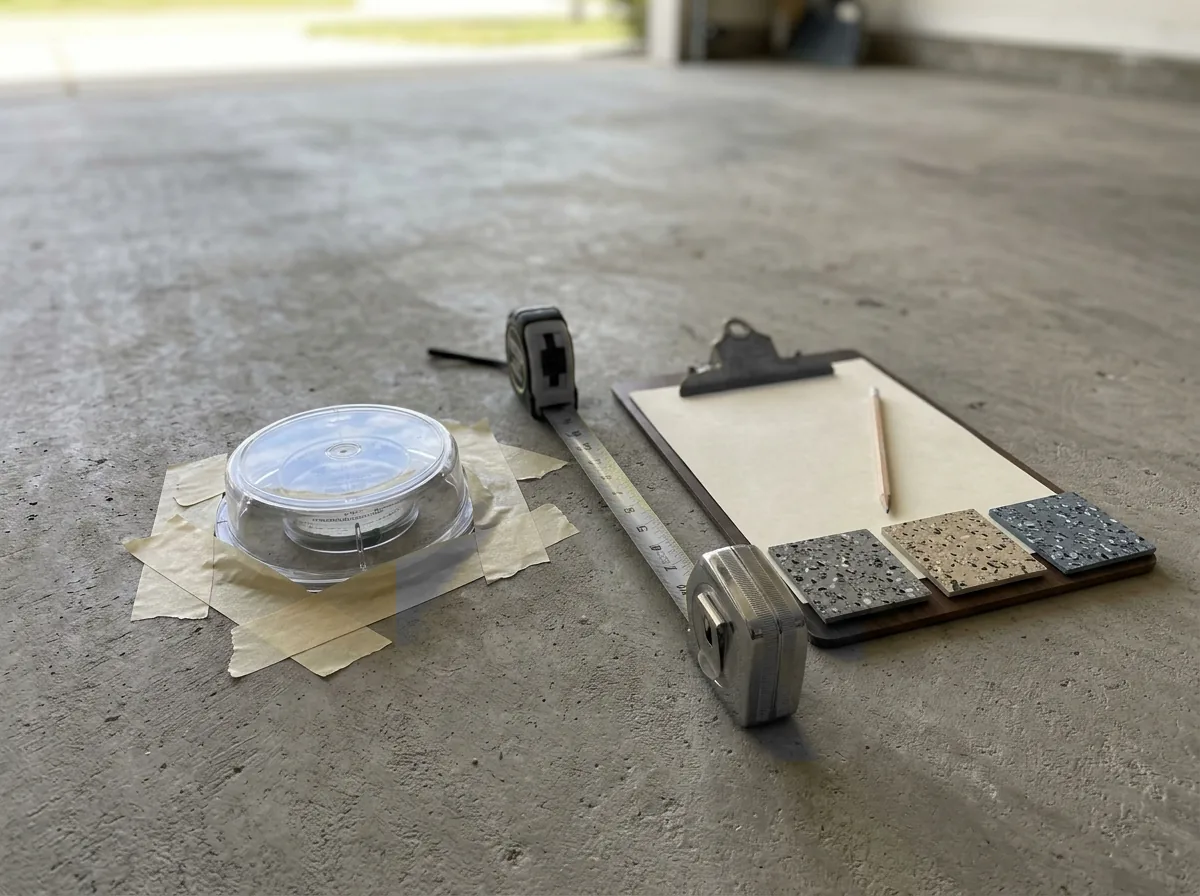
Why Hayward homeowners call Hayward Epoxy Floors
- No fee to you for the referral
- Your request goes to one local installer, not a list
- Ask for a written scope: system, coats and cure time
- Free estimate after the slab is looked at
Quartz Floor Slip Resistance in Numbers
Slip resistance is measured as a wet dynamic coefficient of friction (DCOF). The tile industry's ANSI A326.3 standard sets 0.42 as the minimum wet DCOF for level interior floors expected to be walked on when wet, and it warns that passing 0.42 doesn't make a floor right for every project. A separate walkway standard, NFSI B101.3, recommends 0.60 or more for barefoot wet areas such as showers and pool decks, and for greasy floors such as garages and food prep areas.
Both were written with hard surface flooring such as tile in mind, so treat the numbers as a target to ask about rather than a label every coating carries. A useful question: "Has this system, with this seal coat, been tested for wet DCOF, and what did it score?" If the answer is no, ask to walk a sample board with wet shoes.
Quartz Epoxy Flooring vs Flake
Flake is the cheaper of the two in the one guide that prices both. Quartz is grittier, and coating makers aim it at labs, restrooms, locker rooms, kitchens and showrooms. If the room is dry and the goal is color, a flake floor usually makes more sense. If the room is wet, sees boots or bare feet, or needs to slope to a drain, quartz is the better spend.