
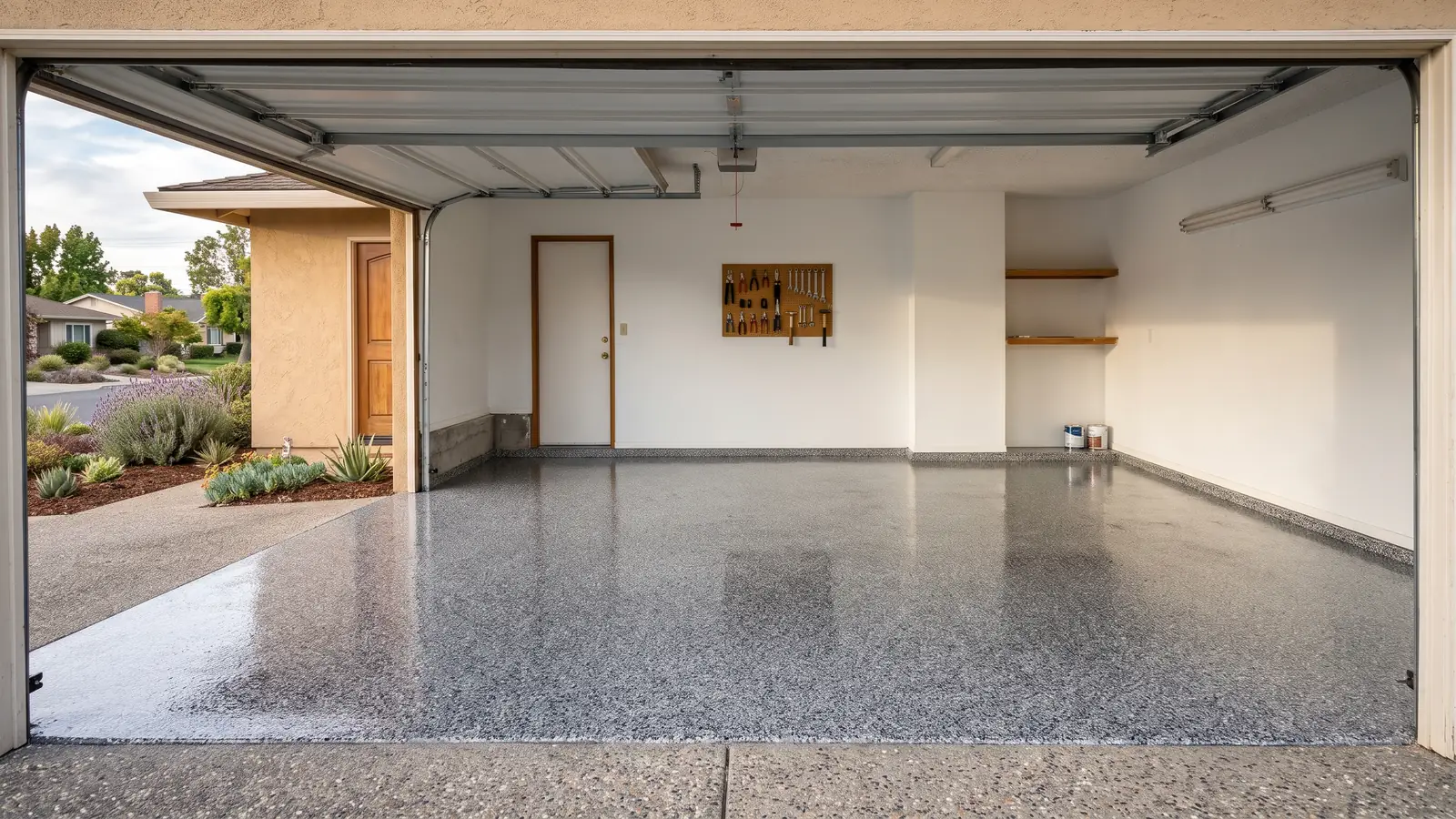
Cost
Cost guides fold grinding into a coating's prep and publish no separate price; heavy repair or resurfacing adds about $1 to $5 a square foot, and moisture testing runs $50 to $300.Time
On a garage coating job, grinding is the first-day work within the usual 1 to 3 days on site.Target profile
CSP 2 to 3 for most epoxy primers and polyaspartic topcoats, up to CSP 3 to 5 for heavy broadcast systems.Moisture limits
One published spec allows 3 pounds of vapor per 1,000 square feet per 24 hours, or 75% relative humidity, before a standard coating.
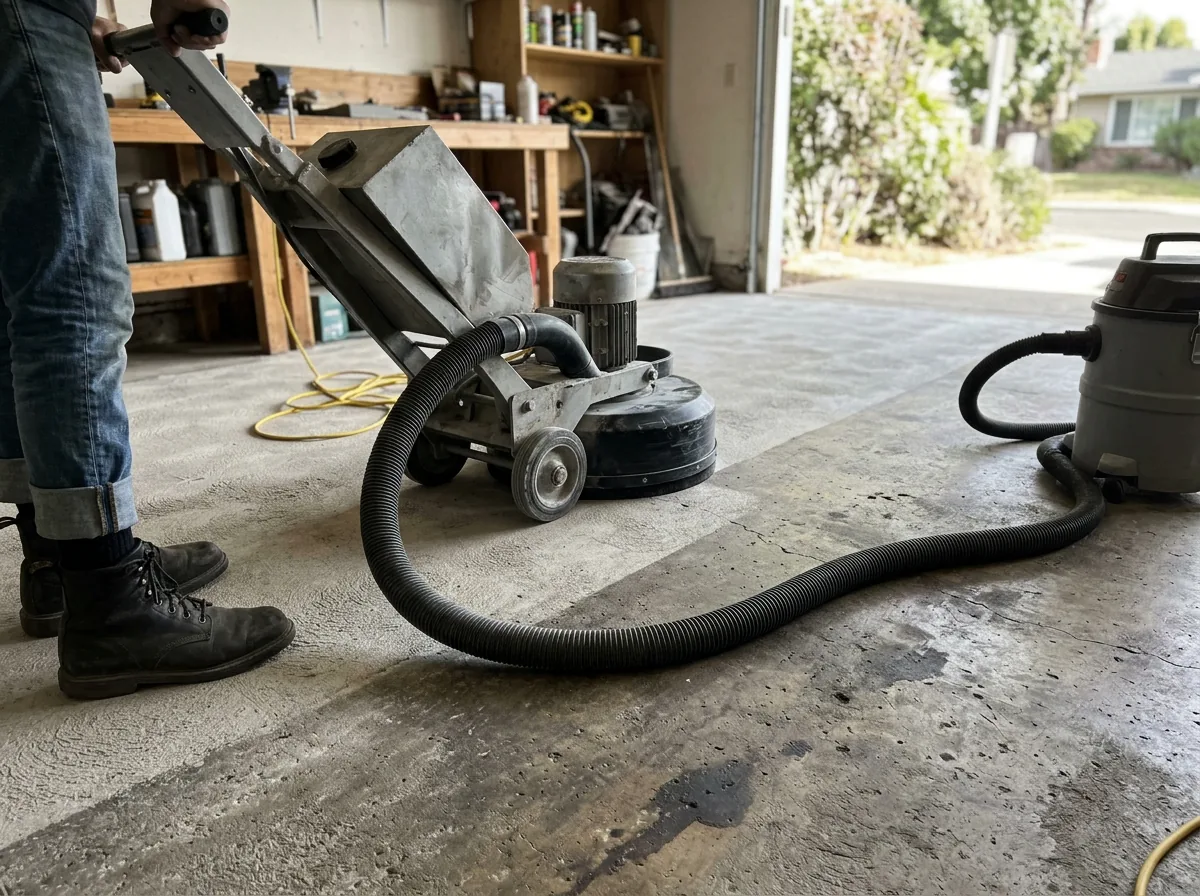
Hayward Epoxy Floors books you in with an independent local installer who grinds concrete for coatings, polishing and repair. The work is done with walk-behind diamond grinders, with tooling matched to the job: coarse metal-bond segments to open the surface or strip a coating, finer passes to smooth it. The aim is a measurable concrete surface profile on the ICRI CSP scale, checked against reference chips, rather than the acid etch some cost guides still describe. A moisture test belongs on the same visit, because a slab that's too damp will push off any coating that goes on it.
Concrete Grinding Services, from Coating Prep to Moisture Tests
Surface-Profile Grinding for Coatings (CSP 2 to 3)
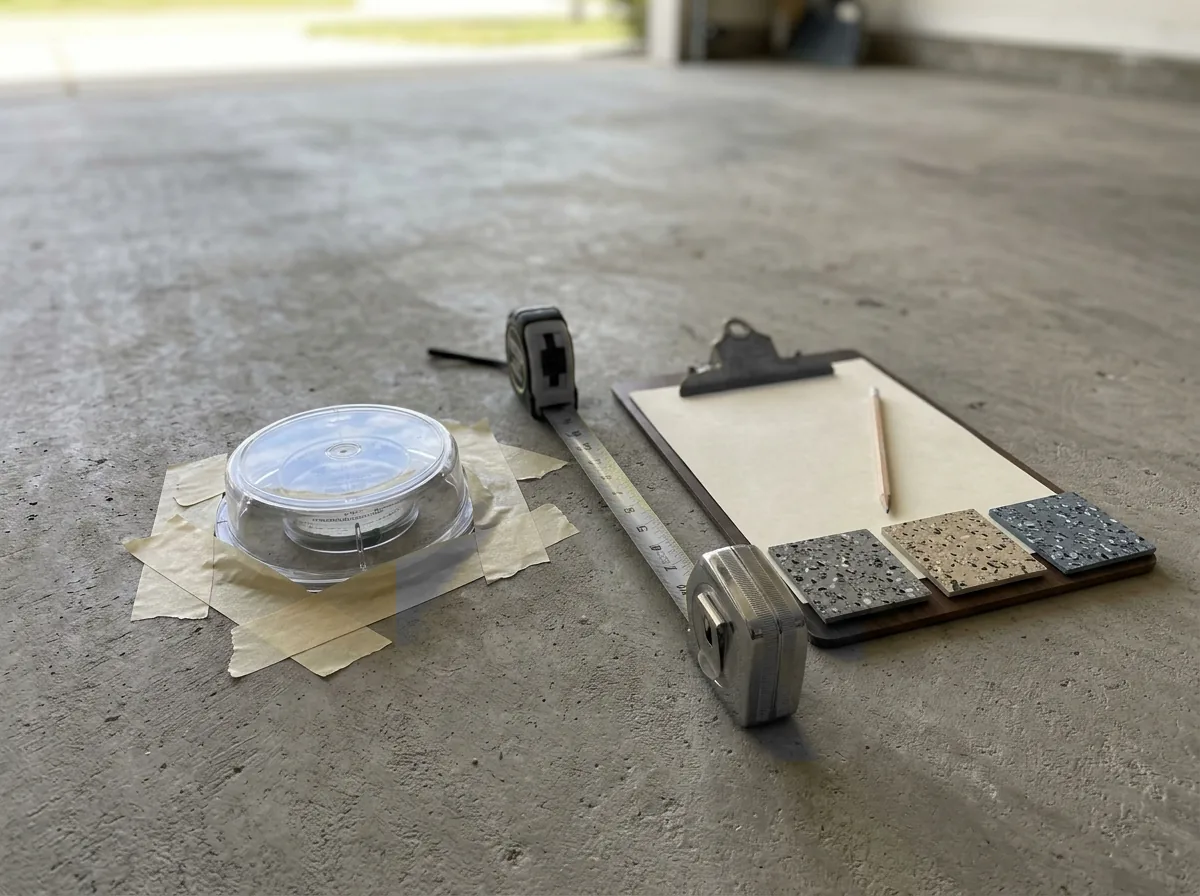
A coating bonds mechanically, so the slab needs the right texture: rough enough to grip, not so rough that the coat can't cover the peaks. It's the same logic as picking sandpaper before painting trim, only measured. Profile is graded on the ICRI concrete surface profile scale. One vendor guide gives CSP 2 to 3 for standard epoxy primers and polyaspartic topcoats and says diamond grinding reaches CSP 1 to 3. A manufacturer's medium-duty epoxy system asks for CSP 2 to 4, its high-traffic broadcast system CSP 3 to 5, and a Sika epoxy data sheet CSP 3 to 4. The same guide is blunt about acid etching: it "does not create adequate CSP." Ask the installer which CSP the product sheet calls for and how they'll check it.
Floor Leveling and High-Spot Removal
Grinding takes material off, which makes it the tool for high spots, ridges, form lines and lumps of old patching. It can't fill a low spot. Those get a patching mortar or a self-leveling topping, which goes on from about 1/4 inch thick (concrete resurfacing). National guides price leveling at about $3 to $12 a square foot. Flatness matters most before polishing, where the polishing council treats it as an important factor in what finish a slab can take, and before thin coatings, where every dip shows under a gloss.
Glue, Mastic and Paint Removal after Carpet, Tile or VCT
Pulling up carpet, tile or vinyl composition tile (VCT) leaves adhesive, thinset and paint that a coating won't bond to, and coarse diamond grinding is the standard way to take coatings and adhesives off. One caution comes first. Older black mastic can contain asbestos, and federal rules treat sanding and grinding of asbestos-containing mastic as aggressive methods, allowing wet scraping or approved removal solutions instead. Most of Hayward's homes were built before 1980, so on any older tile floor, have the adhesive tested before anyone grinds it. Taking off an old epoxy or garage coating is a separate job: see epoxy coating removal.
Trip-Lip and Slab-Edge Grinding
Where two slabs settle unevenly, the raised edge is a trip hazard, and grinding it down avoids tearing out the slab. For businesses, the federal ADA standards set the targets: a change in level up to 1/4 inch may be vertical, a change from 1/4 to 1/2 inch must be beveled no steeper than 1:2, and anything over 1/2 inch needs a ramp. The ADA standards are written for public spaces, but the same numbers are a sensible target for a home walkway or garage entry. If the slab is still moving, the lip will come back, so cracks that keep growing belong with concrete crack repair.
Moisture Testing and Vapor-Barrier Primers
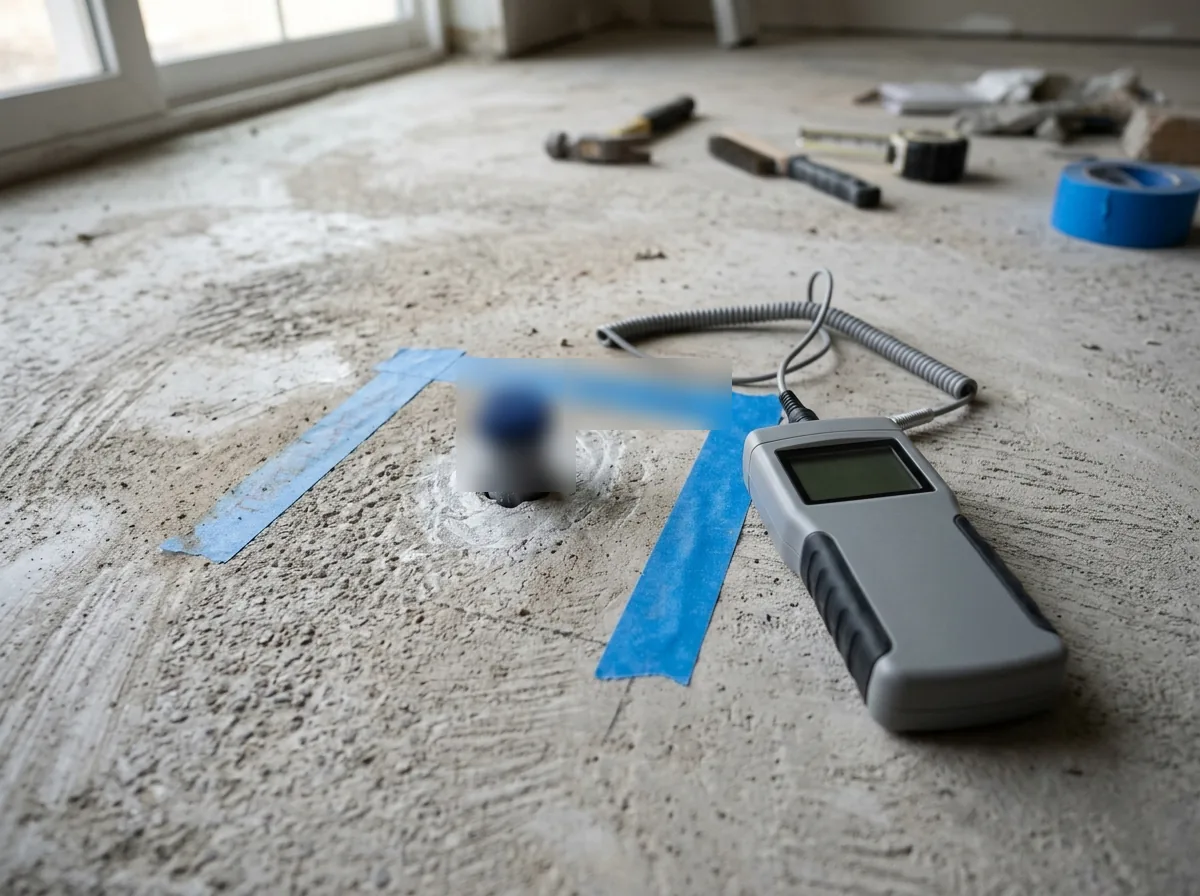
Moisture moving up through a slab is a known cause of coatings blistering and letting go, and testing is cheap insurance at about $50 to $300. There are two standard methods:
- ASTM F1869: a calcium chloride dish sealed under a dome measures the moisture vapor emission rate
- ASTM F2170: probes in holes drilled into the slab read relative humidity
- One published spec limit: 3 lb/1,000 sq ft/24 h by F1869, or 75% RH by F2170
- Standard epoxy systems in one maker's specs tolerate the same 3 lb figure
When a slab tests above the coating's tolerance, the fix is a moisture-mitigation epoxy primer under the system. One such primer is rated for slabs up to 25 pounds by F1869 or 100% RH by F2170. It adds a coat and cost, which is why the test result should be written into the quote.
Why Hayward homeowners call Hayward Epoxy Floors
- No fee to you for the referral
- Your request goes to one local installer, not a list
- Ask for a written scope: system, coats and cure time
- Free estimate after the slab is looked at
Concrete Grinding Dust Control and HEPA Vacuums
Ground concrete throws off respirable crystalline silica, and federal OSHA rules (29 CFR 1926.1153, Table 1) set out how a walk-behind floor grinder has to be run. The machine needs either an integrated water feed to the cutting surface or the manufacturer's dust-collection system, with a filter of 99% or greater efficiency and a filter-cleaning mechanism. Indoors, a HEPA-filtered vacuum picks up loose dust between passes, and dry sweeping is out where it would raise silica. HEPA here means a filter that catches 99.97% of particles at 0.3 microns.
For a homeowner that translates into simple checks. The grinder should run with a shroud and a hose to a vacuum, not trailing a cloud. The door from the garage into the house should be sealed off. The floor should be vacuumed, not swept, before the base coat.
Concrete Grinding in the Written Quote
- The target CSP and the product sheet it comes from
- Moisture test method, number of tests and the result, in writing
- What happens and what it costs if the slab fails: a vapor primer, or a different system
- Whether old adhesive will be tested for asbestos before grinding
- Grinder, shroud and vacuum setup, and how the house will be sealed off
- Who handles crack, joint and trip-lip repair, and at what price