
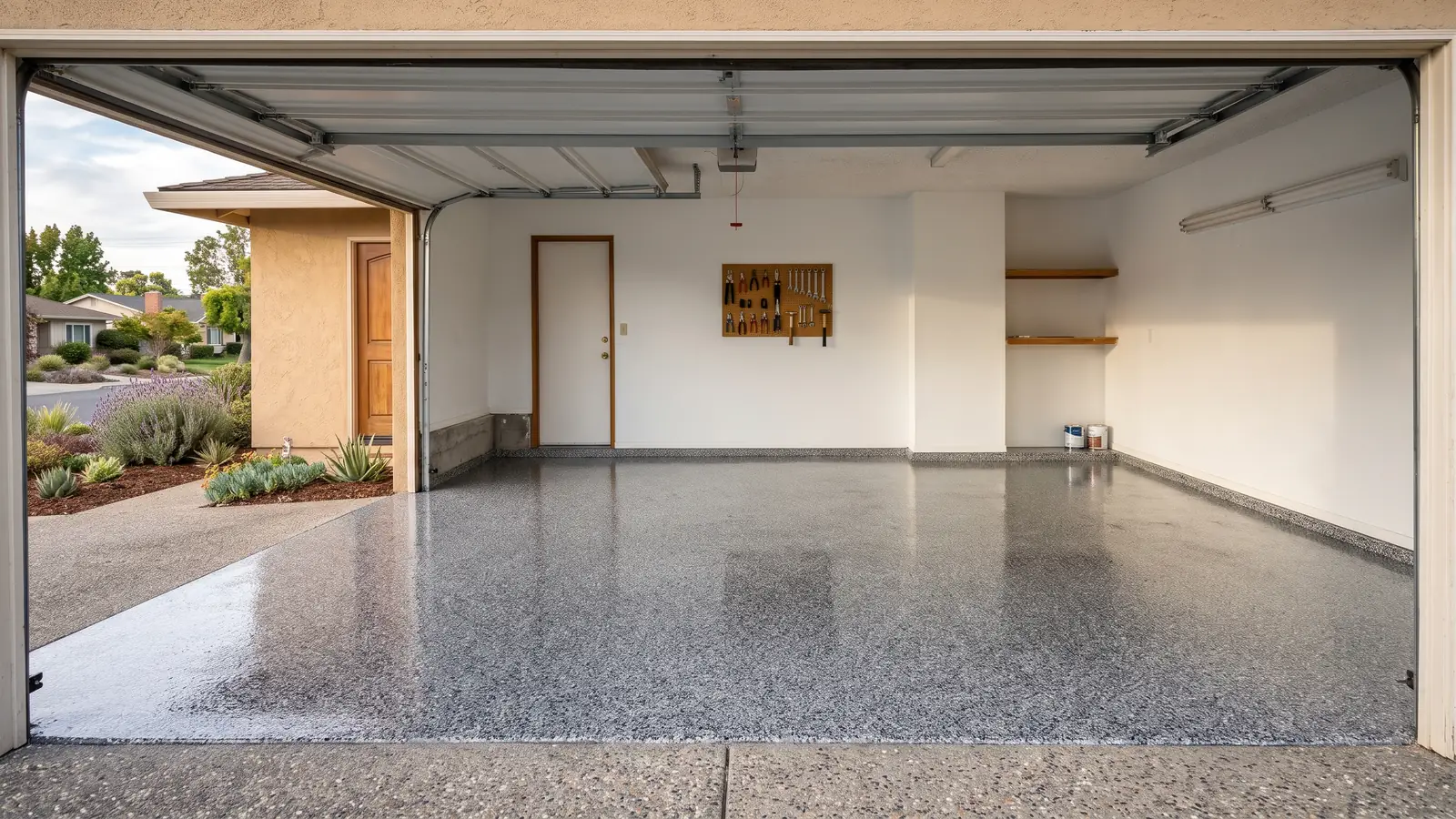
Cost
National guides put polished concrete at about $3 to $12 a square foot for a basic finish and $5 to $15 or more for decorative work.Time
Most residential floors up to 2,000 square feet take 2 to 4 days; commercial floors of 5,000 to 10,000 square feet take 1 to 2 weeks.What's included
Grinding, filling pores and cracks, a liquid densifier, polishing passes to the chosen sheen, and an optional stain-guard.Choices
How much aggregate shows (cream, salt-and-pepper or exposed stone), gloss Level 1 to 4, and whether to add dye.
Hayward Epoxy Floors connects you with an independent local installer who grinds and polishes existing concrete slabs. Polishing starts with metal-bond diamond tooling to cut the surface, switches to resin-bond diamonds for the finer passes, and uses a liquid silicate densifier to harden the slab along the way. The industry's Concrete Polishing Council grades the result two ways: aggregate exposure, Class A to C, and gloss, Level 1 to 4. Apart from an optional stain-guard, nothing sits on top, so the floor you get is your own concrete, refined.
Concrete Polishing Finishes, from Cream to Exposed Aggregate
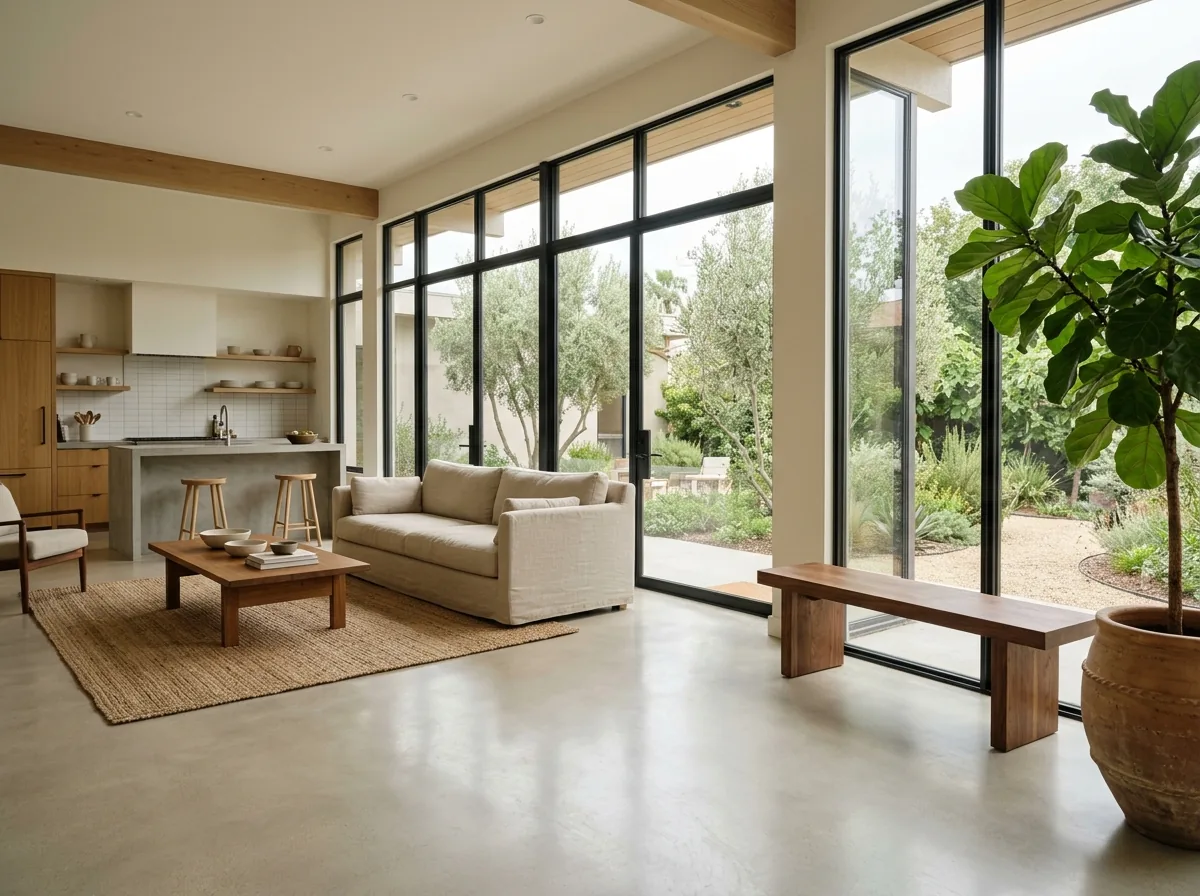
Cream Polish (Class A)
A cream finish polishes the cement paste at the very top of the slab and exposes almost no aggregate: 85% to 95% of the surface stays cement fines. It's the smooth, uniform look of many modern interiors. Because the cut is so shallow, it won't remove existing blemishes, trowel marks or old patches, so a slab that's been through a few remodels may not be a good candidate. It's also the least grinding, which keeps it the cheapest finish, about $3 to $8 a square foot nationally.
Salt-and-Pepper Polish (Class B)
A slightly deeper cut, about 1/16 inch, opens the sand in the top of the slab and gives the speckled salt-and-pepper look, with 85% to 95% fine aggregate showing. It hides small surface flaws better than cream and still avoids the cost of cutting down to the stone. National guides price it around $4 to $10 a square foot. The polishing council notes that floor flatness is an important factor in choosing the class, so on a slab that was troweled unevenly, ask whether a cream finish can stay consistent or whether salt-and-pepper is the safer target.
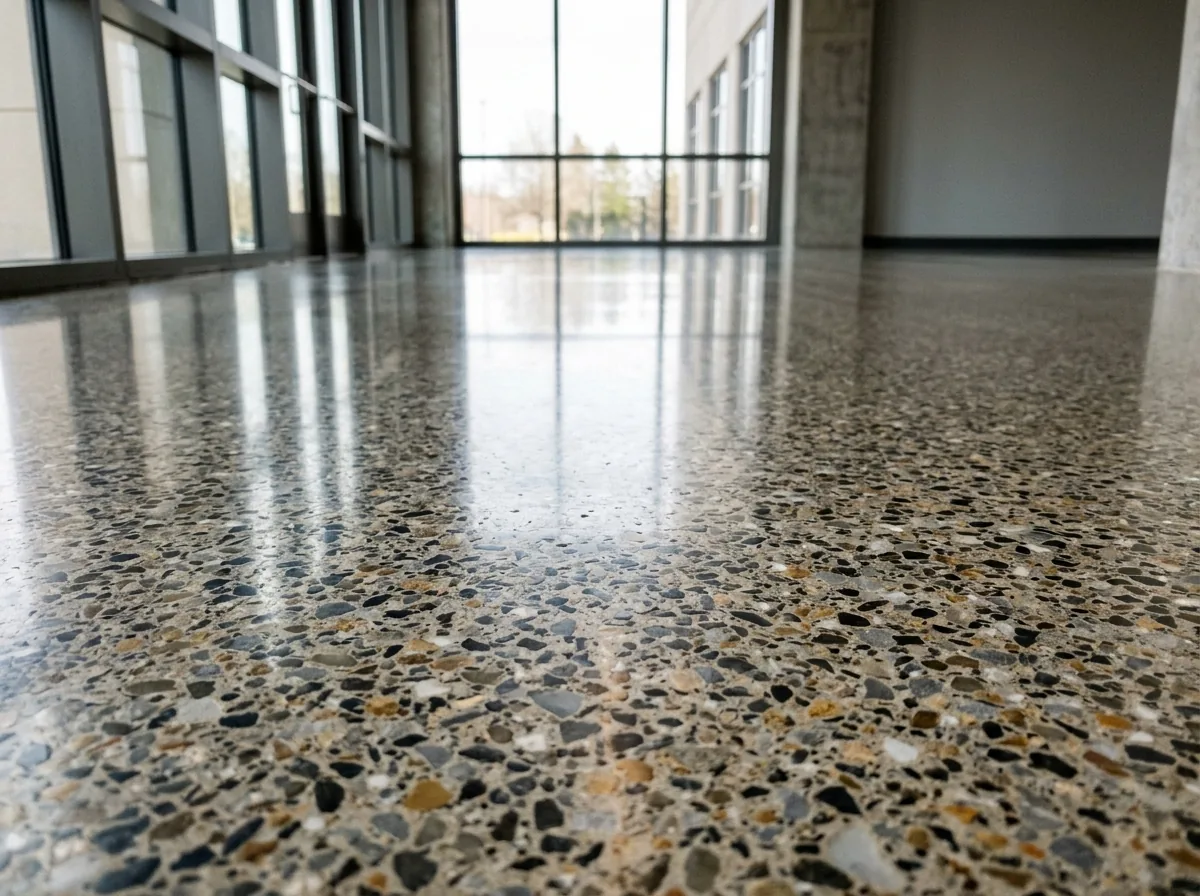
Exposed-Aggregate Polish (Class C)
Grinding deeper exposes the coarse stone in the mix, with 80% to 90% of the surface showing full aggregate, for a terrazzo-like floor. Older charts split this into medium aggregate at about 1/8 inch of cut and large aggregate at about 1/4 inch. It's the most dramatic finish and the most work, at roughly $6 to $12 a square foot. What you'll see depends on the stone that went into your slab, and the polishing council notes that aggregate varies from area to area and color can shift from gray to brown once the paste is gone. Ask for a test patch on your actual floor before committing.
Dyed Polished Concrete
Dye is applied to the polished concrete to add color while keeping the polished surface. National guides put dye at about $1 to $3 a square foot on top of the polish. Acid and water-based stains are a separate family with their own look and costs; they're covered on the stained concrete floors page.
Grind and Seal (Budget Option)
Grind and seal takes the first grinding passes, then puts a topical sealer on the slab instead of polishing it. The result is matte to satin, takes less labor and costs less. The trade-off is durability: a polished slab holds up better over time, while the sealer layer wears and needs recoating. Concrete sealing costs about $1 to $3 a square foot nationally and needs reapplying every 2 to 5 years. Sealer types are covered under stained concrete floors.
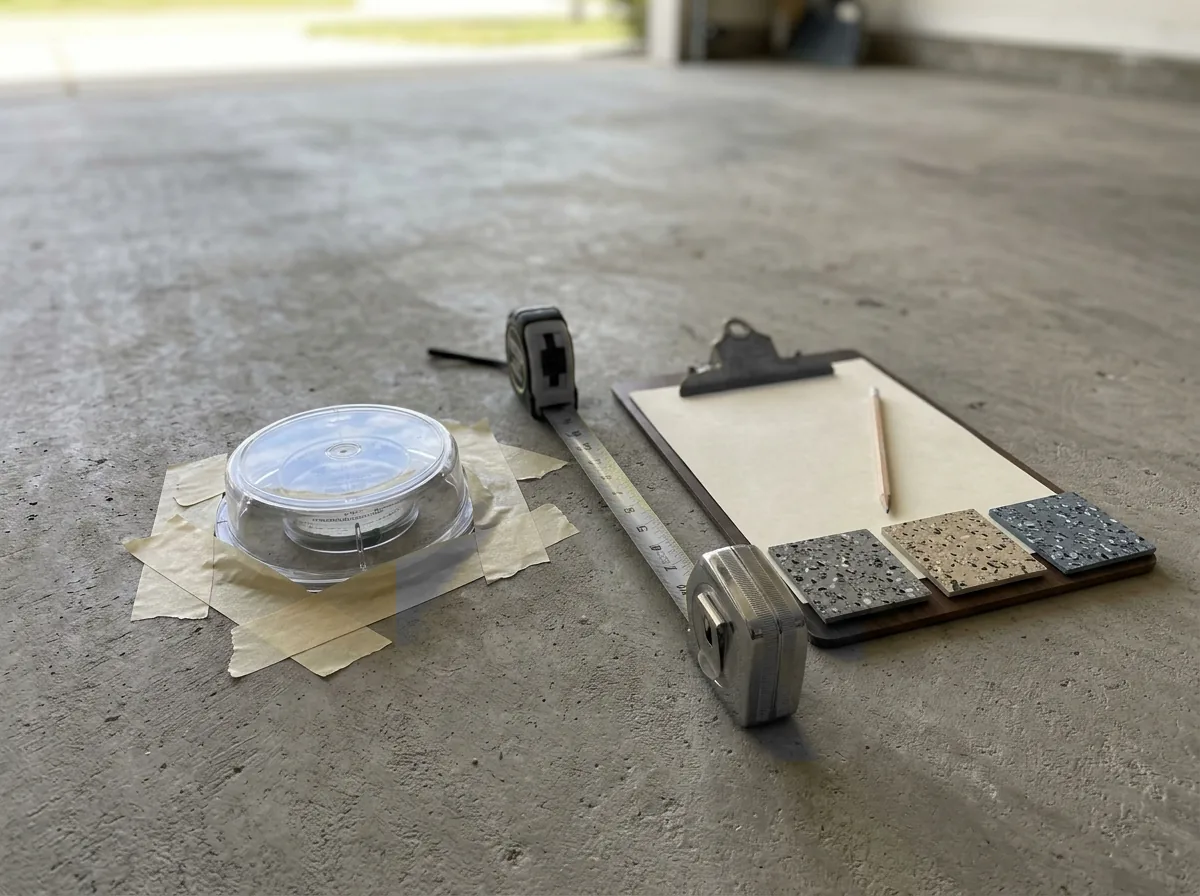
Why Hayward homeowners call Hayward Epoxy Floors
- No fee to you for the referral
- Your request goes to one local installer, not a list
- Ask for a written scope: system, coats and cure time
- Free estimate after the slab is looked at
Concrete Polishing Gloss Levels and the Densifier
Gloss is graded in four levels. The current council chart grades them by reflective clarity; an older industry chart adds the diamond grit where each level usually stops:
| Level | Name | Reflective clarity (current chart) | Typical final grit (older chart) |
|---|---|---|---|
| 1 | Flat (ground) | 0-9% | below 100 |
| 2 | Satin (honed) | 10-39% | 100-400 |
| 3 | Polished | 40-69% | 800 and higher |
| 4 | High polish | 70-100% | 800 and higher |
At Level 3 a floor clearly reflects side and overhead lights from 30 to 50 feet away. Level 4 looks wet from most angles and is reached at around 3,000 grit or with a high-speed burnisher. More shine means more passes and more labor: national guides run from about $3 to $6 a square foot for a soft matte up to $6 to $15 for a high gloss. To our eye, a garage or shop looks right at Level 2, and a living room or showroom at Level 3.
The densifier is what makes polished concrete harder than plain concrete. It's a liquid silicate (sodium, lithium or a silicate/siliconate blend) that reacts with the free lime left over from cement curing and forms more calcium silicate hydrate, the compound that gives concrete its strength. A densified floor dusts less, wears less, takes a better polish and absorbs less liquid, which is why true polished concrete doesn't strictly need a sealer. A stain-guard is still worth adding in kitchens and garages, where oil and acidic spills can mark it.
What Moves a Concrete Polishing Quote
Size
Rooms under 1,000 square feet often price at $8 to $15 or more a square foot; floors over 5,000 can drop to $3 to $6.Condition
Leveling adds $3 to $12 a square foot, minor crack and patch repairs $100 to $800, and old sealers, paint or epoxy have to be ground off first (concrete grinding and coating removal).Access
Tight rooms, columns and corners need hand grinding; hard-to-reach spaces can add 10% to 30%.Labor
Most of the bill, at about $40 to $100 an hour nationally.Finish
Aggregate class, gloss level and dye, priced above.
The cleanest way to compare quotes is to ask each installer for the exposure class, the gloss level, the final grit, the densifier type and whether a stain-guard is included. Two quotes for "polished concrete" can describe very different floors.