
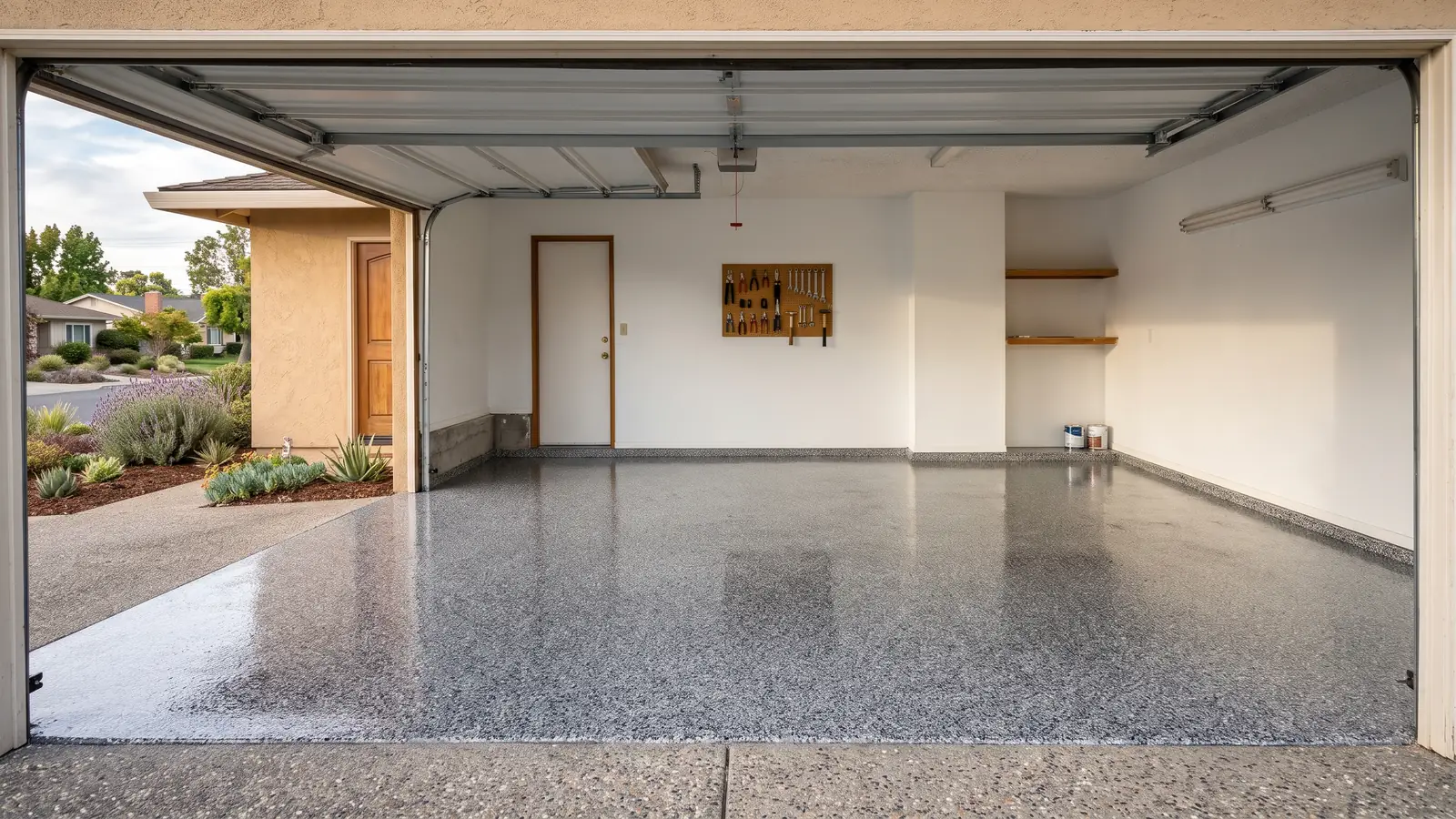
- National cost guides put a basic overlay at about $3 to $7 a square foot, decorative overlays with stain or stencils at $6 to $10, and stamped overlays at $7 to $20.
- A two-car driveway resurfaced with a basic overlay comes to roughly $1,200 to $2,900 in the same guide.
- Overlays range from a 1/32-inch skim to about 2 inches of self-leveling topping, and a well-bonded overlay lasts about 8 to 15 years.
- One self-leveling underlayment is walkable in 2 to 3 hours and ready for most floor coverings after 16 hours.
The choices that matter
Thickness, texture or pattern, color, and whether the slab underneath is sound enough to resurface at all.
Hayward Epoxy Floors points your call to one independent local contractor who resurfaces worn driveways, patios, garage slabs and interior floors. Resurfacing puts a thin layer of cement and polymer resin over concrete that is ugly or worn but still sound. It costs less than tearing out and pouring a new slab, and the overlay can be colored, textured or stamped. It can't fix a slab that is heaving or broken.
Concrete Resurfacing Types by Thickness
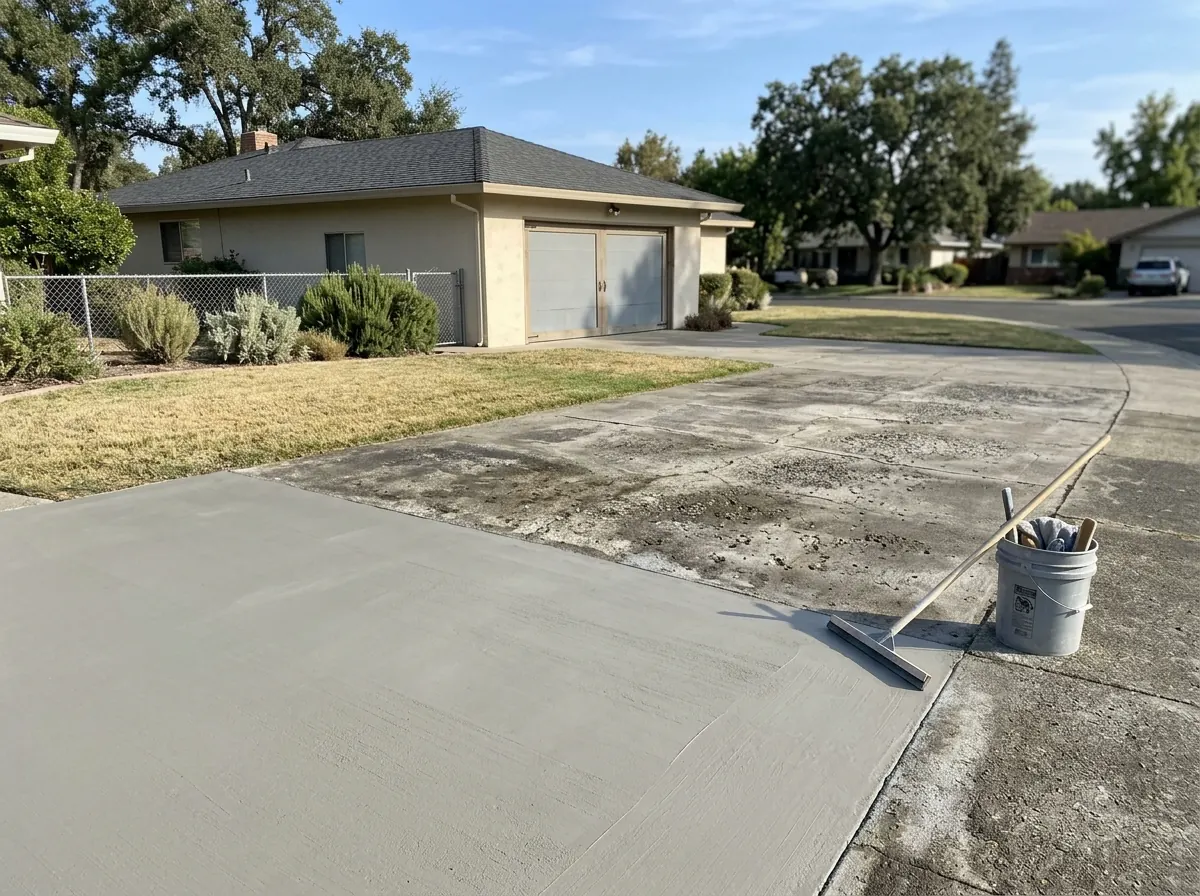
Polymer-Modified Skim Coats
A skim coat is the basic resurfacing job: a cement-and-polymer mix spread thin with a squeegee or trowel over cleaned concrete to hide pitting, scaling and old patches. Knockdown and spray-down versions go on about 1/8 inch thick and leave a splatter or shallow texture instead of a slick finish. This is the $3 to $7 a square foot tier. It suits driveways, walkways and patios where the surface is worn but the slab is level and solid.
Self-Leveling Toppings and Underlayments
Self-leveling products are poured, not troweled, and flow out flat. Guides list them from about 1/4 inch up to 2 inches thick, at around $2 to $5 a square foot for thin interior work. One common underlayment installs up to 1-1/2 inches neat, is made for dry interior spaces, and isn't a vapor barrier, so the maker asks for a relative humidity test of the slab first. It fixes dips and uneven old floors inside, not sunken outdoor slabs.
Microtopping
Microtopping is the thinnest decorative layer, roughly 1/32 to 3/16 inch depending on the guide, troweled in a few passes for a smooth or lightly textured finish. It costs about $3 to $7 a square foot in national guides and takes solid or stenciled color, stains and dyes. Because it is so thin, every crack or hollow spot in the slab below will show through, so prep decides how it ends up.
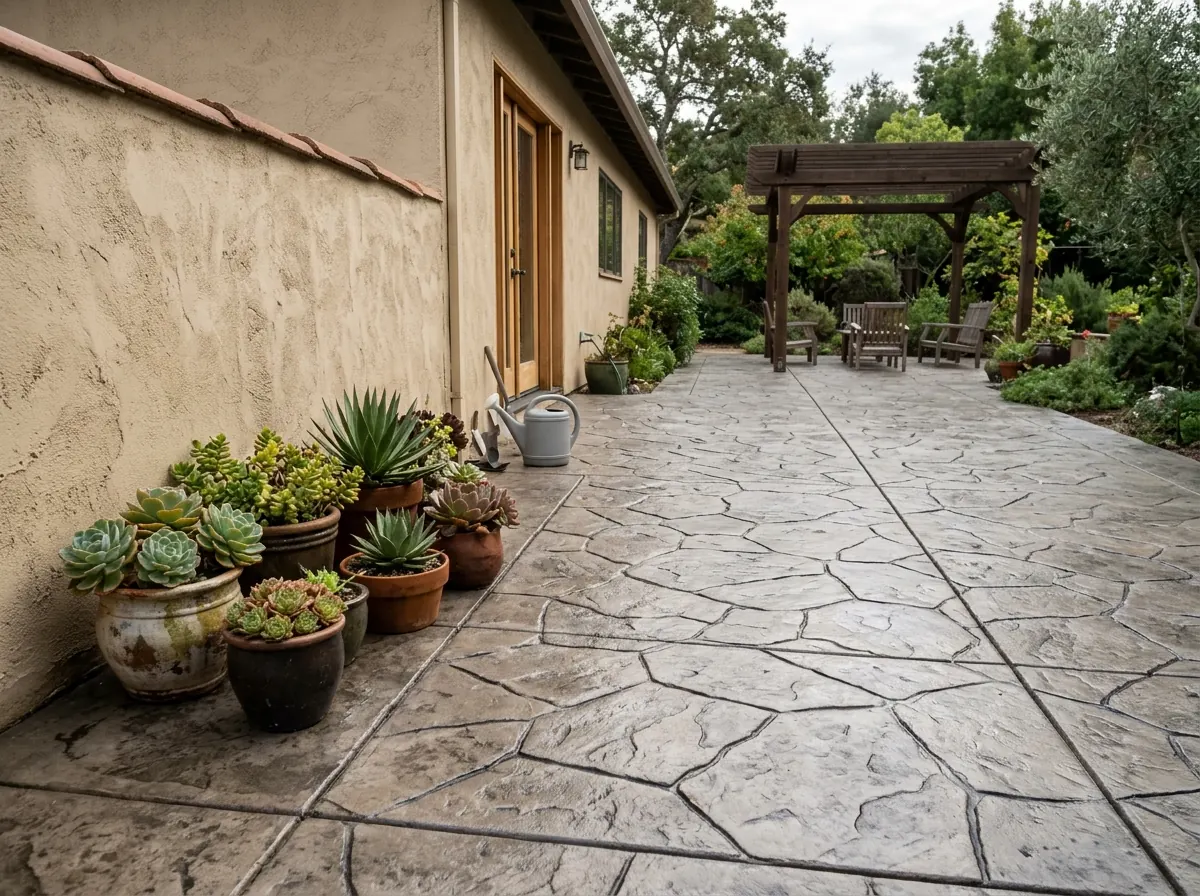
Stamped and Stenciled Overlays
Stampable overlays go on 1/4 to 3/4 inch thick so a rubber mat can press a stone, brick or tile pattern into them while they're wet. They cost about $7 to $15 a square foot for a single pattern and up to $20 for complex designs. Stenciled and stained overlays are the cheaper decorative route, around $6 to $10. Decorative overlays need a sealer, and the stained concrete page compares sealer types.
Resurfacing before a Coating
Sometimes resurfacing is the first step of a coating job. A garage or shop slab with deep pitting, an uneven surface or many old patches can get a skim coat or self-leveling layer first, then an epoxy or polyaspartic system on top. Ask the installer whether the coating maker approves its product over that overlay, and how long the overlay must dry first. Moisture testing still applies; the concrete grinding page covers it.
Why Hayward homeowners call Hayward Epoxy Floors
- No fee to you for the referral
- Your request goes to one local installer, not a list
- Ask for a written scope: system, coats and cure time
- Free estimate after the slab is looked at
Will Resurfacing Work on Your Slab?
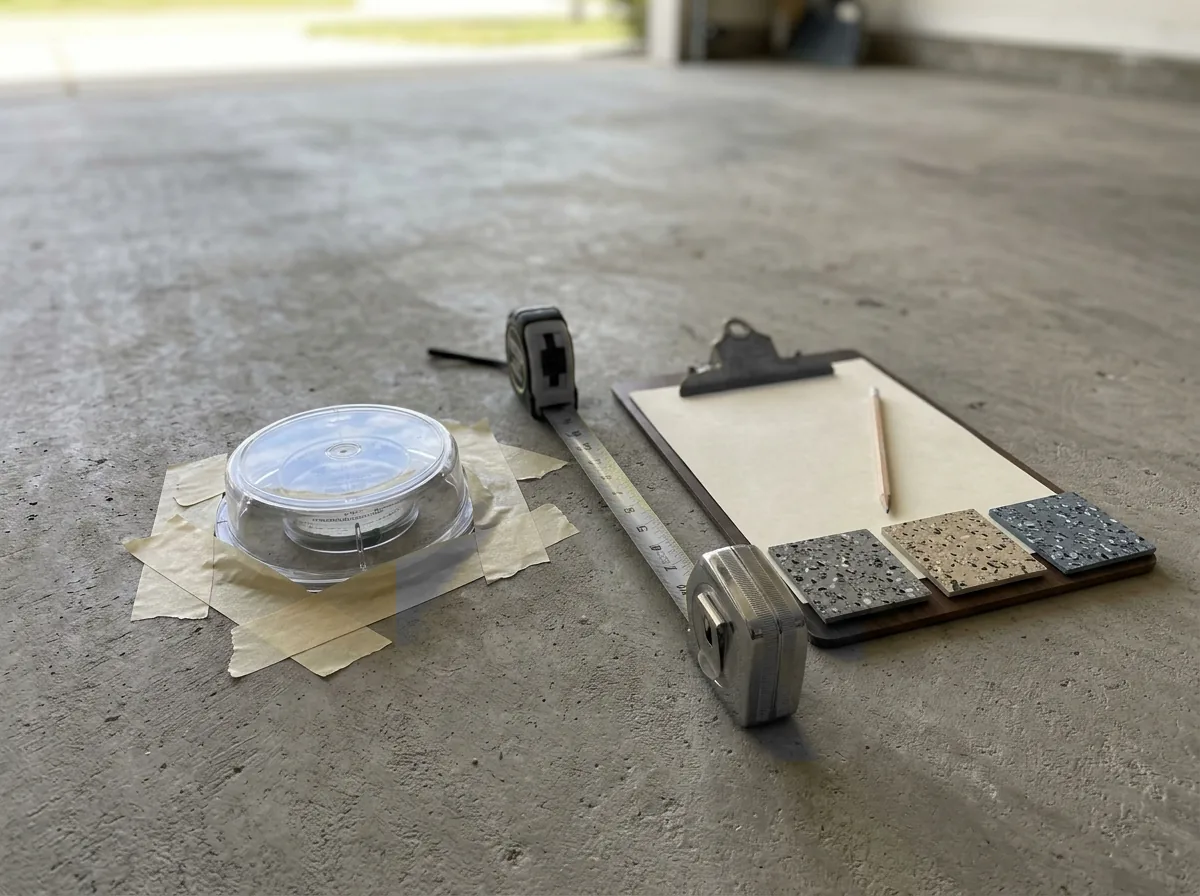
Resurfacing guides agree on one point: poor prep is the most common reason an overlay cracks or delaminates. A good bid includes pressure washing, stripping old sealers or paint, and repairing cracks before the overlay goes down. Cracks under 1/4 inch can be repaired and covered. Wider ones, crumbling or heaving sections, and repairs that would need more than 2 inches of new material usually mean replacing that section instead. The crack repair page explains how to tell which cracks are which.
Expansion joints matter too. Concrete moves at its joints as the seasons change, and an overlay laid across a working joint will crack along it. Ask the contractor to carry each joint up through the new surface.
Hayward's winters are wet and its summers dry, so a patio overlay goes through a full wet-dry cycle every year. Plan for a sealer once the overlay has cured, about a month after the job in one guide, and expect to reseal on the sealer's schedule.