
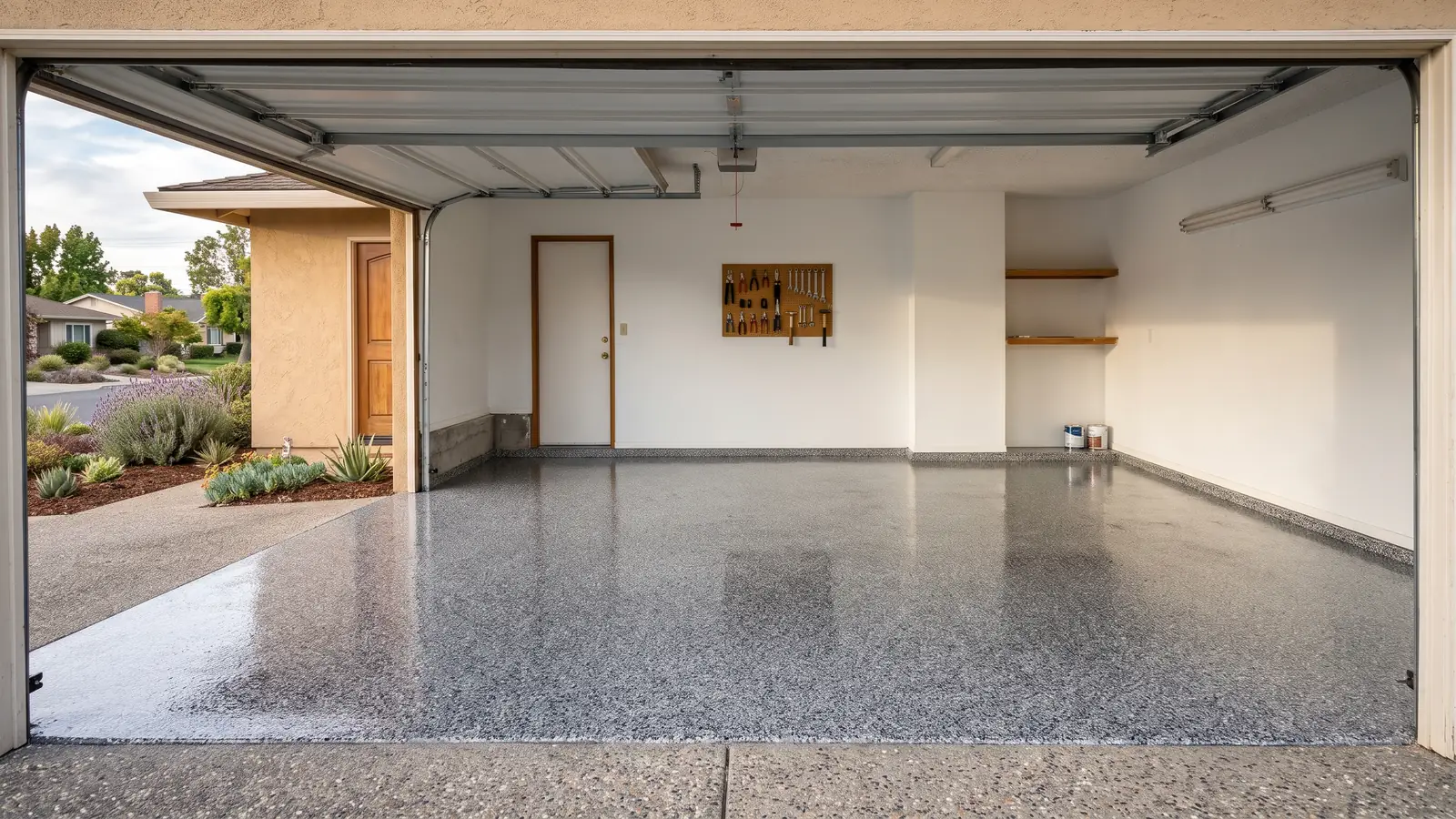
- The floor's resistance to ground has to read below 1 billion ohms under ANSI/ESD S20.20, and a person walking on it in the site's ESD footwear has to stay under 100 volts.
- ANSI terms split floors into conductive (below 1 million ohms) and static dissipative (1 million to 1 billion ohms).
Epoxy ESD systems are built in layers
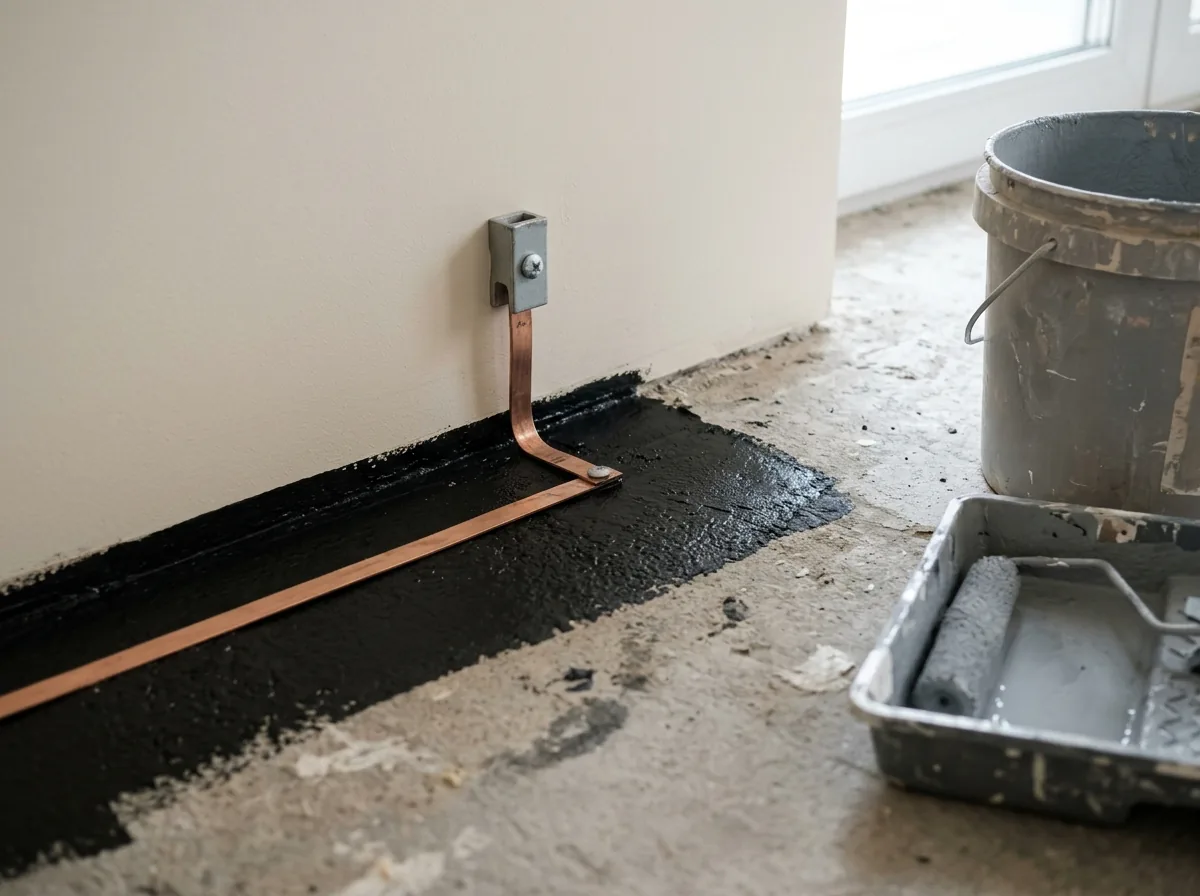
A primer, a carbon-loaded conductive layer, then a dissipative or conductive topcoat. One conductive system is about 1.5 mm thick.Grounding is part of the install
One manufacturer calls for an earthing point every 200 to 300 square meters (roughly 2,150 to 3,230 sq ft), with at least two per room.- No public guide prices ESD floors, so compare quotes on the conductive layers, grounding points and the test report rather than a single number.
Hayward Epoxy Floors sends your project specs to one independent local contractor who installs fluid-applied ESD epoxy for electronics assembly, labs, clean rooms and server rooms. ESD floors are proprietary systems, so the installer has to use every component from one manufacturer and follow its instructions. Start with the target resistance range and the footwear your staff will wear. Both decide which system fits.
ESD Flooring Types and How They're Grounded

Static-Dissipative Epoxy
Dissipative floors sit in the 1 million to 1 billion ohm band. Charge drains more slowly and in a more controlled way than on a conductive floor. That matters where people work around live equipment: NIH's facilities guidance warns that a floor that's too conductive can raise safety concerns for staff working with electricity. Dissipative vinyl, NIH notes, often gets its conductivity from a polish that has to be reapplied. In an epoxy system the conductive material sits in the coating layers themselves.
Conductive Epoxy
Conductive floors read below 1 million ohms and move charge to ground faster. NIH lists rooms with flammable materials, imaging equipment and data centers among the spaces that use static control floors, and the choice between conductive and dissipative is made with the users and the equipment in mind. One conductive epoxy system's data sheet gives a typical resistance to ground of 100,000 to 1 million ohms, with quartz sand in the topcoat for wear.
Chemical-Resistant Lab Floors
Labs need the static control and a surface that survives spills. Ask whether the ESD topcoat is rated for the solvents and acids actually used in the room, not just "good chemical resistance" in general terms. Where heavy chemical exposure rules out an ESD topcoat, a novolac floor (covered on the commercial epoxy page) may suit the wet zone while the bench areas stay ESD.
Clean Room and Seamless Cove Floors
Clean rooms want no seams, no grout and nowhere for particles to settle. Fluid-applied epoxy delivers that across the whole room, and running it up the wall as a cove base removes the corner where dust collects. The commercial kitchen page explains how integral cove is formed and priced.
Grounding and Resistance Testing
The floor only works when it's tied to the building ground. Under the coating, the conductive layer connects through grounding points to the building's grounding system. After cure, the floor is tested two ways: resistance to ground under ANSI/ESD STM 7.1, and body voltage on a person walking in the designated footwear under STM 97.2. Since 2014, S20.20 has required the walking test when a floor is qualified. Some older three-layer epoxies, a thin topcoat over a highly conductive primer, passed the resistance test while people walking on them still built up more than 100 volts.
Why Hayward homeowners call Hayward Epoxy Floors
- No fee to you for the referral
- Your request goes to one local installer, not a list
- Ask for a written scope: system, coats and cure time
- Free estimate after the slab is looked at
Writing the ESD Floor Spec
Hayward's industrial corridor holds biotech labs alongside warehouses and food plants, and the city actively recruits biotech firms. Before you collect bids for a lab or assembly room there, settle these points with your ESD coordinator:
- the target resistance range (conductive or dissipative) and the test method;
- the footwear the floor will be tested with, which should be what staff actually wear;
- the number and location of grounding points on the drawings;
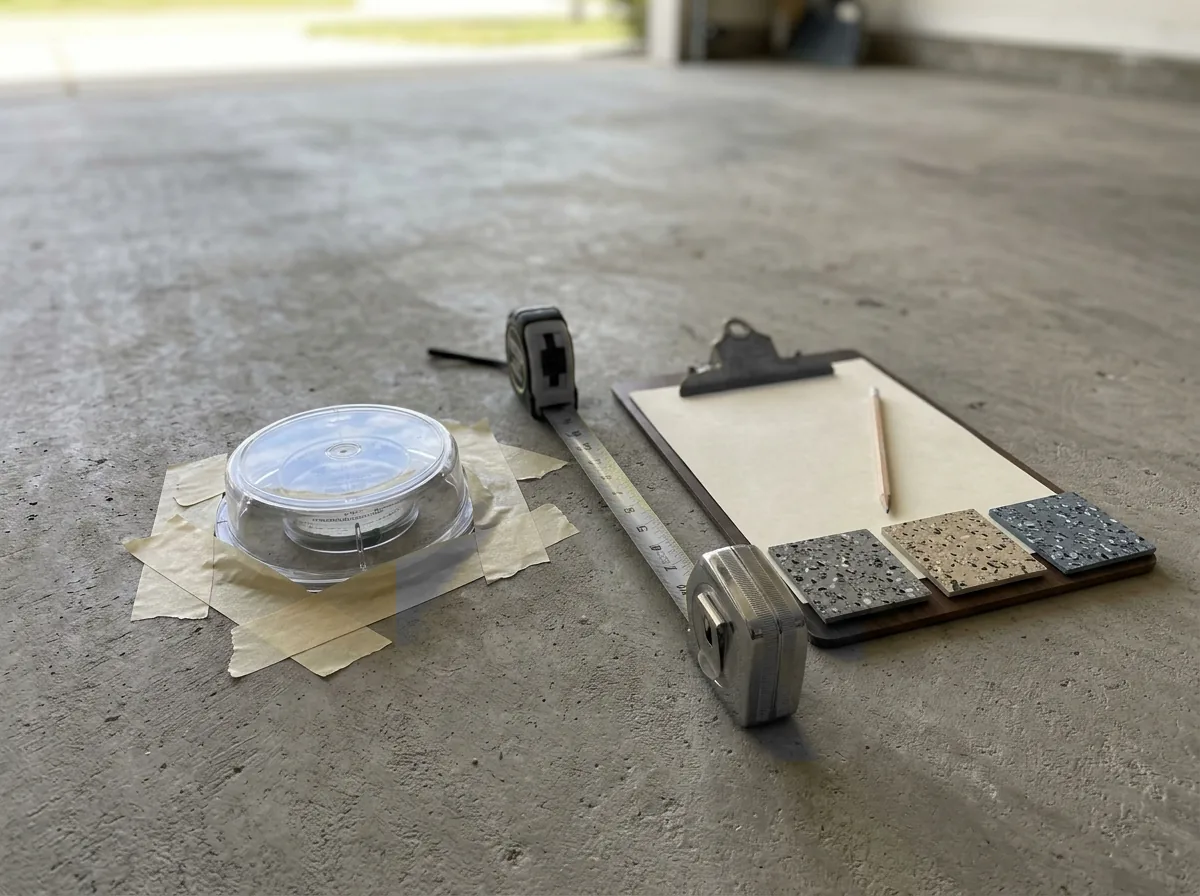
- who performs acceptance testing, and how many readings (one maker suggests 6 for a room under about 110 square feet, and 50 for about 1,100 to 10,800 square feet);
- moisture testing of the slab first; the concrete grinding page covers the methods.
Humidity affects how static behaves, so test under conditions close to how the room will actually run. Keep the report: it is your baseline for the periodic checks an ESD program calls for.