
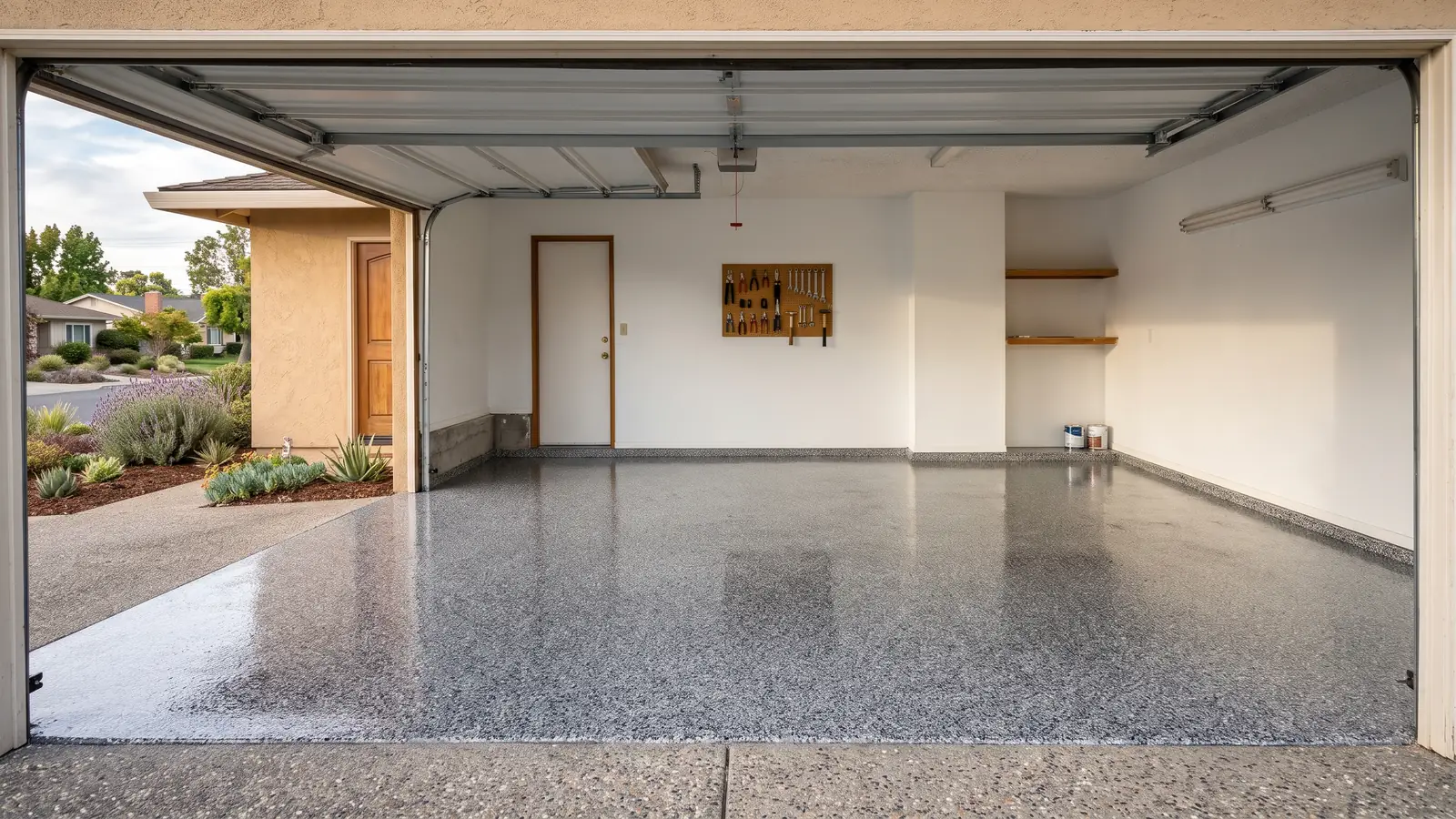
Cost
Bay Area guides put an installed epoxy garage floor at about $7 to $10 a square foot, while national guides run wider, $4 to $10.Time
One to three days on site for most garages, then a wait of 2 to 7 days before parking on a straight epoxy floor.Included in a full job
Diamond grinding, crack and pit repair, a pigmented base coat, flakes if you want them, and a clear topcoat.Price choices
Flake or solid color, an epoxy or polyaspartic topcoat, and how much slab repair the floor needs. Chips and custom colors run roughly $0.50 to $2.00 extra per square foot.
Hayward Epoxy Floors puts you in touch with an independent local installer who coats residential garage slabs. The systems worth comparing range from a two-coat solid color to a full-broadcast flake floor under a polyaspartic clear coat, and a professional system starts with 100% solids epoxy rather than thin water-based epoxy. Prep should be diamond grinding to an ICRI surface profile, not acid etching. Published system specs put the finished floor somewhere between 30 and 70 mils thick, depending on the build.
Garage Floor Epoxy Systems for One-, Two- and Three-Car Garages
Full-Broadcast Flake Garage Floors
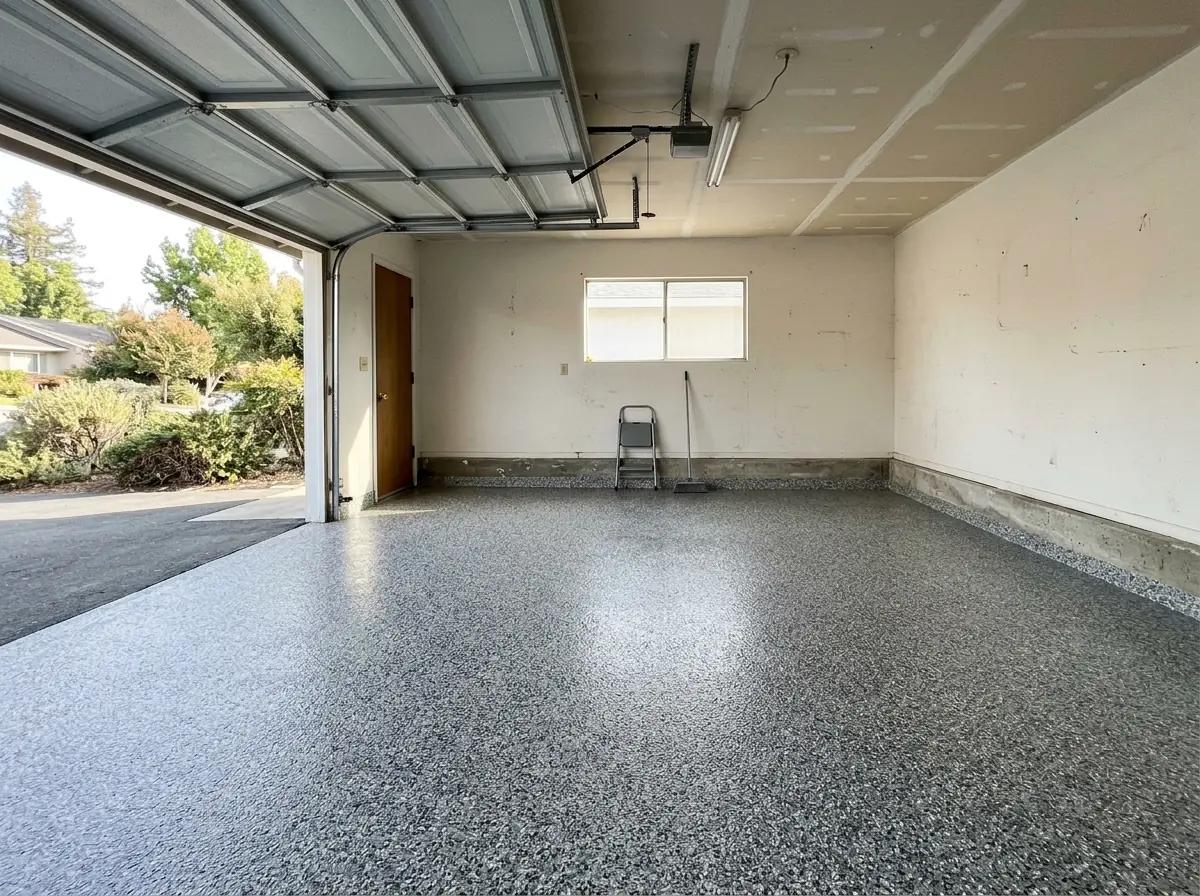
A flake floor is built in four passes. The crew rolls a pigmented epoxy base, throws vinyl flakes into it until no base shows, lets it cure, scrapes off the loose chips and seals the lot with one or two clear coats. In a garage the details that matter are at the edges: whether the flakes run up the stem wall, how the coating stops at the door seal, and whether the clear coat covers the flakes fully so they don't snag a mop. For a garage that takes a car every day, it's the system we'd look at first. Chip size, blend and broadcast density are choices of their own, covered on the flake epoxy floors page.
- Typical published build for a flake broadcast system: 35 to 50 mils
- Topcoat: clear epoxy or polyaspartic
Solid-Color Epoxy Garage Coatings
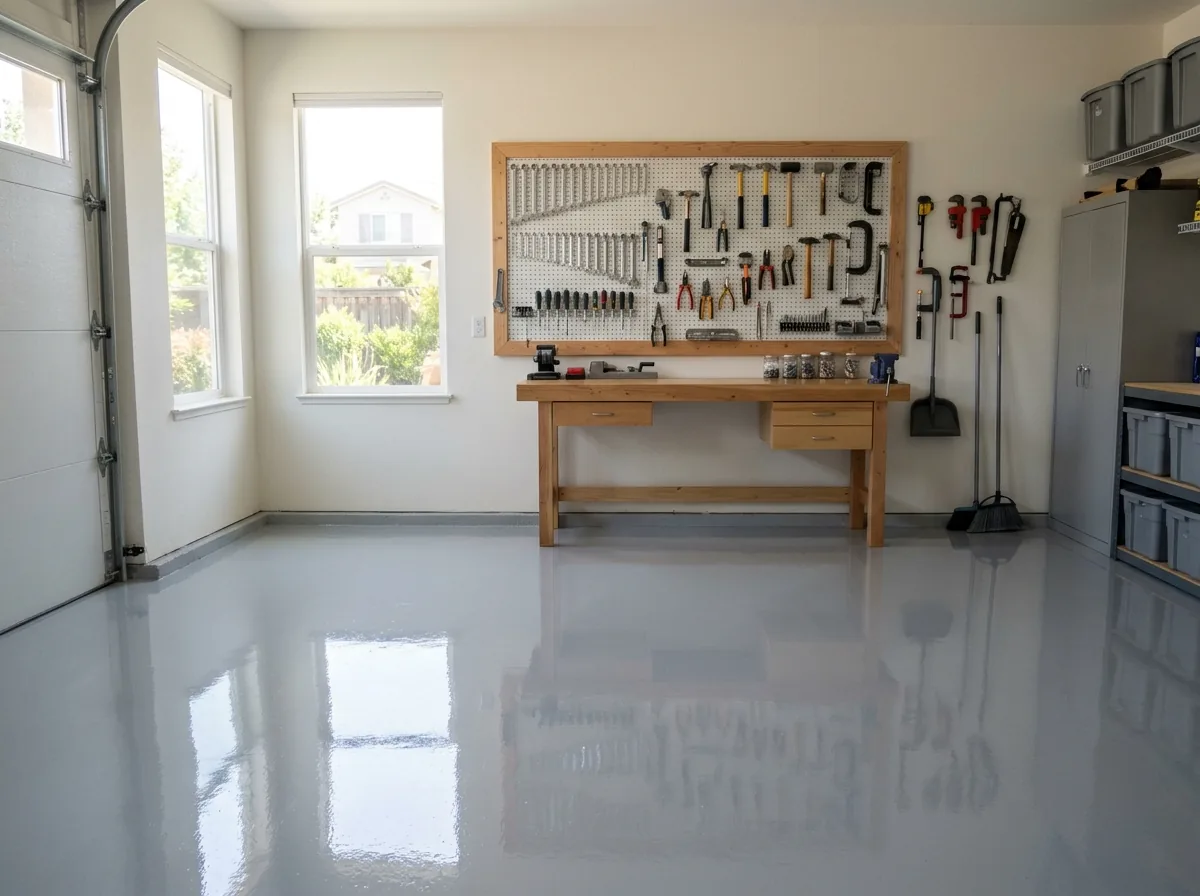
A solid-color floor skips the chips: a base coat and a pigmented topcoat in gray, tan or another shop color. It's the plainer, cheaper option, it reflects more light onto a workbench, and a dropped screw is easy to find. The catch is that a smooth, single-color surface shows tire tracks, dust and scratches more than a flake floor does, and it's more slippery when wet unless grit goes into the topcoat.
- Epoxy goes on at about 10 to 20 mils per coat
- One medium-duty spec: a 10 to 12 mil base plus a 16 to 20 mil topcoat, 30 to 50 mils in all
Epoxy Base Coat with a Polyaspartic Topcoat
A hybrid build mixes the two resins. Epoxy does the bulk work underneath: it's thick, it fills small pits and it holds the flakes. A polyaspartic clear coat on top adds a harder wear layer that won't yellow in sunlight, which epoxy alone tends to do (why polyaspartic holds its color). Hayward averages about 257 sunny days a year, and a garage with the door up all Saturday puts the first few feet of floor in direct sun. Commercial specs use the same layering: one high-traffic system tops its epoxy layers with a 10.7-mil aspartic coat. One thing to ask about is timing. A polyaspartic data sheet we checked allows 24 hours to recoat; after that, the surface has to be sanded before the next coat goes on.
Garage Slab Resurfacing for Pitted or Spalled Concrete
A coating copies the slab under it, the way new paint on a dented car door still shows the dent. Pits, pop-outs and flaking spots (spalls) show straight through even a thick flake floor, so an installer either patches them with an epoxy mortar or lays a thin cement overlay over the whole slab before coating. Patching individual cracks and chips is cheap, about $25 to $250. Heavy repair or resurfacing across the floor is a bigger line item, adding roughly $1 to $5 a square foot to a coating job. Self-leveling overlays go down from about 1/4 inch to 2 inches thick, which also fixes low spots where water collects. When the whole surface is gone, concrete resurfacing is its own job.
Home Gym and Workshop Garage Floors
A garage that doubles as a gym or a shop needs more than a parking floor. Dropped dumbbells, rolling toolboxes and jack stands are harder on a coating than tires, so ask for a thicker build in those zones. As a guide, one manufacturer spec for smooth medium-duty epoxy totals 30 to 50 mils, while its high-traffic version, built with a full broadcast of 20/40 mesh sand, reaches 60 to 70 mils. Put a rubber mat where a barbell lands. If you work on cars, list what gets spilled (brake fluid, coolant, solvents) so the installer can match the topcoat to it.
Why Hayward homeowners call Hayward Epoxy Floors
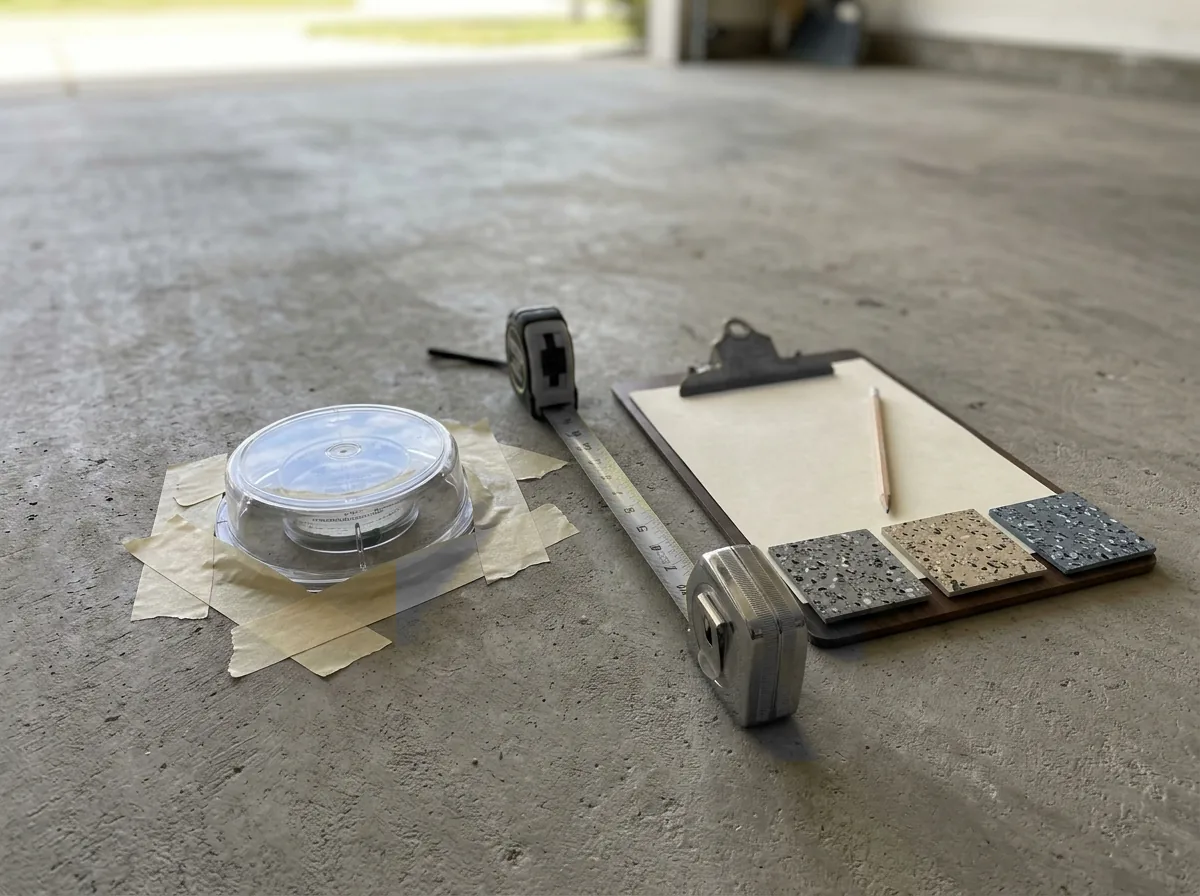
- No fee to you for the referral
- Your request goes to one local installer, not a list
- Ask for a written scope: system, coats and cure time
- Free estimate after the slab is looked at
Garage Floor Epoxy Cost in Hayward by Garage Size
No published guide prices Hayward on its own. The closest figures are one Bay Area guide and two national ones, all installed prices:
| Garage | Bay Area epoxy (250 / 500 / 750 sq ft) | National epoxy | National polyaspartic |
|---|---|---|---|
| One-car | $1,600-$2,600 | $1,200-$3,900 | $1,400-$4,700 |
| Two-car | $3,300-$5,200 | $1,600-$5,800 | $2,000-$6,900 |
| Three-car | $4,900-$7,800 | $2,300-$8,600 | $2,900-$10,400 |
The Bay Area two-car range starts at $3,300, about double the national low end, and labor explains most of the gap: it makes up roughly half to two-thirds of a garage coating bill, so local wages drive the total. Within a quote, the swing comes from slab repair, removing an old coating (epoxy floor repair and removal), full flake versus solid color, the topcoat, and a moisture-vapor primer if the slab tests wet.
Hot-Tire Pickup on Garage Floor Coatings
Hot-tire pickup is a coating lifting off the slab and sticking to a tire. Heat and plasticizers from the tire soften the film, and where the bond to the concrete is weak, the coating tears away and leaves a bare patch. It rarely happens on day one. It shows up weeks or months later, in the spots where you park every day.
A flooring supplier's guide to workshop floors puts most cases down to the system, not the resin: concrete that wasn't mechanically profiled, moisture pushing up through the slab, or a thin decorative film with too little build. Cure time is the other factor. One garage floor paint data sheet asks owners to wait 5 days before parking on cool tires and 7 days before hot ones. Kits and coatings are often labeled as resisting hot tires, but a label is not a substitute for good prep. Ask the installer how the slab will be profiled, how thick the finished film will be, and the date you can safely park after a drive home on a hot day.
Garage Floor Epoxy Quotes: What to Ask Before You Sign
- Will the slab be diamond-ground, and to what profile? (how grinding sets the profile)
- What is the total system thickness in mils, coat by coat?
- Is the base 100% solids epoxy, and what is the topcoat?
- Will the slab be moisture-tested before the base coat, and what happens if it fails?
- Does the coating run up the stem wall, and how are the control joints handled?
- What date can a car go back in?