
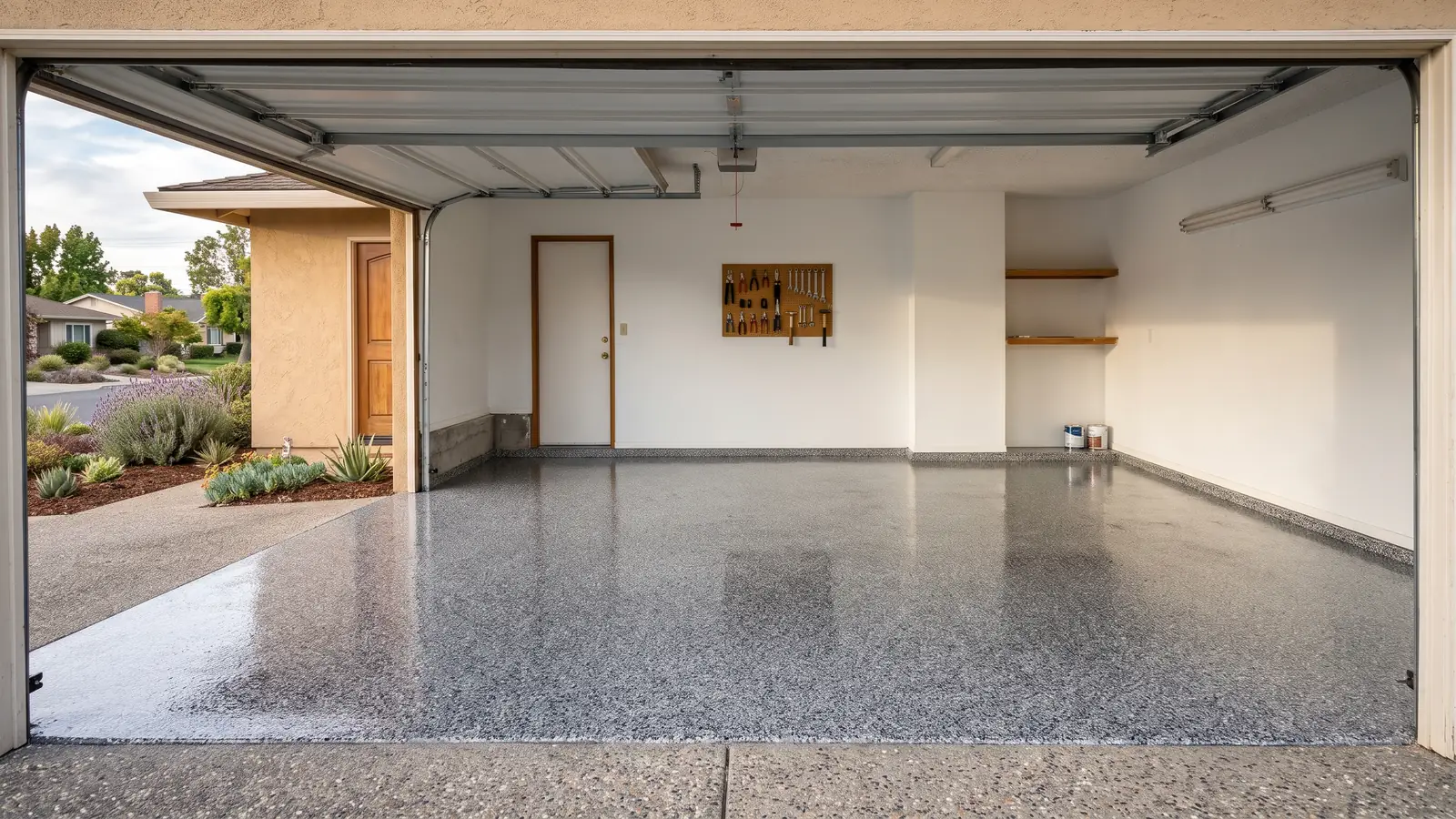
- No cost guide prices hangar floors on their own. The nearest published figure is for 100% solids commercial epoxy, which national guides price from roughly $12 a square foot. For scale, a standard T-hangar at Hayward Executive Airport is about 912 to 1,058 square feet.
- An aviation-grade system typically builds 28 to 38 mils from primer, a body coat and two urethane topcoats.
- Plan on roughly a week without the aircraft. One industrial epoxy reaches normal traffic about five days after the last coat at 73°F.
- These systems go on with air and slab between 50°F and 85°F, which rules out an unheated hangar on many winter nights in Hayward.
The choices that matter
Color and gloss, the fluid rating of the topcoat, texture for wet areas, and the striping layout.
Hayward Epoxy Floors refers your hangar job to one independent local contractor for epoxy and urethane hangar floors. A hangar slab deals with hydraulic fluid, fuel, oil, tire marks from tugs and the weight of jacks and tool carts on small contact points. The coating that suits it is a thick, light-colored system rated for those fluids, over concrete ground to a rough profile. The topcoat decides how well it keeps that look.
Aircraft Hangar Floor Coating Types
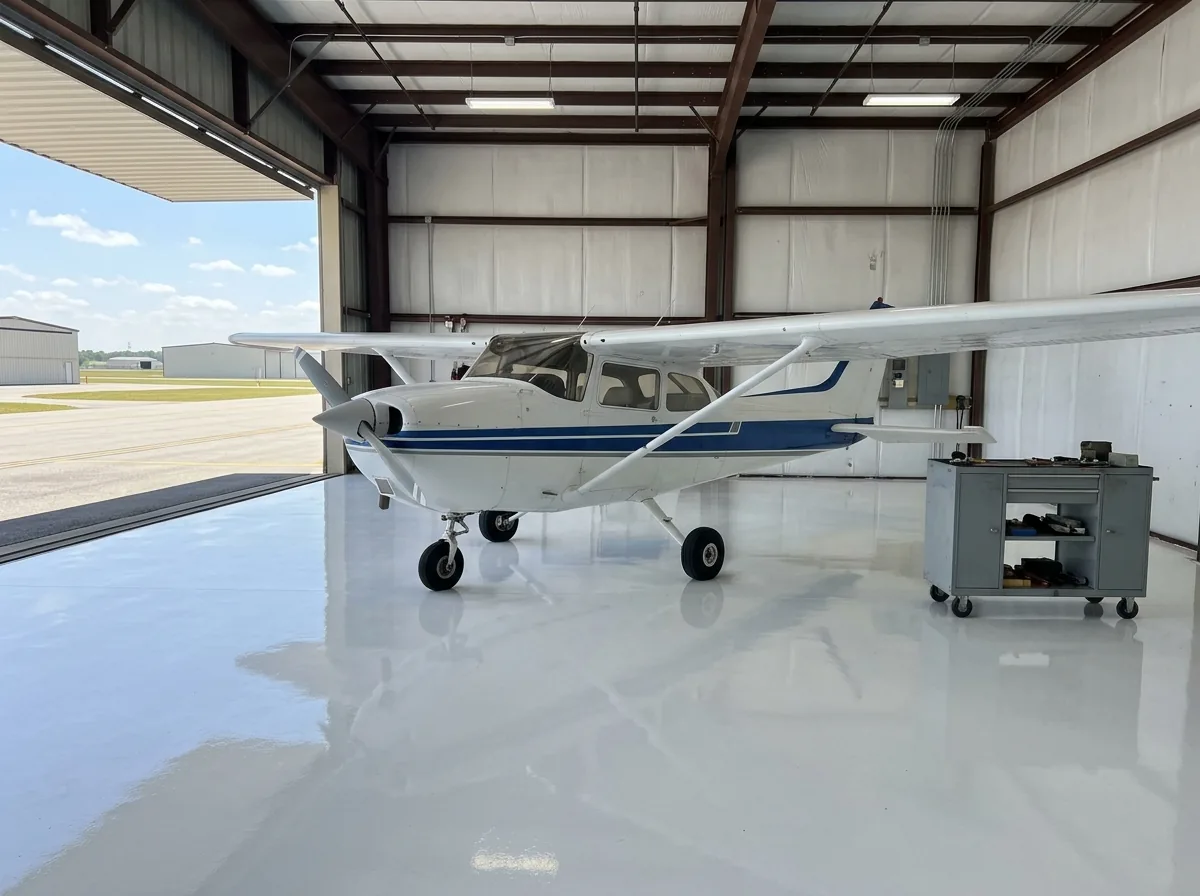
Light-Reflective White Hangar Floors
White, light gray and pale tan are the standard hangar colors for a practical reason. A floor that reflects light brightens the underside of the aircraft, and a drip or a lost cotter pin stands out against it. One aviation system lists a 60° gloss reading of 90, firmly in high-gloss territory. The trade-off is that tire marks and dust show too, so plan on a dust mop and a degreaser as part of the routine.
Hydraulic-Fluid-Resistant Topcoats
A slow hydraulic leak can sit on the floor for days in a hangar that's only opened on weekends, so the topcoat has to be rated for the fluids it will actually meet. Aviation systems put urethane topcoats over the epoxy body coat and are sold as resisting Skydrol and Jet-A by name, and one maker recommends a second topcoat as standard. Ask to see the fluid rating, and whether it's for a splash, a spill or longer immersion.
Tie-Down and Grounding-Point Detailing
If the hangar has tie-down rings or grounding rods set into the slab, deal with them before grinding starts: walk the floor with the installer and mark every embed. They should be masked and coated around, not buried, with the coating finished cleanly at the edge so it doesn't peel back from the steel. Note any cracks crossing the slab at the same time; the crack repair page explains what should be filled before coating.
Hangar Striping and Safety Lines
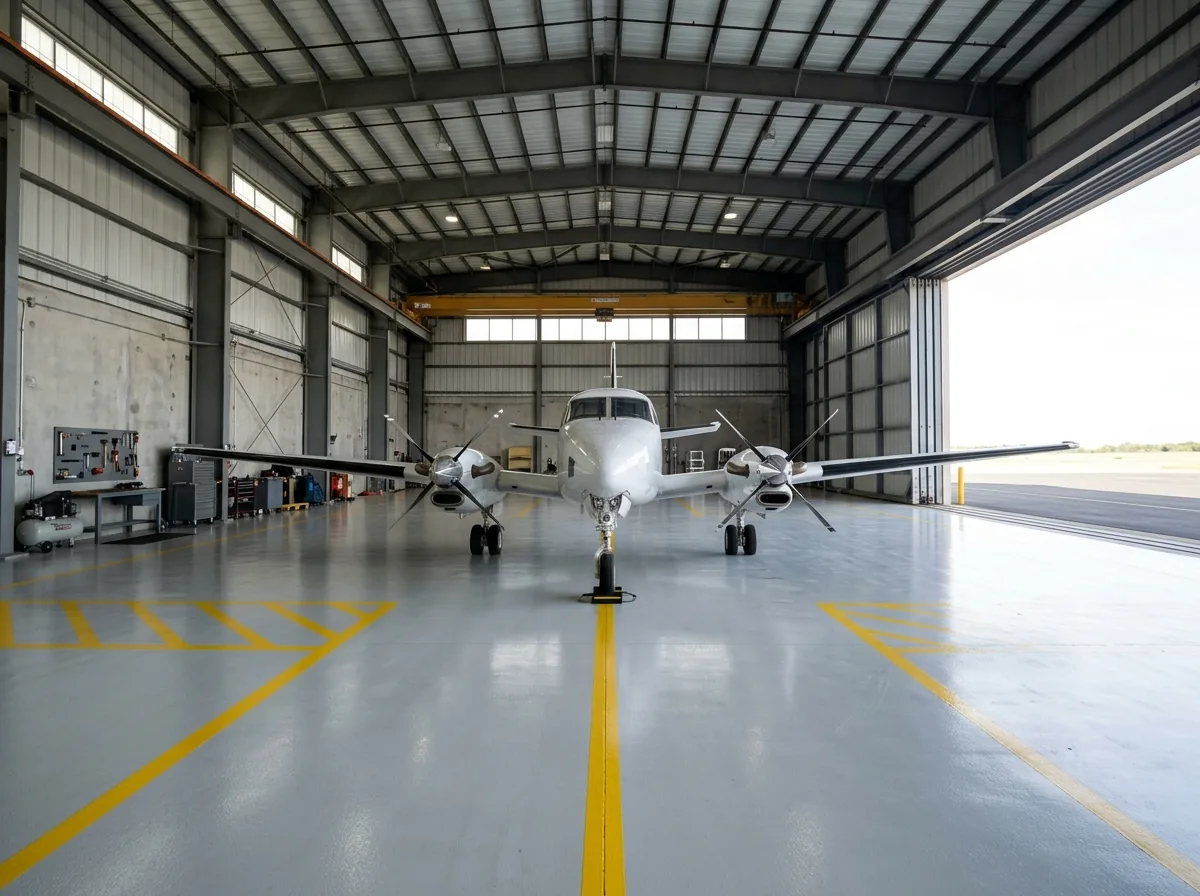
Wing-tip lines, nose-wheel centerlines and keep-clear boxes around fire extinguishers make it easier to park the same way every time, especially in a tight T-hangar. Lines go on after the base system and under the clear topcoat so tug tires don't wear them off. Layout and pricing work the same way as warehouse striping, covered on the industrial epoxy page.
Box Hangars vs T-Hangars
The two hangar shapes are different jobs. A T-hangar is a narrow nested unit shaped around one airplane, often under 1,100 square feet, with tight corners at the wing and tail. Box hangars are open rectangles; the executive hangars at Hayward run about 2,400 to 3,600 square feet. Cost guides note that larger commercial floors get volume pricing per square foot, though a bigger slab also means more grinding time and more joints to fill.
Why Hayward homeowners call Hayward Epoxy Floors
- No fee to you for the referral
- Your request goes to one local installer, not a list
- Ask for a written scope: system, coats and cure time
- Free estimate after the slab is looked at
Planning a Hangar Floor at Hayward Executive Airport
The city's latest published airport facts (2016-17) list 108,680 aircraft operations a year at Hayward Executive Airport, 436 based aircraft, 206 city-owned hangars and 143 names on the hangar waiting lists. Most of those hangars are T-hangars of 810 to 1,288 square feet, so a typical hangar floor here is small, tight and scheduled around one owner's flying.
A few things to settle before booking:
- If the hangar is city-owned or leased, check the agreement and the airport office first.
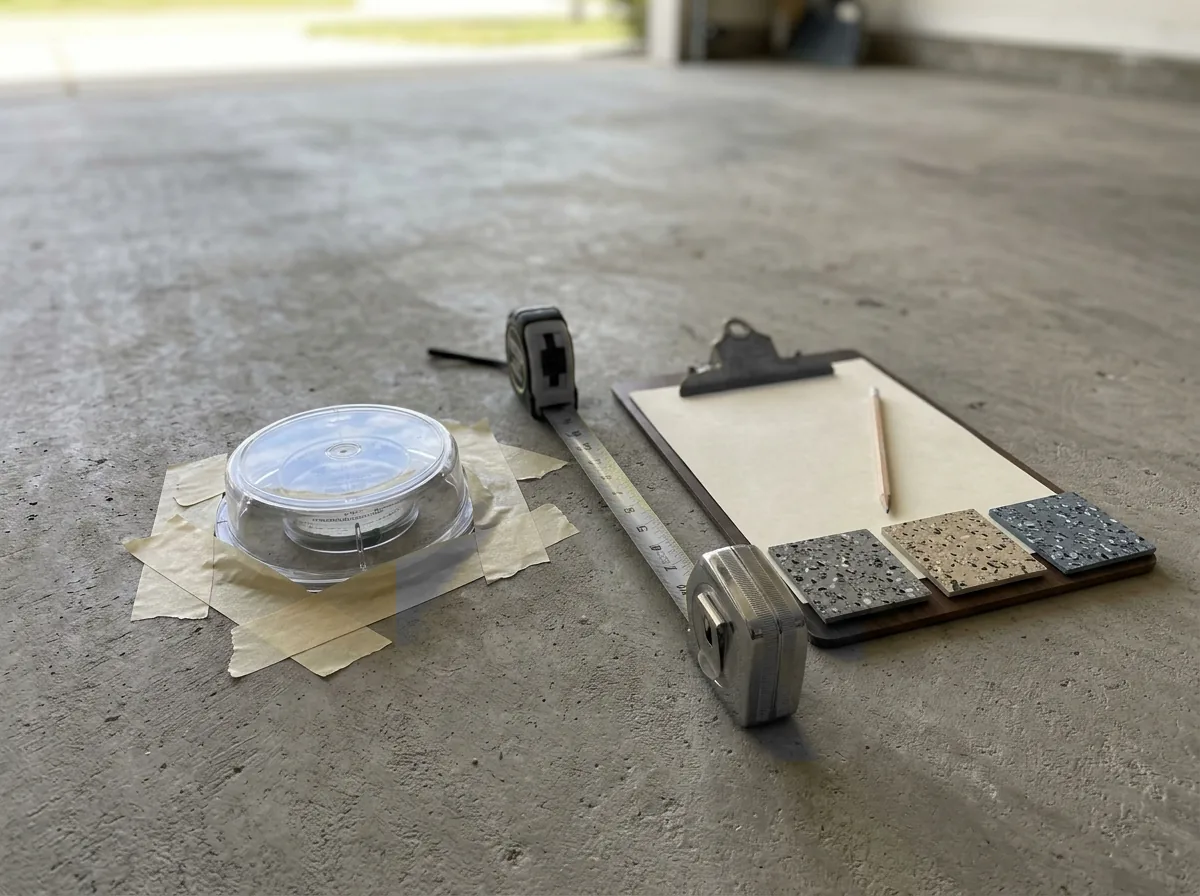
- One aviation system calls for concrete of at least 3,625 psi, ground to a profile of CSP 3 to 6. An old, oil-soaked slab needs real grinding, and old floor paint should come off.
- Winter nights in Hayward average about 42°F, below the 50°F minimum on that product sheet. Book a dry, mild week or plan for heat.
- Arrange where the airplane, tug and tools will sit for the week.